

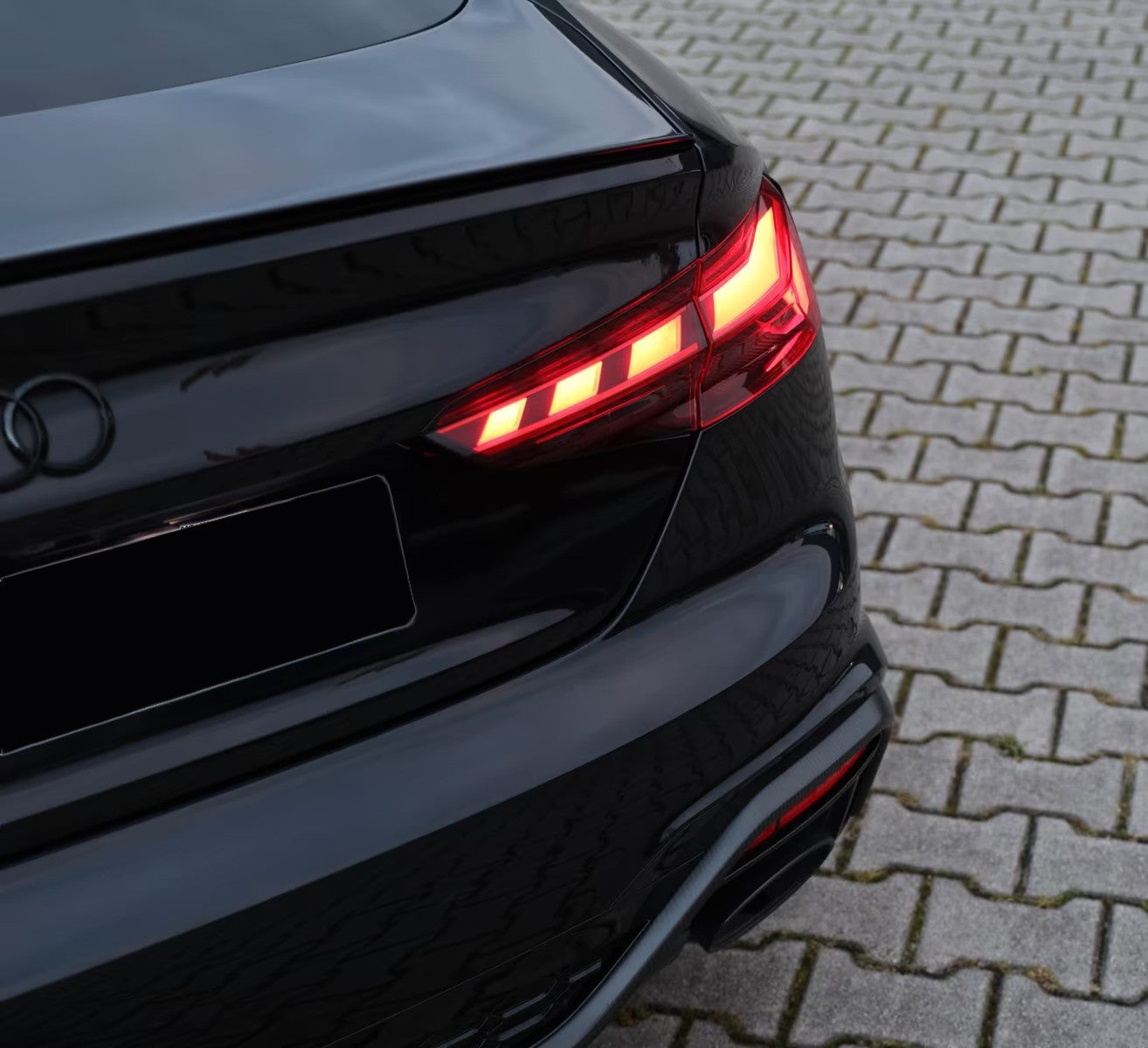


The Audi EA855 evo is one of the most celebrated performance engines in the modern Volkswagen Group lineup — a turbocharged 2.5-liter inline-5 that has earned a devoted following among enthusiasts worldwide. Far from being a cynical displacement choice, the five-cylinder configuration is a deliberate engineering statement: the 1-2-4-5-3 firing order produces the unmistakable warbling exhaust note that defines the RS driving experience, a sound unlike anything else in the segment.
Found exclusively in Audi's most focused RS models — the RS3 (8V and 8Y), TT RS (8S), and RS Q3 — this engine sits at the heart of compact cars capable of embarrassing much larger machinery. In its latest specification, factory output reaches 400 hp, while the aftermarket has proven the platform capable of significantly more on stock internal components.
Despite its high-performance purpose, the EA855 evo is generally regarded as a robust and well-engineered unit when properly maintained. This guide covers everything you need to know before buying, owning, or modifying an EA855 evo-powered car — from factory specs and known reliability concerns to tuning potential and long-term ownership costs.
Parts & Accessories
Your Audi EA855 evo deserves better.
Hand-picked performance and replacement parts — ready to ship.
Shop Audi EA855 evo parts →Specs & Versions
Base Specifications
| Specification | Detail |
|---|---|
| Type | Inline-5, turbocharged |
| Displacement | 2,480 cc (2.5 liters) |
| Block | Compacted graphite iron |
| Head | Aluminum alloy, DOHC |
| Valvetrain | DOHC, 20 valves (4 per cylinder) |
| Injection | Direct injection (TFSI) |
| Production Years | 2009 – present |
DAZA — 400 hp / 354 lb-ft
The DAZA is the highest-output variant of the EA855 evo family, introduced with the second-generation RS3 and TT RS. It represents the definitive expression of the five-cylinder formula, with revised turbocharger mapping, upgraded fueling, and refined thermal management compared to earlier units.
| Model | Chassis | Years |
|---|---|---|
| Audi RS3 Sportback / Sedan | 8Y | 2021 – present |
| Audi TT RS Coupe / Roadster | 8S | 2019 – 2023 |
DNWA — 400 hp / 354 lb-ft
The DNWA is a closely related variant to the DAZA, sharing the same headline power and torque figures while serving specific market and model configurations within the RS Q3 lineup.
| Model | Chassis | Years |
|---|---|---|
| Audi RS Q3 / RS Q3 Sportback | F3 | 2019 – present |
How to check a used EA855 evo-powered car's history
Before buying any used car equipped with the EA855 evo, it is essential to ensure full transparency about its past. Undisclosed accidents and hidden mechanical abuse can directly compromise safety and reliability, particularly on a high-performance platform where structural integrity and powertrain condition are tightly linked.
The EA855 evo is a tuner favorite, and many examples have been stage-tuned before resale — sometimes without disclosing that fact to the next buyer. A car that has been pushed hard on track, run on improper oil specifications, or subjected to aggressive remapping without supporting hardware changes may present hidden timing chain wear, rod bearing fatigue, or oil consumption well beyond Audi's accepted threshold. Deferred maintenance on the electric water pump and thermostat housing is another red flag that does not always surface in a visual inspection. It is strongly recommended to check the vehicle's complete history using its license plate or VIN number before any purchase decision.
Get an instant 20% discount to access a vehicle's full past with total transparency via carVertical by clicking this link or on the banner below:

Key Strengths
The EA855 evo earns its reputation through a combination of engineering character and genuine performance capability that few four-cylinder rivals can match on emotional terms alone.
The five-cylinder firing order produces a naturally staggered combustion sequence that generates the iconic Audi RS exhaust note — a quality no amount of electronic sound synthesis can replicate. Enthusiasts frequently cite this as a primary reason for choosing an RS3 or TT RS over objectively faster competitors.
From a mechanical standpoint, the engine responds exceptionally well to tuning. Stage 1 remaps on stock hardware routinely yield figures in the 470–500 hp range, a remarkable margin above the factory baseline without touching internal components. The short-stroke architecture and robust bottom end give tuners a solid foundation to work from.
Aftermarket support for the EA855 evo is strong and growing. A well-established ecosystem of intake kits, intercooler upgrades, downpipes, and ECU software exists across both European and North American markets. Specialist knowledge of this platform is increasingly accessible, though owners should budget accordingly — this remains an engine that rewards investment in quality parts and specialist labor.
Properly serviced examples with full history are known to remain dependable well beyond 100,000 miles, which is a meaningful achievement for a factory 400 hp unit.
Known Reliability Issues
Carbon Buildup on Intake Valves
Symptom: Rough idle, hesitation on acceleration, misfires, reduced power, and increased fuel consumption.
Cause: Like all direct-injection engines, the EA855 evo sprays fuel directly into the combustion chamber rather than across the intake valves. Without fuel washing the valve stems and seats, oil vapors from the PCV system deposit carbon over time.
Severity: Moderate to High
Typical mileage: 50,000 – 80,000 miles
Note: Walnut shell blasting is the accepted fix. Using Top Tier gasoline and maintaining short oil change intervals slows accumulation but does not eliminate it entirely.
Electric Water Pump Failure
Symptom: Coolant temperature warnings, overheating, limp mode activation, coolant loss with no visible external leak.
Cause: The EA855 evo uses an integrated electric water pump rather than a belt-driven mechanical unit. This design offers thermal management advantages but introduces an electronic component that is subject to premature failure — particularly on cars that have been driven hard or maintained poorly.
Severity: Critical
Typical mileage: 40,000 – 80,000 miles
Note: Failure can escalate rapidly to overheating and potential head gasket damage. Pre-purchase inspection should specifically confirm water pump condition. Replacement with an OEM or upgraded unit is strongly recommended at first sign of fault codes or temperature anomalies.
High Oil Consumption
Symptom: Oil level dropping between service intervals; blue-tinted exhaust smoke under hard acceleration; oil warning light activation.
Cause: The EA855 evo has a documented tendency toward elevated oil consumption, particularly on higher-mileage or heavily driven examples. Piston ring wear, valve stem seal degradation, and PCV system oil carryover are the primary contributors. Audi's own specification acknowledges up to 1 liter per 1,000 km as within acceptable limits — a figure that surprises many buyers accustomed to modern economy engines.
Severity: Moderate to High (if unmonitored)
Typical mileage: 50,000 – 100,000 miles
Note: Regular oil level checks every 500 miles are essential. Use only Audi-approved 0W-30 or 0W-40 full synthetic oil meeting VW 502.00 specification. An aftermarket PCV catch can is a popular and worthwhile preventive modification.
Timing Chain Wear at High Mileage
Symptom: Rattling noise on cold start that disappears after warm-up, timing-related fault codes, rough running.
Cause: The timing chain and associated tensioner components are a known wear item at higher mileage, particularly on examples that have accumulated many cold starts or suffered extended oil change intervals. Chain stretch leads to timing deviation that can affect performance and, in severe cases, engine integrity.
Severity: High (if neglected)
Typical mileage: 80,000 miles and above
Note: Preventive inspection at high mileage is strongly advised. Strict adherence to oil change intervals with quality synthetic oil is the best long-term protection.
Maintenance Schedule
| Service | Interval |
|---|---|
| Engine oil & filter change | Every 5,000 miles (or annually) — do not extend to OEM long-life intervals |
| Spark plug replacement | Every 30,000 – 40,000 miles |
| Intake valve inspection / cleaning | Every 50,000 – 60,000 miles |
| Coolant flush (G13 spec) | Every 40,000 miles or 4 years |
| Electric water pump inspection | Every 40,000 miles |
| Timing chain inspection | At 80,000 miles and every 20,000 miles thereafter |
| PCV system inspection | Every 40,000 miles |
| Air filter replacement | Every 20,000 – 25,000 miles |
Recommended oil specification: Full synthetic 0W-30 or 0W-40 meeting VW 502.00 / 504.00 specification. Liqui-Moly Molygen, Castrol Edge, and Motul 8100 are popular choices among EA855 evo owners. Do not use mineral or semi-synthetic oil.
Tuning Potential
| Stage | Modifications | Estimated Power |
|---|---|---|
| Stage 1 | ECU remap only | 470 – 500 hp |
| Stage 2 | Remap + high-flow downpipe + intake + intercooler upgrade | 510 – 540 hp |
| Stage 3 | Upgraded turbocharger + fueling + intercooler + supporting hardware | 580 – 650 hp |
Recommended first modifications in order of priority:
- ECU remap (Stage 1) — the single highest-value modification; enormous power gain on stock hardware
- Aftermarket intake — reduces intake restriction and improves turbo response
- High-flow downpipe — removes exhaust restriction, lowers exhaust gas temperature
- Front-mount intercooler (FMIC) upgrade — critical for sustained power in warm climates and track use
- PCV catch can — protects intake valves and reduces oil consumption symptoms
- Oil cooler — essential before any serious track use or Stage 2+ tuning
Fueling and cooling limitations: At Stage 2 and above, the stock fuel injectors and high-pressure fuel pump approach their limits under sustained load. A high-pressure fuel pump upgrade is strongly recommended before pushing beyond 520 hp. Cooling system capacity becomes a meaningful constraint on track; an upgraded intercooler and oil cooler are not optional at high power levels. Rod bearing integrity must be confirmed before running sustained high-boost sessions on any high-mileage example.
FAQ
Is the Audi EA855 evo a reliable engine?
The EA855 evo is generally reliable for a 400 hp factory performance engine when maintained correctly. The most common issues — carbon buildup, oil consumption, and water pump failure — are manageable with attentive servicing and are well understood by the specialist community. Reliability is directly tied to maintenance quality; cars that have been run on extended oil change intervals or poor oil specifications are significantly more prone to problems.
What are the most common problems with the EA855 evo?
The three issues owners encounter most frequently are carbon buildup on intake valves, electric water pump failure, and elevated oil consumption. Timing chain wear becomes relevant on higher-mileage examples is a concern specifically on tuned cars running high power levels without supporting hardware.
How long does the EA855 evo last?
Well-maintained examples are known to exceed 150,000 miles without major internal work. The key factors are strict oil change intervals using the correct specification oil, regular coolant system inspection, and avoiding sustained high loads without proper supporting modifications. Oil consumption should be monitored closely as mileage accumulates.
How does the EA855 evo compare to the older EA113 five-cylinder?
The EA855 evo is a comprehensively modern engine compared to the earlier Audi EA113, which underpinned the original RS3 and TT RS. The EA855 evo offers superior factory output, far greater tuning headroom, and more refined thermal management, but it also introduces direct injection complexity and the electric water pump as additional maintenance considerations. The older engine's simplicity appeals to some, but the performance gap is significant.
What is the tuning ceiling of the EA855 evo?
On stock internal components, 500 hp at Stage 1 is readily achievable and well within the engine's tolerance for road use. The platform has been demonstrated to support figures approaching and exceeding 600 hp with upgraded turbocharger, fueling, and supporting hardware, though at that level rod bearing upgrades and comprehensive cooling modifications become non-negotiable.
Can the EA855 evo be used as a daily driver when tuned?
A Stage 1 EA855 evo is an entirely manageable daily driver, with no significant reduction in everyday reliability provided the car is properly serviced. Stage 2 remains usable daily with appropriate hardware. Beyond that point, the additional stress on fueling, cooling, and internal components makes the car better suited to weekend or occasional use unless a comprehensive supporting build has been completed.
Conclusion
The Audi EA855 evo is a genuinely special engine — characterful, potent, and more tunable than almost anything else in its displacement class. Its five-cylinder identity sets it apart in a world increasingly dominated by homogeneous turbo four-cylinders, and the aftermarket has responded accordingly with a mature and well-supported ecosystem. Maintenance demands are higher than average, but they are entirely predictable for an owner who goes in with clear expectations.
Overall reliability score: 7.5/10
Tuning potential score: 9/10
Browse our parts catalog to find quality components for your EA855 evo-powered Audi.