



The EPA's February 2026 policy shift eliminates off-cycle credits for start-stop systems, effectively removing manufacturer incentives for this technology. This deregulation restores consumer choice and simplifies automotive engineering by reducing mechanical stress on starters and turbochargers. Drivers benefit from lower maintenance costs and increased vehicle longevity, as these systems previously accounted for significant battery and component wear.
The EPA recently admitted that the off-cycle credits for start-stop systems failed to produce significant emissions reductions, leading to a major policy shift under the Trump administration. This decision allows manufacturers to prioritize mechanical longevity over regulatory loopholes, making it easier than ever to désactiver start stop functionality. Our guide provides the technical expertise needed to eliminate this intrusive feature and protect your starter motor from premature wear.
Why Disabling Start-Stop Is Becoming a Credible Option in 2026
Drivers have long voiced their frustration with engines cutting out at every traffic light. A major regulatory shift is finally aligning with consumer demand, making permanent deactivation a reality.
Decoding the EPA Policy Shift Under the Trump Administration
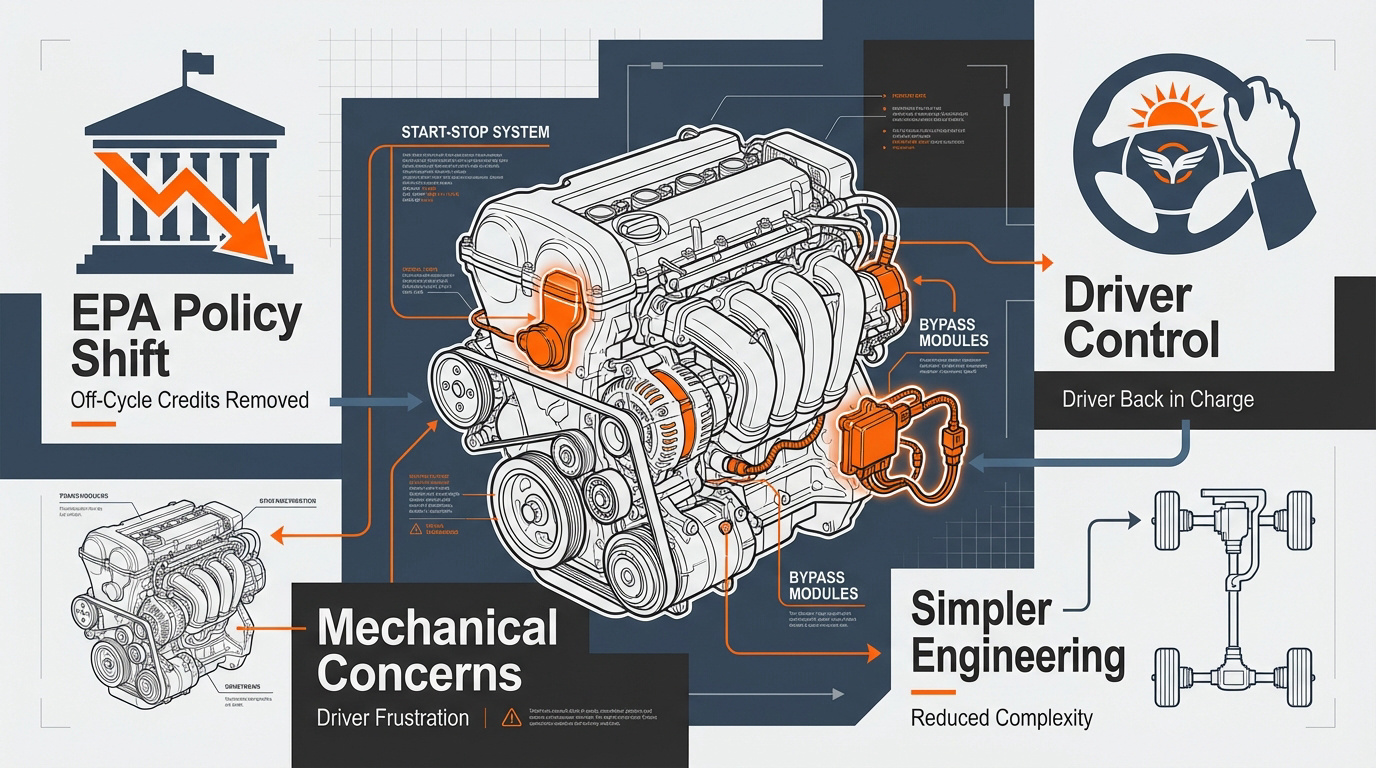
The EPA, led by Lee Zeldin, removed off-cycle credits for start-stop systems on February 12, 2026. This move eliminates the primary incentive for manufacturers to install this technology. Brands no longer face pressure to meet greenhouse gas standards via these credits.
The agency explicitly addressed the technology's unpopularity. Drivers find the constant restarting intrusive and potentially damaging to battery life. This shift responds to consumer feedback and mechanical reliability concerns regarding frequent ignition cycles.
Manufacturers are no longer forced to impose this feature. This impacts new vehicle design immediately.
Moving Toward Simpler Automotive Engineering
The U.S. is seeing a trend toward automotive deregulation. The focus has shifted to reducing complexity in engine management systems. Engineers can now prioritize mechanical efficiency over regulatory loopholes.
This environment marks the return of genuine freedom of choice. People want total control over their car's behavior. Removing forced automation allows for a more predictable driving experience.
Deregulation also simplifies long-term maintenance. Fewer sensors and restart cycles mean fewer electronic headaches and less component wear. This leads to more robust, affordable vehicles.
Market philosophy has shifted. The driver is back in charge.
Technical Assessment: Mechanical Wear and Real-World Savings
While regulations change, the physical toll on your engine remains a primary reason to consider a permanent fix.
Impact on Starter Motor and Turbocharger Longevity
Heavy-duty starting systems face extreme mechanical stress. Even reinforced components possess a finite cycle limit. Frequent restarts inevitably increase friction and heat. This process leads to the premature failure of the starter motor.
Turbocharger lubrication cycles suffer during frequent stops. Oil flow ceases immediately when the engine cuts out. This interruption can cause critical heat soak in the bearings.
Key mechanical risks include:
- Increased starter gear wear
- Turbocharger bearing heat stress
- Oil pressure fluctuations during restarts
AGM and EFB Batteries: Demanding Electronic Management
AGM and EFB batteries power these systems. They feature specialized designs to handle deep discharges. However, their sophisticated construction results in significantly higher replacement costs.
Stable battery voltage is vital for onboard electronics. Low voltage often triggers persistent errors in sensitive modules. Proper electronic management is mandatory for system stability.
The Start-Stop system aggressively drains these expensive units. Replacing an AGM battery costs much more than a standard lead-acid version.
Our shop offers permanent start-stop elimination kits. These kits protect your vehicle’s electrical health.
2 Methods to Permanently Disable the Stop System
If you are tired of pressing the button every single time you start the car, here are the professional solutions.
Software Reprogramming via VCDS or OBD11
Coding involves using specialized diagnostic tools to modify the vehicle's internal configuration. For German cars, VCDS and OBDeleven remain the industry standards for accessing these hidden control modules.
Technicians usually adjust the voltage limit or temperature thresholds within the ECU. This effectively tricks the car into believing that the necessary safety conditions for engine shutdown are not met.
However, this method presents complexities for beginners. One wrong click in the adaptation menu can trigger software glitches or persistent error codes on your dashboard.
- Voltage limit adjustment
- Temperature threshold modification
- Diagnostic port access
Installing a Plug-and-Play Physical Module

Memory modules offer a sophisticated way to bypass the system by remembering the last state of the physical button. Once you switch it off, the device ensures it stays off during every subsequent ignition cycle.
Installation is remarkably straightforward for most owners. No wires require cutting or splicing because the harness simply plugs directly into the existing factory connectors behind the dashboard trim.
Our online store provides these high-quality plug-and-play kits specifically engineered for German models. These hardware solutions offer a reliable, reversible alternative to complex software manipulation.
Manufacturer Warranty and Technical Inspections: Precautions
Before making any changes, you must understand the legal and contractual implications for your vehicle.
Risks of Voiding Contractual Protection
Modifying your car's electronics can impact warranty coverage. Dealers might attribute unrelated electrical failures to these unauthorized changes. It often complicates claims for battery or alternator issues.
Maintaining reversibility is a smart strategy. You should be able to restore factory settings quickly. Doing so before a scheduled service visit helps avoid unnecessary scrutiny from technicians.
Physical modules offer a distinct advantage over software coding. These components are usually easier to remove. They often leave no digital footprint in the ECU compared to permanent software flashes.
Compliance Standards and Technical Inspection Readiness
Pollution testing during periodic inspections remains a primary concern for owners. Most emission tests are conducted while the engine is running. Therefore, the idle-stop function rarely affects the final result.
Real-world urban fuel consumption often tells a different story than official figures. For many drivers, the actual savings are negligible. Traffic patterns frequently prevent the system from operating effectively anyway.
Technical inspectors rarely verify Start-Stop functionality during routine checks. It is not classified as a safety-critical system. Your vehicle's roadworthiness typically depends on mechanical integrity and safety gear.
- Emissions test impact
- Fuel economy reality
- Reversibility for resale value
Our boutique offers specialized kits for the permanent elimination of the start and stop system. These solutions provide a reliable way to regain control over your driving experience without complex modifications.
The EPA's 2026 policy shift ends incentives for intrusive engine cycling, prioritizing mechanical longevity and driver choice. By installing a plug-and-play module, you can permanently désactiver start stop to protect your starter and battery. Reclaim your vehicle's peak performance and drive with total confidence today. Your car, your rules.
FAQ
What is the recent EPA policy change regarding Start-Stop systems under the Trump administration?
On February 12, 2026, the EPA, under the leadership of Administrator Lee Zeldin, implemented a major deregulatory action by eliminating off-cycle credits for greenhouse gas (GHG) emissions. This move specifically removes the federal incentives that previously pressured manufacturers to install Start-Stop technology to meet strict environmental standards.
The administration justified this shift by highlighting that Start-Stop systems are unpopular with consumers and fail to produce significant real-world emission reductions. By removing these mandates, the policy aims to restore consumer choice, reduce vehicle costs for American families, and simplify automotive engineering by eliminating unnecessary regulatory burdens.
Does the Start-Stop system cause premature wear on the starter motor and engine?
While traditional starters are not built for high-frequency cycling, modern vehicles equipped with this technology feature reinforced starter motors. These units utilize needle bearings and optimized gear ratios to mitigate the stress of constant restarting. However, even with these enhancements, the increased mechanical cycles naturally lead to higher friction and heat over the vehicle's lifespan compared to traditional systems.
Furthermore, the system places a significant strain on the electrical architecture. These vehicles require expensive AGM or EFB batteries, which face aggressive discharge cycles. At our shop, we recognize that many owners prefer to eliminate these stressors entirely to ensure long-term mechanical simplicity and avoid the high replacement costs of specialized battery units.
Is it possible to permanently disable Start-Stop using VCDS or OBD11 on newer models?
For many older German vehicles, software reprogramming via VCDS or OBD11 was a standard method to modify voltage or temperature thresholds, effectively "tricking" the ECU into disabling the system. However, for the latest models (2021 and newer), manufacturers like Audi have increasingly locked these software modules, making digital deactivation difficult or impossible through standard diagnostic tools.
We have observed that while certain "Start-Stop deactivation" options may still appear in the Gateway CAN (Module 19) menus, they often fail to execute on newer firmware versions. Because these digital footprints can also be detected by dealers, many enthusiasts now favor physical solutions that offer more reliable results without permanent software alterations.
What is the most effective method to bypass the Start-Stop function without coding?
The most reliable and user-friendly solution is the installation of a plug-and-play physical module. These "memory" modules are designed to remember the last state of your physical Start-Stop button. If you turn the system off once, it remains off every time you restart the vehicle, effectively returning control to the driver.
These kits are highly sought after because they require no wire cutting or splicing and can be easily removed before a dealership visit. We offer high-quality modules specifically engineered for major German brands, providing a seamless integration that avoids the complexities and risks associated with deep software reprogramming.
Will disabling the Start-Stop system void my vehicle warranty or fail an emissions test?
Modifying your vehicle's electronics can lead to warranty disputes if a dealer attributes a failure to your modification. This is why we emphasize reversibility; using a physical module or keeping a backup of your original coding is essential. Physical modules are often preferred as they leave a smaller digital footprint than permanent ECU remapping.
Regarding technical inspections, disabling Start-Stop rarely impacts emissions testing. Most periodic inspections are conducted with the engine running, and the system is not classified as a safety-critical component. While it may slightly alter urban fuel economy, the real-world impact is often negligible compared to the benefits of reduced mechanical wear and improved driving comfort.