

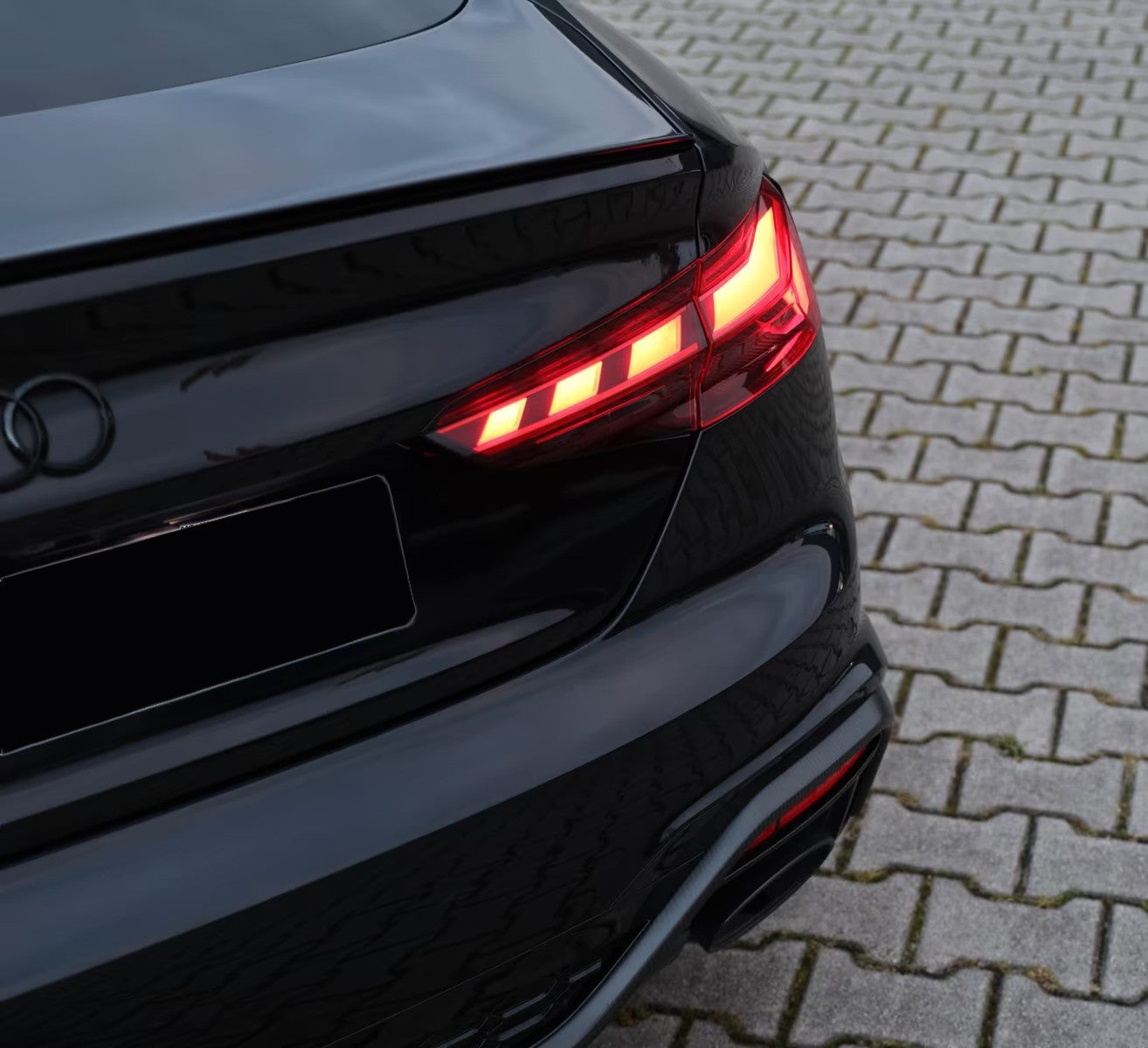


The Audi Q8 4M is the brand's flagship SUV coupe, combining the practicality of a large premium SUV with the sleek roofline and aggressive styling of a coupe. Launched in 2018, it sits at the very top of Audi's SUV lineup, positioned directly against the BMW X6 and Mercedes-Benz GLE Coupe. With a price tag to match its ambitions, the Q8 attracted buyers looking for a daily driver that doubles as a statement piece.
But what happens when that statement piece starts racking up miles and the warranty expires? The Audi Q8 reliability picture is more nuanced than the showroom brochure suggests. From mild-hybrid electrical gremlins to air suspension failures and software headaches, there are real ownership risks to understand before handing over a significant sum for a used example.
This guide covers everything you need to know: engine variants, known reliability issues by powertrain, maintenance costs, and the parts most likely to need attention. Whether you are shopping for a used Q8 or already own one, this is your essential reference.
Parts & Accessories
Your Audi Q8 4M deserves better.
Hand-picked performance and replacement parts — ready to ship.
Shop Audi Q8 4M parts →History and Versions
The Audi Q8 4M entered production in 2018 and received a significant facelift in 2024, refining the exterior design, updating the MMI infotainment interface, and revising the mild-hybrid system across the range. Built on the MLB Evo platform — shared with the Audi Q7 4M, Porsche Cayenne, and Lamborghini Urus — it offers a strong engineering foundation. The Q8 was sold with a focused range of turbocharged petrol and diesel engines, all paired with a ZF eight-speed automatic transmission and standard Quattro all-wheel drive.
The high-performance SQ8 and RS Q8 variants were introduced shortly after the standard model, broadening the lineup significantly.
| Engine | Displacement | Power | Torque | 0-60 mph | Notes |
|---|---|---|---|---|---|
| 55 TFSI (DETA) | 3.0L V6 turbocharged petrol | 335 hp | 369 lb-ft | 5.6 sec | 48V mild hybrid, standard Q8 |
| 45 TDI (CRTE) | 3.0L V6 turbodiesel | 228 hp | 442 lb-ft | 7.1 sec | 48V mild hybrid, discontinued in US |
| 50 TDI (CRTE) | 3.0L V6 turbodiesel | 282 hp | 457 lb-ft | 6.3 sec | 48V mild hybrid, most common diesel |
| SQ8 TFSI (DOHB) | 4.0L V8 twin-turbo petrol | 500 hp | 568 lb-ft | 4.1 sec | 48V mild hybrid, sport flagship |
| SQ8 TDI (CRTE) | 4.0L V8 tri-turbo diesel | 429 hp | 664 lb-ft | 4.8 sec | Electric compressor, limited US availability |
| RS Q8 (DOHB) | 4.0L V8 twin-turbo petrol | 591 hp | 590 lb-ft | 3.7 sec | Shares engine with Lamborghini Urus |
How to Check a Used Audi Q8's History
Before buying a used Audi Q8, it is essential to ensure full transparency about its past. Undisclosed accidents can hide poor-quality repairs that directly compromise the safety of the driver and passengers.
On a large premium SUV like the Q8, the risks are particularly significant. A previous collision may have caused misaligned body panels on the complex frameless door seals, left airbag control modules unreplaced after a deployment event, or resulted in hastily repaired air suspension components that will fail without warning. The 48V mild-hybrid system adds another layer of complexity: damaged battery packs or improperly repaired electrical harnesses are almost impossible to detect without a full diagnostic scan and a comprehensive vehicle history. It is therefore strongly recommended to check the vehicle's complete history using its license plate or VIN number before making any purchase decision.
Get an instant 20% discount to access a vehicle's full past with total transparency via carVertical by clicking this link or on the banner below:

Key Strengths
The Audi Q8 4M makes a compelling case as a used buy, provided you buy the right example.
The MLB Evo platform is one of the most refined SUV architectures in the industry, delivering a blend of ride quality, handling precision, and long-distance comfort that few rivals can match. The standard Quattro all-wheel drive system is supremely capable and has a strong reliability track record across the entire Audi lineup.
The ZF 8HP automatic gearbox fitted to all Q8 variants is widely regarded as one of the best units ever made — smooth, durable, and capable of handling high torque figures without complaint when properly serviced.
The interior build quality is genuinely excellent. The Q8's cabin uses high-grade materials throughout and the virtual cockpit and MMI touch response dual-screen system feel premium even several years after launch.
Finally, the Q8 holds its value relatively well compared to rivals, and the parts ecosystem — shared with the Q7, A8, and Porsche Cayenne — means replacement components are widely available.
Known Reliability Issues
55 TFSI — DETA (3.0L V6 Petrol)
48V mild-hybrid belt-alternator-starter (BAS) failure The mild-hybrid system's integrated starter-generator is one of the most reported issues on early Q8 55 TFSI models. Symptoms include rough engine start-stop cycling, warning lights, and reduced fuel economy. Severity: Moderate. Typically appears between 40,000 and 70,000 miles.
Carbon buildup on intake valves As a direct-injection engine, the DETA accumulates carbon deposits on the intake valves over time. Symptoms include rough idle, misfires, and a loss of power. Severity: Moderate. Most commonly reported after 60,000 miles.
Oil consumption Some DETA engines consume oil at a higher-than-expected rate. Owners should check levels every 3,000 to 5,000 miles rather than waiting for the service interval. Severity: Minor to Moderate. Can appear from 30,000 miles onward.
Coolant system leaks The plastic coolant pipe fittings and water pump housing on the 3.0L V6 are known weak points. A soft hose or weeping connector can escalate into overheating if ignored. Severity: Moderate. Typically appears between 50,000 and 80,000 miles.
SQ8 TFSI and RS Q8 — DOHB (4.0L V8 Twin-Turbo Petrol)
Turbocharger oil feed line leaks The twin-scroll turbochargers on the DOHB engine can develop oil leaks at the feed line banjo fittings. Left unattended, this causes oil smoke under hard acceleration and risks turbo damage. Severity: Critical. Often appears after 50,000 miles.
Timing system wear The V8's timing chain and tensioners have been flagged on higher-mileage examples. A rattling noise on cold start is the primary symptom. This is a labor-intensive repair given the engine's packaging. Severity: Critical. Typically develops after 80,000 miles.
48V lithium-ion battery degradation The mild-hybrid battery pack on the SQ8 TFSI is mounted under the rear cargo floor. Capacity fade causes reduced energy recuperation and extended periods of direct engine charging, increasing fuel consumption. Severity: Moderate. Most common after 60,000 to 80,000 miles.
High-pressure fuel pump (HPFP) noise A ticking or hammering noise from the fuel pump area is a known complaint on the DOHB V8, especially during cold starts. Many owners report it as cosmetic, but it can indicate premature pump wear. Severity: Minor to Moderate.
50 TDI and SQ8 TDI — CRTE (3.0L and 4.0L V6/V8 Diesel)
EGR valve and cooler fouling The EGR system on the 3.0L and 4.0L diesel variants is prone to soot accumulation, which causes rough running, reduced power, and increased smoke. Regular cleaning is essential. Severity: Moderate. Typically appears between 60,000 and 90,000 miles.
DPF regeneration issues The diesel particulate filter can struggle to complete passive regeneration cycles on urban driving. Clogging leads to limp mode and expensive forced regenerations or replacements. Severity: Moderate to Critical. More common in vehicles with frequent short trips.
Swirl flap actuator failure The intake manifold swirl flaps on both diesel variants are a known failure point. Broken flaps can enter the engine and cause catastrophic damage. Severity: Critical. Usually detected between 70,000 and 100,000 miles if not proactively replaced.
Chassis Issues
Air suspension compressor failure The optional adaptive air suspension — standard on many Q8 trim levels — relies on a compressor that is susceptible to moisture ingress and premature wear. The vehicle sags on one corner or fails to rise from the lowered position. Severity: Moderate to Critical. Common from 60,000 miles onward.
Front control arm bushings The front upper and lower control arm bushings deteriorate with age and mileage, causing vague steering and knocking over bumps. This is a shared concern with the Q7 4M platform. Severity: Minor to Moderate. Typically at 50,000 to 80,000 miles.
Rear differential bushings The rear differential carrier bushings can develop play, resulting in clunking during acceleration or deceleration. Severity: Minor. Usually appears after 70,000 miles.
Electronics and Software
MMI touch response screen delamination and glitching The dual touchscreen MMI system is prone to screen delamination on early units, with ghost inputs and unresponsive zones reported across the community. Severity: Minor to Moderate.
Virtual cockpit display faults Flickering, partial blackouts, and pixel degradation on the 12.3-inch digital instrument cluster have been reported, often related to loose ribbon connectors. Severity: Minor.
48V system warning lights (false positives) The mild-hybrid management software on early Q8 models frequently triggers false warning lights related to the belt-starter-generator and recuperation system. Many are resolved by software updates, but some require hardware replacement. Severity: Minor to Moderate.
Maintenance and Servicing
Audi specifies oil change intervals of up to 10,000 miles on the Q8 range, but most experienced mechanics recommend shortening this to 7,500 miles for V8 variants and any turbocharged diesel, given the high thermal loads involved.
The ZF 8HP automatic transmission is factory-filled for life, but a fluid change every 60,000 to 80,000 miles is strongly advised to protect the clutch packs and valve body.
Air suspension service involves inspecting the compressor, air lines, and ride-height sensors at every major service interval. Budget for an eventual compressor replacement — a genuine Audi unit costs between $800 and $1,200, with labor on top.
Spark plugs on the petrol variants should be replaced every 40,000 miles to maintain ignition efficiency and reduce coil stress.
Brake fluid should be changed every 2 years regardless of mileage, given the Q8's size and the heat generated during repeated heavy braking.
Typical annual service costs for the Q8 at an independent specialist range from $400 to $700 for a standard oil service, rising to $1,500 to $2,500 for a major service including filters, spark plugs, and fluid changes.
Parts to Watch / Replace First
Air suspension compressor — The most common mechanical failure on high-mileage Q8s. Replace proactively if the vehicle has over 70,000 miles and no service record for this component.
Intake manifold swirl flaps (diesel) — Critical on both the 3.0L and 4.0L TDI. Failure can cause catastrophic engine damage. Replacement with updated metal-bodied units is strongly recommended.
EGR valve and cooler (diesel) — Heavy soot deposits accumulate over time. Cleaning or replacement restores throttle response and reduces smoke.
48V belt-alternator-starter unit — The heart of the mild-hybrid system. Worn units cause rough starts and reduced recuperation. Check for diagnostic fault codes before purchase.
Coolant hoses and water pump housing (V6 petrol) — Plastic fittings become brittle with heat cycling. Inspect all connections carefully on any example over 60,000 miles.
Front control arm bushings — Worn bushings are a common cause of vague steering and MOT/inspection failures. Polyurethane upgrade bushings are a cost-effective alternative to OEM rubber.
Spark plugs and ignition coils (V6 and V8 petrol) — Ageing plugs accelerate coil wear. Replace as a set to avoid misfires and potential catalytic converter damage.
Cabin air filter and pollen filter — Often neglected on luxury SUVs. A blocked filter reduces HVAC efficiency and can cause blower motor strain.
FAQ
Is the Audi Q8 reliable?
The Audi Q8 is broadly reliable for a vehicle of its complexity, but it is not without issues. The 48V mild-hybrid system, air suspension, and diesel EGR components are the most common problem areas. A well-maintained example with a full service history is a solid used buy.
What is the best engine option for the Audi Q8?
For most buyers in the US market, the 55 TFSI (3.0L V6 petrol) offers the best balance of performance, running costs, and long-term reliability. The RS Q8 is spectacular but brings significantly higher maintenance and repair costs. Diesel variants are best avoided for urban or short-trip driving due to DPF-related complications.
How many miles will an Audi Q8 last?
A well-maintained Audi Q8 can realistically reach 150,000 to 200,000 miles before requiring major mechanical work. The ZF gearbox and Quattro drivetrain are durable, but the air suspension, hybrid components, and engine ancillaries will need attention along the way.
Is the Audi Q8 expensive to maintain?
Yes, relative to mainstream SUVs. Annual maintenance costs typically run between $900 and $2,000 depending on the variant and what needs addressing. Air suspension repairs, turbocharger work on V8 models, and 48V system replacements are the most costly items to budget for.
Which Audi Q8 years should I avoid?
Early 2019 and 2020 model year examples are most likely to carry unresolved software bugs in the MMI and mild-hybrid systems. Pre-facelift models built before mid-2020 may also have earlier-generation swirl flap designs on diesel variants. Always verify that any outstanding Audi technical service bulletins have been addressed.
Does the Audi Q8 share parts with the Q7?
Yes, significantly. The Q8 and Audi Q7 4M share the MLB Evo platform, meaning many suspension components, drivetrain parts, and electronic modules are interchangeable. This makes parts sourcing easier and can reduce repair costs when using specialist suppliers.
What is the difference between the Q8 and the SQ8?
The SQ8 uses a larger 4.0L V8 engine in either petrol twin-turbo or diesel tri-turbo form, along with uprated brakes, sportier suspension tuning, and a more aggressive exterior package. It is significantly faster but also more expensive to service and repair than the standard 55 TFSI.
Conclusion
The Audi Q8 4M earns a reliability score of 7 out of 10. It is a genuinely impressive vehicle built on a strong platform, but its complexity — particularly around the 48V mild-hybrid system, adaptive air suspension, and diesel emissions hardware — demands diligent maintenance and a thorough pre-purchase inspection. Buy a clean, well-documented example and the Q8 will reward you with years of effortless, comfortable driving. Neglect it, and repair bills can escalate quickly. Browse our catalog for quality Q8 replacement parts to keep your vehicle in top condition.