

The Mercedes-Benz C-Class W206 represents the fifth generation of one of the brand's most enduring nameplates. Launched in 2021 and still in production, the W206 competes directly with the BMW 3 Series and Audi A4 in the premium compact sedan segment. It builds on the solid foundations of its predecessor, the W205, while introducing a dramatically overhauled interior, a fully digital dashboard, and a comprehensive shift toward mild-hybrid and plug-in hybrid powertrains.
For buyers considering a used W206, the questions are real: Are the new turbocharged four-cylinder engines dependable? How does the tech-heavy interior hold up over time? Are the 48V mild-hybrid systems a long-term liability?
This guide answers those questions in full, covering every engine variant, known reliability issues, maintenance costs, and the parts most likely to need attention. Whether you are buying your first C-Class or upgrading from an older generation, read on before you sign anything.
Parts & Accessories
Your Mercedes-Benz Classe C W206 deserves better.
Hand-picked performance and replacement parts — ready to ship.
Shop Mercedes-Benz Classe C W206 parts →History and Versions
The W206 debuted at the Geneva Motor Show in early 2021 and went on sale in the United States later that year. It replaced the W205, which had a successful nine-year run. The W206 is offered in sedan (W206) and estate/wagon (S206) body styles, with the AMG Line and the full-fat C 43 and C 63 performance variants rounding out the range.
All W206 models come standard with a 48V integrated starter-generator (ISG) mild-hybrid system, and plug-in hybrid variants (C 300 e / C 300 de) offer substantial all-electric range. The AMG C 63 controversially ditched its V8 in favor of a turbocharged 2.0L four-cylinder with an electric motor, drawing significant attention from enthusiasts.
| Engine | Displacement | Power | Torque | 0-60 mph | Notes |
|---|---|---|---|---|---|
| C 180 — M254 | 1.5L turbo I4 + 48V | 170 hp | 221 lb-ft | ~8.0s | Entry-level, mild hybrid |
| C 200 — M254 | 1.5L turbo I4 + 48V | 204 hp | 295 lb-ft | ~7.0s | Most popular petrol variant |
| C 300 — M254 | 2.0L turbo I4 + 48V | 258 hp | 295 lb-ft | ~5.9s | Best naturally-aspirated feel |
| C 300 e — M254 PHEV | 2.0L turbo I4 + electric | 313 hp | 413 lb-ft | ~5.6s | Plug-in hybrid, 62+ mi EV range |
| C 220 d — OM654 | 2.0L turbo I4 diesel | 200 hp | 332 lb-ft | ~7.1s | Efficient diesel, Europe-focused |
| C 300 d — OM654 | 2.0L turbo I4 diesel | 265 hp | 443 lb-ft | ~5.7s | Strong diesel performer |
| C 300 de — OM654 PHEV | 2.0L diesel + electric | 313 hp | 516 lb-ft | ~5.6s | Diesel plug-in hybrid |
| AMG C 43 — M254 AMG | 2.0L turbo I4 + 48V | 402 hp | 369 lb-ft | ~3.7s | All-wheel drive standard |
| AMG C 63 S e — M139l | 2.0L turbo I4 + electric | 671 hp | 752 lb-ft | ~3.4s | Hybrid AMG, most complex |
How to Check a Used Mercedes-Benz C-Class W206's History
Before buying a used Mercedes-Benz C-Class W206, it is essential to ensure full transparency about its past. Undisclosed accidents can hide poor-quality repairs that directly compromise the safety of the driver and passengers.
The W206's construction — with its aluminum-intensive front structure and complex 48V electrical architecture — makes collision damage especially difficult to spot without a professional inspection. Misaligned front bodywork can point to a repaired subframe, while unreplaced side curtain airbags or a poorly reset restraint control module can leave occupants unprotected in a subsequent accident. Hastily repaired suspension components, particularly the front multilink arms and rear multilink geometry, can also go undetected yet seriously compromise handling and tire wear. It is therefore strongly recommended to check the vehicle's complete history using its license plate or VIN number before making any purchase decision.
Get an instant 20% discount to access a vehicle's full past with total transparency via carVertical by clicking this link or on the banner below:

Key Strengths
The W206 C-Class raises the bar for what a compact luxury sedan can offer at its price point.
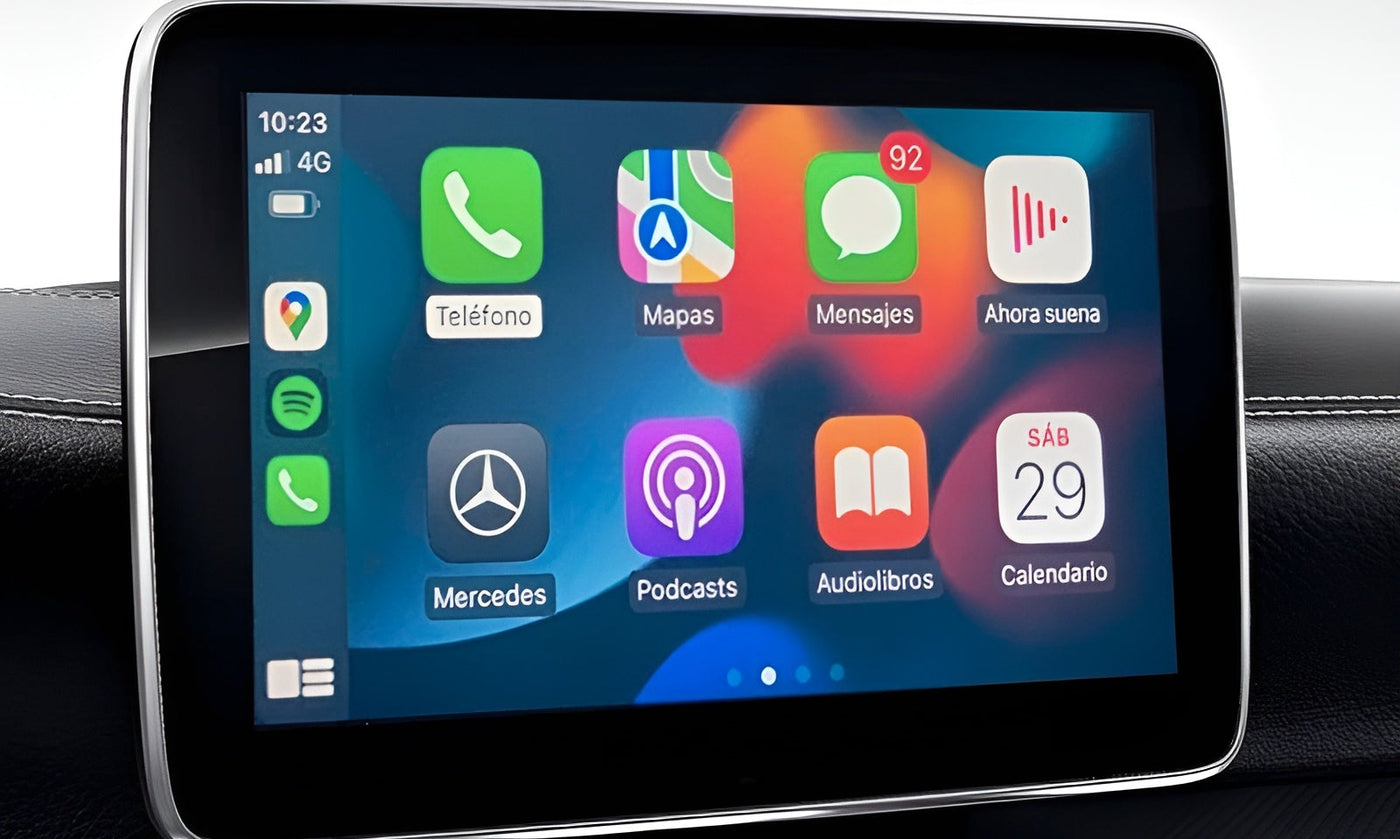
The interior is a genuine highlight: the 11.9-inch portrait touchscreen and fully digital instrument cluster deliver an experience that rivals much more expensive cars. Build quality feels a step above the W205 in most areas, with better-fitting soft-touch surfaces and more premium detailing.
The M254 engine family represents a clean-sheet design with modern variable geometry turbocharging and direct injection. Early reports suggest it is more robust than the earlier M274, which had a troubled reputation.
Ride quality on the standard suspension is genuinely refined, and the optional E-Active Body Control air suspension transforms the car into a segment benchmark. Safety technology — including the latest Mercedes-Benz Driver Assistance Package — is among the best available in class.
For buyers in the US market, the C 300 with its 258 hp 2.0L mild-hybrid offers an appealing combination of performance, fuel economy, and a realistic total cost of ownership. Residual values also remain strong, making the W206 a sensible financial proposition.
Known Reliability Issues
C 180 / C 200 / C 300 — M254 (1.5L and 2.0L Mild Hybrid)
The M254 is Mercedes-Benz's newest generation of four-cylinder petrol engines, introduced alongside the W206. It is paired with a 48V belt-driven integrated starter-generator (ISG) on all variants. The engine is still relatively young, but patterns are beginning to emerge in owner forums and workshop reports.
48V ISG belt wear — The integrated starter-generator belt operates under higher loads than a conventional accessory belt. Early cases of belt slip and premature wear have been reported, typically appearing between 30,000 and 50,000 miles. Severity: Moderate.
EGR cooler deposits — Carbon buildup in the EGR circuit has been flagged on higher-mileage C 200 and C 300 examples, causing rough idle and hesitation under light throttle. Typically noticed after 40,000 miles. Severity: Moderate.
48V lithium-ion battery degradation — The auxiliary 48V battery that powers the mild-hybrid system can show capacity loss on early production examples, triggering auto start-stop faults and reduced energy recuperation. Most common after 50,000 miles or in warm climates. Severity: Moderate.
Oil consumption — Some M254 engines have shown elevated oil consumption, reportedly related to piston ring seating on early builds. Check the dipstick at every visit and keep records. Severity: Moderate, watch closely.
C 300 e / AMG C 43 — M254 PHEV / AMG Variant
Plug-in hybrid high-voltage battery cooling — The C 300 e's battery thermal management system relies on a dedicated cooling loop. If coolant service is neglected, reduced battery cooling efficiency can accelerate cell degradation. Severity: Moderate, typically after 60,000 miles.
AMG C 43 turbocharger heat soak — The 402 hp AMG C 43 pushes the M254 architecture hard. Owners have reported turbocharger heat soak symptoms under track-style driving, with a noticeable reduction in boost pressure after sustained hard acceleration. This is less of a concern in normal use. Severity: Minor to Moderate.
Charge port door actuator failures — On plug-in hybrid variants, the charge port flap motor has failed on some early examples, leaving the port stuck open or closed. Severity: Minor. Fix is a straightforward actuator replacement.
AMG C 63 S e Performance — M139l (2.0L + Electric)
The new AMG C 63 is the most complex variant by a significant margin. Its combination of a 204 hp electric rear axle motor, a 400V battery pack, and the high-output M139l four-cylinder creates an unprecedented level of system interaction.
Rear electric axle software calibration — Early build software caused jerky torque vectoring transitions between combustion and electric drive modes. Mercedes issued over-the-air and dealer software updates, but some pre-update cars still exhibit rough transitions. Severity: Minor to Moderate, fixable via software.
High-voltage battery warranty claims — Several US owners have reported reduced EV range inside the first two years of ownership, suggesting early cell degradation in the C 63's performance-oriented battery pack. Severity: Moderate, watch closely on early 2022-2023 examples.
Exhaust system heat shielding — The C 63's compact packaging routes the exhaust close to several plastic underbody components. Heat shield rattle and minor deformation of adjacent covers have been noted after 20,000-30,000 miles. Severity: Minor.
Chassis Issues
Front multilink arm bushings — The W206 uses a sophisticated multilink front suspension that delivers excellent handling but introduces more bushing wear points than a simpler strut setup. Soft rubber bushings in the lower control arms show early wear on cars used on rougher road surfaces, typically by 40,000-60,000 miles. Severity: Moderate.
Rear subframe mount rubber isolators — A known trait of the W206's rear suspension architecture is that the subframe isolation mounts can transmit increased road noise and micro-vibrations when they begin to degrade. Severity: Minor to Moderate, usually after 60,000 miles.
Brake dust shield corrosion — In US markets with road salt usage, the steel brake dust shields on all four corners are prone to surface rust and eventual perforation by 30,000-40,000 miles on cars in northern states. Severity: Minor but aesthetically unpleasant.
Electronics and Software
MBUX infotainment system freezes — The W206's Mercedes-Benz User Experience (MBUX) second-generation system is powerful but occasionally prone to screen freezes and unresponsive touch inputs, particularly after cold starts. Most cases are resolved by dealer software updates. Severity: Minor.
Ambient lighting module faults — The elaborate 64-color ambient lighting system has produced scattered reports of individual LED zones failing, typically in the door panels. Severity: Minor.
OTA update failures — Over-the-air updates have occasionally failed mid-process on early cars, requiring a dealer visit to reinstate the correct software version. Severity: Minor but inconvenient.
Maintenance and Servicing
The W206 follows Mercedes-Benz's ASSYST Plus service interval system, which calculates service intervals based on driving style and conditions rather than fixed mileage. In practice, oil change intervals typically fall between 8,000 and 10,000 miles with approved 0W-20 or 0W-40 fully synthetic oil.
The 9-speed 9G-Tronic automatic transmission does not have a specified fluid change interval from the factory, but independent specialists recommend a transmission fluid service every 40,000 to 50,000 miles to preserve longevity.
For C 300 e and C 300 de plug-in hybrid models, the brake fluid should be checked annually given the reduced use of friction braking, which can lead to moisture absorption in the hydraulic circuit.
Typical service costs in the US market:
- Oil and filter service: $180–$280 at a dealer, $100–$160 at an independent specialist
- Spark plugs (M254): $200–$350 all four, typically every 40,000 miles
- Brake fluid flush: $80–$130
- Air filter: $60–$100
- 48V ISG belt inspection/replacement: $250–$450
Mercedes-Benz Pre-Paid Maintenance plans are available at purchase and can offer meaningful savings on the first two scheduled services.
Parts to Watch / Replace First
48V ISG drive belt — The belt connecting the integrated starter-generator to the crankshaft is under significant load. Inspect at every oil change and replace proactively at the first sign of wear or glazing.
Engine air filter — The M254's turbocharged induction is sensitive to airflow restriction. Replace on schedule, typically every 20,000 miles in dusty environments.
Cabin air/pollen filter — The W206's HVAC system is excellent, but a clogged pollen filter can strain the blower motor over time. Replace annually or every 15,000 miles.
Spark plugs — The M254 uses iridium spark plugs that have a long service life, but neglecting them past 40,000–50,000 miles can cause misfires and increased fuel consumption.
Brake fluid — Particularly important on plug-in hybrid models where regenerative braking reduces hydraulic brake usage and accelerates moisture contamination.
Front lower control arm bushings — These are the first chassis consumables to degrade on higher-mileage W206 examples. Replacing them as a set restores the precise steering feel the car is known for.
Coolant expansion tank cap — A common weak point on many modern Mercedes-Benz models; a failing cap can cause pressure loss and spurious cooling system warnings.
FAQ
Is the Mercedes-Benz C-Class W206 reliable?
The W206 is a relatively young platform with a generally positive reliability record so far. The M254 engine appears more robust than the M274 it effectively succeeds, and early issues are largely software-related rather than mechanical. It is too early for a definitive long-term verdict, but initial signs are encouraging.
What is the best engine option in the W206?
For most US buyers, the C 300 with the 2.0L M254 mild hybrid offers the best balance of performance, efficiency, and relative mechanical simplicity. If running costs are the priority, the C 300 e plug-in hybrid delivers excellent real-world economy for buyers who can charge regularly.
How many miles will a Mercedes-Benz C-Class W206 last?
With proper maintenance, a W206 should comfortably reach 150,000 to 200,000 miles. The 9G-Tronic transmission is well-proven, and the M254 engine is engineered for long service life. The 48V hybrid components are the biggest unknown for high-mileage longevity, though Mercedes covers them under warranty for the first few years.
Is the Mercedes-Benz C-Class W206 expensive to maintain?
It is more expensive than a mainstream sedan but broadly in line with its German competitors. Dealer service costs are higher than independent workshops, and the 48V mild-hybrid system introduces components not present on older C-Class models. Budget approximately $1,000–$1,500 per year for routine maintenance on a well-kept example.
What should I avoid when buying a used W206?
Avoid early 2022 build examples with unverified software update histories, as several known issues — including MBUX instability and ISG calibration faults — were addressed via updates. Always verify that all OTA and dealer software updates have been applied. For plug-in hybrid models, request a battery health report before purchase.
Is the AMG C 63 S e Performance worth buying used?
The AMG C 63 S e is the most technically ambitious C-Class ever built, but also the most complex. It is best purchased close to the end of its manufacturer warranty period with a comprehensive extended warranty in place. The combination of a high-output M139l engine and a 400V electric drive system creates significant repair costs if something goes wrong outside of warranty.
Conclusion
The Mercedes-Benz C-Class W206 earns a reliability score of 7.5 out of 10 for a used purchase. It is a genuinely impressive machine with a cutting-edge interior, refined driving dynamics, and an electrified powertrain lineup that points toward the future. Known issues are real but manageable, and most are software-related rather than catastrophic mechanical failures.
As the platform matures and higher-mileage examples enter the used market, the long-term durability of its 48V systems and M254 engines will become clearer. For now, a well-serviced W206 with a verified history represents one of the strongest choices in its segment. Browse our catalog for quality replacement and maintenance parts to keep your W206 running at its best.