

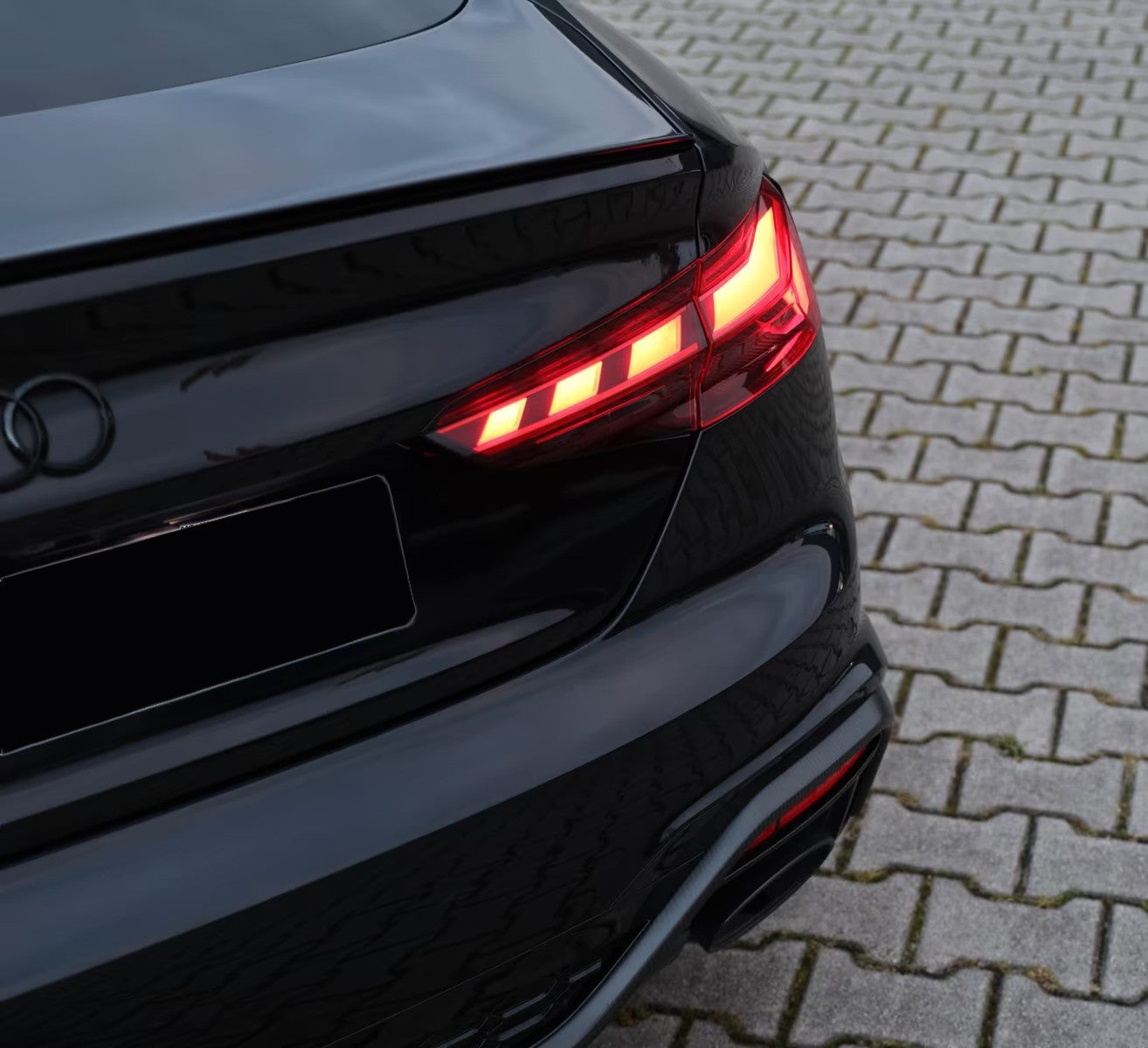


The Audi A1 GB is the second generation of Audi's premium subcompact hatchback, launched in 2018 as a complete redesign over the original 8X platform. Built on the Volkswagen Group's MQB A0 architecture, the GB takes everything the first generation established and sharpens it — more technology, more refinement, and a bolder design direction.
In the US market, the A1 GB was not officially sold, but a growing number of enthusiasts and importers have brought examples stateside, making this guide increasingly relevant for buyers shopping in the used European import segment.
What makes the A1 GB interesting is its positioning: it delivers a genuinely premium interior experience, sharp turbocharged engines, and solid build quality in a compact package. But like any modern car packed with electronics and turbocharged powerplants, it has its share of known weaknesses.
Whether you are considering an import purchase or simply want to understand what you are getting into, this guide covers everything — from engine-specific issues to maintenance costs and the best versions to target.
Parts & Accessories
Your Audi A1 GB deserves better.
Hand-picked performance and replacement parts — ready to ship.
Shop Audi A1 GB parts →History and Versions
The Audi A1 GB entered production in 2018 and continues to the present day. It replaced the first-generation 8X, which ran from 2010 to 2018. The GB is sold exclusively as a 5-door Sportback — Audi dropped the 3-door and cabriolet body styles from the lineup.
Powertrain options span a range of three-cylinder and four-cylinder turbocharged engines, all shared with the broader Volkswagen Group (VW Polo, SEAT Ibiza, SEAT Arona, Skoda Fabia). The flagship S1 nameplate was discontinued for this generation, a decision that disappointed many enthusiasts.
Trim levels include S line, Edition 1, and various market-specific configurations, with the 25 TFSI, 30 TFSI, 35 TFSI, and 40 TFSI being the primary engine designations.
| Engine | Displacement | Power | Torque | 0-60 mph | Notes |
|---|---|---|---|---|---|
| 25 TFSI (DKJA) | 1.0L 3-cyl turbo | 95 hp | 129 lb-ft | ~11.5 sec | Entry level, manual only |
| 30 TFSI (CHZB/DKLA) | 1.0L 3-cyl turbo | 116 hp | 148 lb-ft | ~9.5 sec | Most popular variant |
| 35 TFSI (DKRF) | 1.5L 4-cyl turbo | 150 hp | 184 lb-ft | ~7.9 sec | Best all-rounder |
| 40 TFSI (DKZA) | 2.0L 4-cyl turbo | 200 hp | 236 lb-ft | ~6.4 sec | S line exclusive, DSG only |
How to Check a Used Audi A1 GB's History
Before buying a used Audi A1 GB, it is essential to ensure full transparency about its past. Undisclosed accidents can hide poor-quality repairs that directly compromise the safety of the driver and passengers.
The A1 GB's compact dimensions make it popular in urban environments, where low-speed parking impacts and minor collisions are extremely common. Risks invisible to the naked eye on this model include misaligned front bumper carriers from parking impacts, unreplaced curtain airbags after side impacts, and hastily repaired front subframe mounting points — an area particularly vulnerable on the MQB A0 platform due to its compact geometry. It is therefore strongly recommended to check the vehicle's complete history using its license plate or VIN number before making any purchase decision.
Get an instant 20% discount to access a vehicle's full past with total transparency via carVertical by clicking this link or on the banner below:

Key Strengths
The Audi A1 GB punches well above its weight in several areas that matter to used car buyers.
Interior quality is the headline achievement. The virtual cockpit display, MIB3 infotainment system, and material quality feel closer to a much larger Audi than the car's footprint would suggest. Resale values remain strong, which is a reliable indicator of overall market confidence in the model.
The 1.5 TFSI (35 TFSI) engine is widely regarded as the sweet spot in the range — responsive, fuel-efficient, and far more refined than the three-cylinder units. It also benefits from cylinder deactivation technology (ACT), which improves real-world fuel economy noticeably in highway conditions.
Build quality on the MQB A0 platform is generally solid, with tight panel gaps, well-sealed doors, and minimal water ingress complaints compared to the 8X generation. DSG gearboxes available from the 30 TFSI upward add convenience without significantly impacting long-term reliability.
The A1 GB is also a low-cost car to insure in most markets, and OEM-quality parts remain widely available and reasonably priced through the VW Group parts network.
Known Reliability Issues
25 TFSI / 30 TFSI — 1.0L Three-Cylinder (EA211 evo: DKLA / CHZB / DKRF depending on market)
Timing chain stretch (not tensioner failure as primary issue)
The 1.0 TFSI EA211 evo uses a timing chain system located at the gearbox side. Unlike older EA111 engines, the issue is less about sudden tensioner collapse and more about gradual chain elongation and guide wear over very high mileage or poor oil maintenance. Cold-start rattling can appear if oil changes are neglected or incorrect specification oil is used. Severity: Moderate to Critical if ignored. Typical mileage: 70,000–120,000 miles.
Oil consumption at higher mileage
Some high-mileage EA211 evo engines can show increased oil consumption, generally linked to piston ring wear or extended service intervals rather than a systemic design flaw. This is less common than on older EA888 Gen 1/2 engines. Severity: Moderate. Typically after 60,000–100,000 miles.
Ignition coil and misfire sensitivity
Coil packs and spark plugs are a known maintenance item on small turbocharged three-cylinders. Misfires under load or damp conditions are typically coil-related rather than internal engine faults. Severity: Minor. From ~40,000 miles onward.
35 TFSI — 1.5L Four-Cylinder (EA211 evo: DKRF / DADA depending on market)
“Hesitation” linked to ACT (cylinder deactivation) and low-load calibration
The 1.5 TFSI uses ACT (Active Cylinder Technology). Some drivers report hesitation or uneven response during cylinder reactivation at low throttle. This is primarily software calibration rather than mechanical failure and has been improved via ECU updates over production years. Severity: Minor.
Cold-start “kangarooing” / low-speed surging (early EA211 evo behavior)
Early calibrations of the 1.5 TFSI were known for low-speed drivability hesitation, particularly when cold. This is not a mechanical defect and is generally resolved with software updates. Severity: Minor.
Cooling system plastic junction leaks
Like most modern VW Group engines, plastic coolant fittings and thermostat housings can develop minor leaks over time. This is not specific to the 1.5 but is one of the more common repair items. Severity: Moderate. Typically 40,000–80,000 miles.
40 TFSI — 2.0L Four-Cylinder (EA888 Gen 3B: DKZA / DKNB depending on market)
Water pump and thermostat module leakage
The integrated plastic water pump/thermostat housing is a known wear item on EA888 Gen 3 engines. Coolant seepage or sudden loss can occur without warning. Severity: Critical if overheating occurs. Typically 50,000–90,000 miles.
Carbon buildup on intake valves
As with all direct-injection EA888 engines, intake valve carbon deposits accumulate over time due to lack of fuel wash. This can cause rough idle and reduced throttle response. Severity: Moderate. Typically 50,000–80,000 miles.
Turbocharger bypass/diverter valve wear
The electronic diverter valve can degrade and cause inconsistent boost delivery or slight hesitation under load. This is a known VW Group component wear item. Severity: Minor to Moderate. Typically 40,000–70,000 miles.
2.0 TDI — EA288 (CRKA / CRLB / similar family variants depending on market)
EGR valve and intake clogging
EGR soot buildup remains one of the most common long-term issues on EA288 diesel engines. It can lead to rough idle, reduced efficiency, and limp mode in severe cases. Severity: Moderate. Typically 60,000–100,000 miles.
DPF (Diesel Particulate Filter) saturation in urban use
Short-trip driving prevents proper regeneration cycles, leading to soot accumulation and forced regen requirements. Severity: Moderate. Typically 50,000–90,000 miles depending on use profile.
AdBlue / SCR system faults (if equipped)
Some EA288 variants include SCR emissions systems that can develop NOx sensor or AdBlue heater faults over time. These are emissions-related but can prevent engine restart in extreme cases if ignored. Severity: Moderate to Critical (compliance-related).
2.0 TFSI S1 — EA888 Gen 3 (CWZA / similar EA888 derivatives depending on market)
High-pressure fuel pump (HPFP) wear
HPFP wear can lead to hard starting, lean running conditions, or hesitation under load. This is a known EA888 characteristic across multiple generations. Severity: Moderate. Typically 60,000–100,000 miles.
Water pump / thermostat housing failure
Same EA888 integrated module weakness as above. One of the most common cooling system repairs. Severity: Critical if overheating occurs.
Carbon buildup on intake valves
Direct injection-related deposit accumulation is present here as well and requires periodic cleaning in higher mileage engines. Severity: Moderate.
Chassis Issues
Front lower control arm bushings
A known MQB A0 wear item. Rubber degradation leads to vague steering feel, vibration under braking, and front-end clunks. Typically 50,000–80,000 miles depending on road conditions.
Front strut top mounts and bearings
Wear can produce creaking or knocking when turning at low speeds. This is a common MQB platform characteristic rather than a model defect. Typically 50,000–70,000 miles.
Electronics and Software
MIB3 infotainment glitches (GB platform-wide early production issue)
Early software versions may exhibit Bluetooth dropouts, occasional freezing, or delayed startup. Most issues are resolved via firmware updates.
Virtual cockpit / digital cluster software resets
Intermittent screen resets have been reported in early production vehicles, typically software-related rather than hardware failure.
Parking sensor and TPMS faults
Common age-related sensor issues across the VW Group MQB A0 platform. Generally inexpensive to diagnose and replace.
Maintenance and Servicing
The Audi A1 GB uses fixed or flexible service intervals depending on market coding, but real-world maintenance practice is more important than OEM intervals.
For turbocharged petrol engines, oil change intervals longer than 10,000 miles are not recommended due to turbo and timing chain lubrication sensitivity.
Recommended service intervals:
Engine oil and filter: every 7,500–10,000 miles (VW 508.00 / 504.00 depending on engine)
Air filter: every 20,000–30,000 miles
Spark plugs: every 40,000 miles
Brake fluid: every 2 years
DSG fluid (DQ200 / DQ381 depending on variant): every 40,000–60,000 miles
Coolant: inspect from 60,000 miles, replace as needed
Typical independent workshop costs (import context):
Oil service: $120–$180
Major service: $300–$500
DSG service: $250–$400
Water pump/thermostat: $600–$1,000
Control arm bushings: $250–$500
Parts to Watch / Replace First
Water pump / thermostat module — Common EA888 failure point. Monitor for coolant loss or smell.
Timing chain system (EA211 evo engines) — Not a frequent failure, but inspect for cold-start noise on high-mileage cars.
Front control arm bushings — High wear MQB A0 component affecting steering precision.
Diverter valve (EA888 engines) — Can degrade and cause inconsistent boost response.
Engine mounts (1.0 TFSI) — Wear leads to increased vibration in three-cylinder models.
EGR system (diesel models) — Carbon buildup significantly affects drivability over time.
DSG mechatronic (DQ200) — Sensitive to heat and stop-start use; fluid condition is critical.
FAQ
Is the Audi A1 GB reliable?
Yes. The A1 GB is generally reliable for a modern VW Group compact. Most issues are related to cooling system components, software calibration, and normal wear items rather than major engine design flaws.
What is the best engine option for the Audi A1 GB?
The 1.5 TFSI (35 TFSI) is the most balanced option, offering strong real-world performance and better refinement than the 1.0 TFSI units.
How many miles will an Audi A1 GB last?
With correct servicing, 150,000–180,000 miles is realistic. Cooling system maintenance and DSG servicing are key longevity factors.
Is the Audi A1 GB expensive to maintain?
Costs are moderate for a premium subcompact. Major cost exposure comes from DSG maintenance and cooling system components rather than engine failure.
Which Audi A1 GB should I avoid?
Avoid poorly serviced 1.0 TFSI examples with long oil intervals or cold-start chain noise. Also be cautious with high-usage urban cars with DSG wear symptoms.
Does the Audi A1 GB have DSG problems?
The DQ200 dry-clutch DSG can be sensitive in heavy urban use. Proper servicing and correct driving conditions significantly improve longevity.