

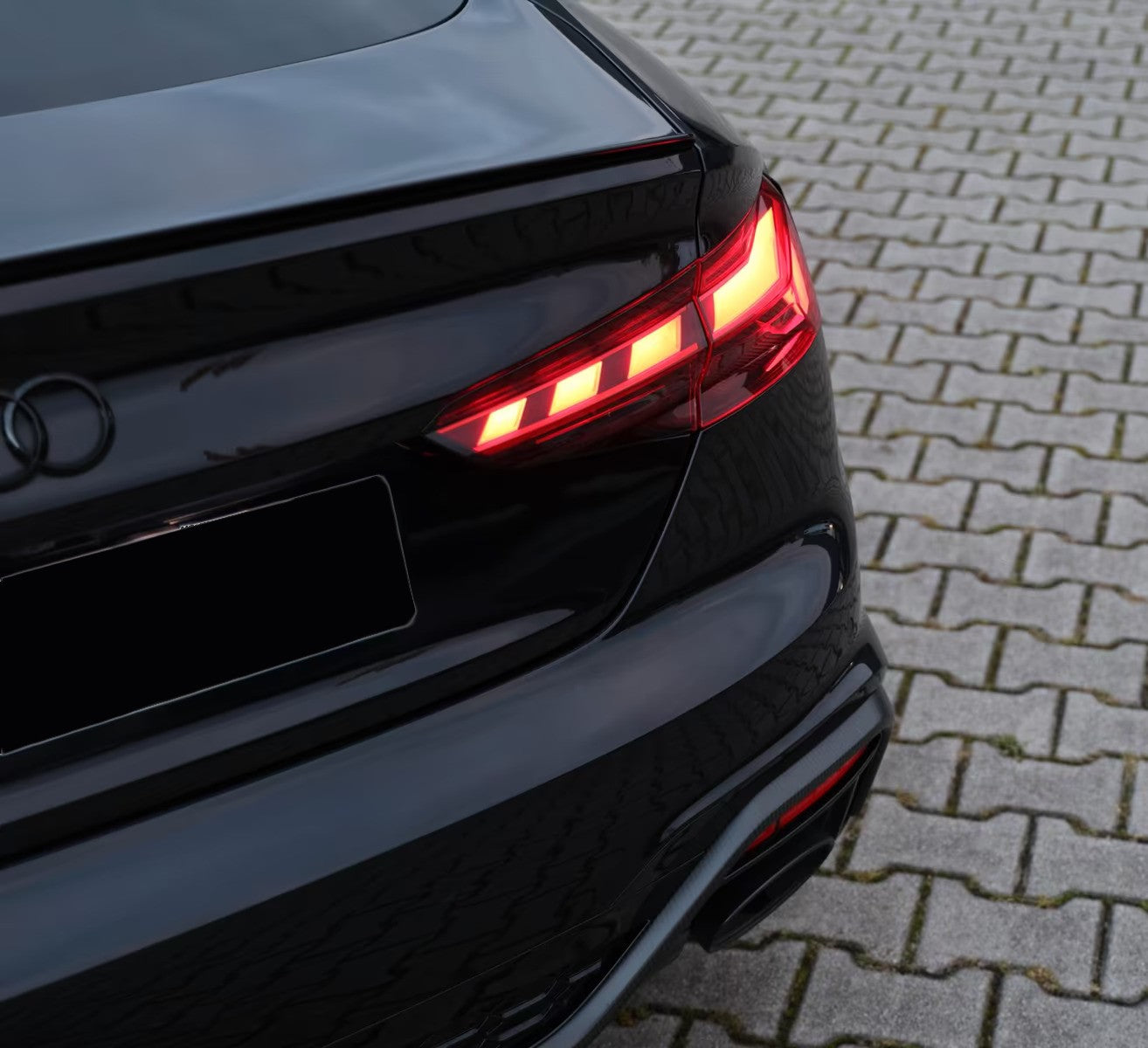


The Audi EA825 is one of the most formidable engines ever produced within the Volkswagen Group ecosystem — a 4.0 TFSI V8 biturbo that redefined what a luxury performance engine could deliver. Introduced in the early 2010s, this powerplant sits at the very top of Audi's internal combustion hierarchy, combining a sophisticated hot-V twin-turbo layout with direct injection, cylinder deactivation, and outputs that stretch well beyond 600 horsepower in factory form.
What makes the EA825 genuinely special is its reach across platforms. Beyond Audi's own S6, S7, RS6, RS7, and S8 lineup, this engine shares its architecture with Bentley's Bentayga and Continental GT, as well as the Porsche Panamera Turbo — which uses a closely related but distinct 4.0 V8 developed in parallel. This cross-brand pedigree speaks to the unit's engineering ambitions and means an exceptionally deep tuning ecosystem with proven solutions developed across multiple marques.
Whether you are shopping for a used RS6 Avant, building a high-horsepower daily driver, or simply researching before a purchase, this guide covers everything you need to know about the EA825.
Parts & Accessories
Your Audi EA825 deserves better.
Hand-picked performance and replacement parts — ready to ship.
Shop Audi EA825 parts →Specs & Versions
Base Specifications
| Specification | Detail |
|---|---|
| Type | V8 biturbo, 90-degree |
| Displacement | 4.0 liters (3,993 cc) |
| Block | Aluminum |
| Head | Aluminum, DOHC per bank |
| Valvetrain | 4 valves per cylinder, variable valve timing |
| Injection | Direct injection (early); direct + port injection (later C8-generation) |
| Production Years | 2012 — present |
CTGA / CTGB — 420 hp / 479 lb-ft
The CTGA and CTGB codes represent the S-spec tuning of the EA825, delivering a more restrained but still formidable output suited to the S6 and S7 grand touring role. These variants introduced the COD (Cylinder On Demand) cylinder deactivation system as standard.
| Model | Chassis | Years |
|---|---|---|
| Audi S6 | C7 | 2012 — 2018 |
| Audi S7 | 4G | 2012 — 2018 |
S8 D4 — 520 hp / 516 lb-ft
The S8 D4 uses a higher-output version of the EA825 producing 520 hp, distinct from the 420 hp S-spec tune found in the S6 and S7. It shares the same COD cylinder deactivation system and hot-V turbo architecture but is calibrated for the S8's flagship performance brief.
| Model | Chassis | Years |
|---|---|---|
| Audi S8 | D4 | 2012 — 2018 |
CREC / CVN — 560 hp / 516 lb-ft
The RS-spec variants push the EA825 into genuinely supercar-adjacent territory. The CREC and CVN codes are found across the RS6, RS7, and high-output S8 Plus applications, featuring higher boost pressure, revised fueling, and upgraded internals relative to the S-spec tune.
| Model | Chassis | Years |
|---|---|---|
| Audi RS6 | C7 | 2013 — 2018 |
| Audi RS7 | 4G | 2013 — 2018 |
| Audi S8 Plus | D4 | 2015 — 2018 |
DBA and C8-Generation Codes — 563–630 hp / 590 lb-ft+
The second-generation EA825 variants introduced for the C8 platform brought a fundamental upgrade: the addition of port injection alongside direct injection, directly addressing the carbon buildup problem that plagued earlier cars. Power climbs to between 563 hp and 630 hp depending on application.
| Model | Chassis | Years |
|---|---|---|
| Audi RS6 | C8 | 2019 — present |
| Audi RS7 | 4K | 2019 — present |
| Audi S8 | D5 | 2019 — present |
| Audi RS Q8 | 4M | 2019 — present |
How to check a used EA825-powered car's history
Before buying any used car equipped with the EA825, it is essential to ensure full transparency about its past. Undisclosed accidents and hidden mechanical abuse can directly compromise safety and reliability — and on a vehicle as complex as an RS6 or S8, the cost of discovering problems after purchase can be severe.
The EA825 is a popular target for aggressive tuning, and a previous owner may have run the engine at elevated boost for extended periods without disclosing this. Deferred maintenance on the timing system, high-pressure fuel pump, or cooling components can cause catastrophic failures with little warning. Carbon buildup on intake valves in direct-injection variants accelerates dramatically when oil change intervals are ignored. Rod bearing wear at very high mileage or on abused examples is also a known concern. For all of these reasons, it is strongly recommended to check the vehicle's complete history using its license plate or VIN number before any purchase decision.
Get an instant 20% discount to access a vehicle's full past with total transparency via carVertical by clicking this link or on the banner below:

Key Strengths
The EA825 earns its reputation through a combination of raw capability and engineering sophistication that few engines in production can match. The hot-V turbo layout — placing both turbines inside the V of the engine — dramatically reduces turbo lag by shortening exhaust pathways, giving the engine a throttle response that feels almost naturally aspirated at low rpm before the boost builds into something truly fierce.
Factory outputs ranging from 420 hp to 630 hp mean that even the entry-level S-spec variants qualify as performance benchmarks in their class. The cross-platform engineering shared with Bentley and the closely related Porsche architecture ensures that the EA825 benefits from development budgets that no single model line could justify alone.
Aftermarket support is exceptional. Because tuners across multiple brands have worked with the same fundamental architecture, ECU remapping solutions are mature, well-documented, and widely available. The engine's internals are robust enough to handle significant power increases without hardware modifications at Stage 1, and the community of owners and tuners across Audi, Bentley, and Porsche platforms means that solutions to every known issue are well understood. For enthusiasts who want a factory-level driving experience with room to grow, the EA825 is a compelling foundation.
Known Reliability Issues
Carbon Buildup on Intake Valves
Symptom: Rough idle, hesitation at low rpm, loss of power, misfires — typically worsening progressively over time.
Cause: The early EA825 uses direct injection only, meaning fuel never washes over the intake valves. Oil blow-by deposits accumulate on valve stems and seats without being cleaned away.
Severity: Moderate to Critical (power loss becomes significant beyond heavy buildup)
Typical Mileage: 60,000 — 100,000 miles on direct-injection-only variants
Note: The C8-generation cars with combined direct and port injection largely resolve this issue. Earlier C7 owners should budget for walnut blasting of intake valves every 60,000 — 80,000 miles.
COD (Cylinder On Demand) Solenoid Failures
Symptom: Check engine light, misfires, rough running — often appearing as a cylinder-specific fault code. The engine may drop cylinders unintentionally or refuse to reactivate all eight.
Cause: The cylinder deactivation solenoids controlling the COD system are known to fail, particularly in higher-mileage examples or those operated primarily on short trips where the system cycles frequently.
Severity: Moderate
Typical Mileage: 50,000 — 90,000 miles
Note: Solenoid replacement is the standard fix. Some owners opt to disable COD via ECU tune to eliminate the failure mode entirely, though this modestly reduces fuel economy.
Timing Chain Wear and Tensioner Failure
Symptom: Rattling or chattering from the engine on cold start, timing-related fault codes, in severe cases rough running or no-start condition.
Cause: The EA825 runs dual timing chains — one per bank — in a complex arrangement. Both chains, guides, and tensioners are subject to wear, and the service procedure is extensive. Stretched chains can cause timing deviations with serious consequences.
Severity: Critical
Typical Mileage: 80,000 — 120,000 miles on neglected examples; earlier if oil changes are deferred
Note: Regular oil changes with the correct specification are the single most effective preventive measure. Timing chain service on this engine is labor-intensive — budget accordingly.
High-Pressure Fuel Pump (HPFP) Failures
Symptom: Hard starts, stalling, long cranking times, fuel-related fault codes, noticeable hesitation under load.
Cause: The high-pressure fuel pump on the EA825 is a known wear item. Failures can be sudden or progressive and are more common on higher-mileage examples or cars that have been tuned without fueling upgrades.
Severity: Moderate to Critical
Typical Mileage: 60,000 — 100,000 miles
Note: Tuned cars running elevated boost should prioritize fueling system inspection. Upgraded HPFP units are available from the aftermarket for high-power builds.
Cooling System Degradation
Symptom: Overheating, coolant loss, temperature fluctuations, visible coolant leaks around the thermostat housing or water pump.
Cause: The thermostat and water pump are plastic-composite components subject to age-related failure. Given the thermal demands of a biturbo V8, cooling system integrity is non-negotiable.
Severity: Critical if ignored
Typical Mileage: 70,000 — 100,000 miles
Note: Preventive replacement of the thermostat and water pump as a set is strongly recommended when purchasing a higher-mileage EA825-powered car.
Rod Bearing Wear at High Mileage
Symptom: Knocking from the lower engine at high mileage or under hard acceleration — a late-stage symptom indicating significant wear.
Cause: At very high mileages or in engines subjected to sustained high-power operation, rod bearing surfaces wear beyond tolerance. This is accelerated by extended oil change intervals or low oil levels.
Severity: Critical
Typical Mileage: 120,000+ miles, or earlier on tuned examples with deferred maintenance
Note: Proactive inspection and bearing replacement as part of a high-mileage refresh is recommended for any heavily tuned or high-mileage EA825.
Maintenance Schedule
| Service | Interval |
|---|---|
| Engine oil and filter change | Every 5,000 — 7,500 miles (on tuned cars: 5,000 miles maximum) |
| Spark plug replacement | Every 30,000 — 40,000 miles |
| Air filter replacement | Every 20,000 — 30,000 miles |
| Intake valve walnut blast (C7 DI-only) | Every 60,000 — 80,000 miles |
| Timing chain inspection | Every 60,000 miles; replace by 100,000 miles if not done |
| Coolant flush | Every 40,000 miles or 4 years |
| Thermostat / water pump inspection | 70,000 miles; replace preventively at 80,000 — 100,000 miles |
| HPFP inspection | Every 60,000 miles |
| Transmission fluid (S tronic / torque converter) | Every 40,000 miles |
| Brake fluid | Every 2 years |
Recommended oil specification: VW 504 00 / 507 00 compliant full synthetic, 0W-40 or 5W-40 — use only from reputable brands. On tuned cars running elevated power, a quality 5W-50 or 10W-60 full synthetic may be appropriate under advice from your tuner.
Tuning Potential
The EA825 has one of the most impressive tuning ceilings of any production engine, with a well-established progression from mild ECU work through to full competition builds.
| Stage | Modifications | Estimated Power |
|---|---|---|
| Stage 1 | ECU remap only | 620 — 650 hp (RS6 C7 base) |
| Stage 2 | Downpipes, intercooler upgrade, ECU remap | 700 — 780 hp |
| Stage 3 | Upgraded turbos, fueling upgrades, HPFP, supporting hardware | 800 — 1,000+ hp |
| Full build | Forged internals, high-flow turbos, standalone fueling | 1,000 — 1,200+ hp |
Recommended first modifications in order of priority:
- ECU remap from a reputable VAG specialist (APR, Revo, Unitronic, RS Tuning) — the single highest-value modification
- High-flow downpipes — dramatic gains when combined with a remap
- Upgraded intercoolers — essential for sustained performance and heat management
- HPFP upgrade — required before pushing beyond Stage 2 fueling demands
- Charge pipe and boost pipe upgrades — reduce risk of blow-offs under high boost
Fueling and cooling note: At Stage 3 and beyond, the factory cooling system and fuel delivery hardware become the primary limiting factors. Upgraded intercoolers, an auxiliary oil cooler, and a high-flow HPFP are non-negotiable for sustained high-power use. The shared Bentley and closely related Porsche platform means many proven solutions from those communities transfer directly to Audi applications.
FAQ
Is the Audi EA825 a reliable engine?
The EA825 is a complex, high-performance engine that rewards careful ownership and penalizes neglect. On cars with documented service histories and no timing chain issues, it is broadly dependable. It is not a low-maintenance unit — budget for regular oil changes, proactive cooling system work, and intake valve maintenance on C7 variants.
What are the most common problems with the EA825?
The most frequently reported issues are carbon buildup on intake valves (C7 direct-injection variants), COD solenoid failures, timing chain wear, and high-pressure fuel pump deterioration. None of these are fatal if caught early, but all require attention.
How long will an EA825 engine last?
With rigorous maintenance, 150,000 — 200,000 miles is achievable. The key variables are oil change discipline, timing chain health, and cooling system condition. Tuned cars with aggressive power levels and less careful maintenance may encounter issues significantly earlier.
How does the C8-generation EA825 compare to the C7 version?
The C8 generation is meaningfully improved. The addition of combined direct and port injection essentially eliminates the carbon buildup problem. Power outputs are higher across the range, and factory reliability improvements have been incorporated based on lessons from the C7 generation. For buyers who want the best version of this engine, the C8 is the preferred choice.
What is the tuning ceiling of the EA825?
With supporting modifications, 1,000 hp is achievable on a well-built example. Even at Stage 1 with a remap only, gains of 60 — 90 hp over factory figures are typical on RS-spec cars. The engine's shared architecture with Bentley and closely related Porsche platform means tuning solutions are exceptionally mature and well-validated.
Can an EA825-powered car be used as a daily driver when tuned?
Yes — Stage 1 and Stage 2 tuned EA825 cars remain entirely drivable daily, with no significant impact on NVH, cold-start behavior, or fuel economy under light loads. At Stage 3 and beyond, additional maintenance requirements and reduced component longevity make daily use more demanding, though the car remains functional.
Should I be concerned about buying a used RS6 or S8 with unknown tuning history?
Yes — this is one of the most important risk factors on EA825-powered cars. Undisclosed previous tuning can mask underlying wear on fuel, cooling, and timing components. Always verify with a full vehicle history check and have a pre-purchase inspection carried out by a VAG specialist before committing to a purchase.
Conclusion
The Audi EA825 is an extraordinary engineering achievement — a 4.0 TFSI V8 biturbo that delivers supercar performance wrapped in executive luxury, with a tuning ceiling that places it among the most capable platforms available to enthusiasts. It scores 7.5/10 for reliability with disciplined maintenance and 9.5/10 for tuning potential, making it one of the most rewarding engines in the VAG lineup for performance-oriented buyers. Browse our parts catalog to find quality components for your EA825-powered Audi.