

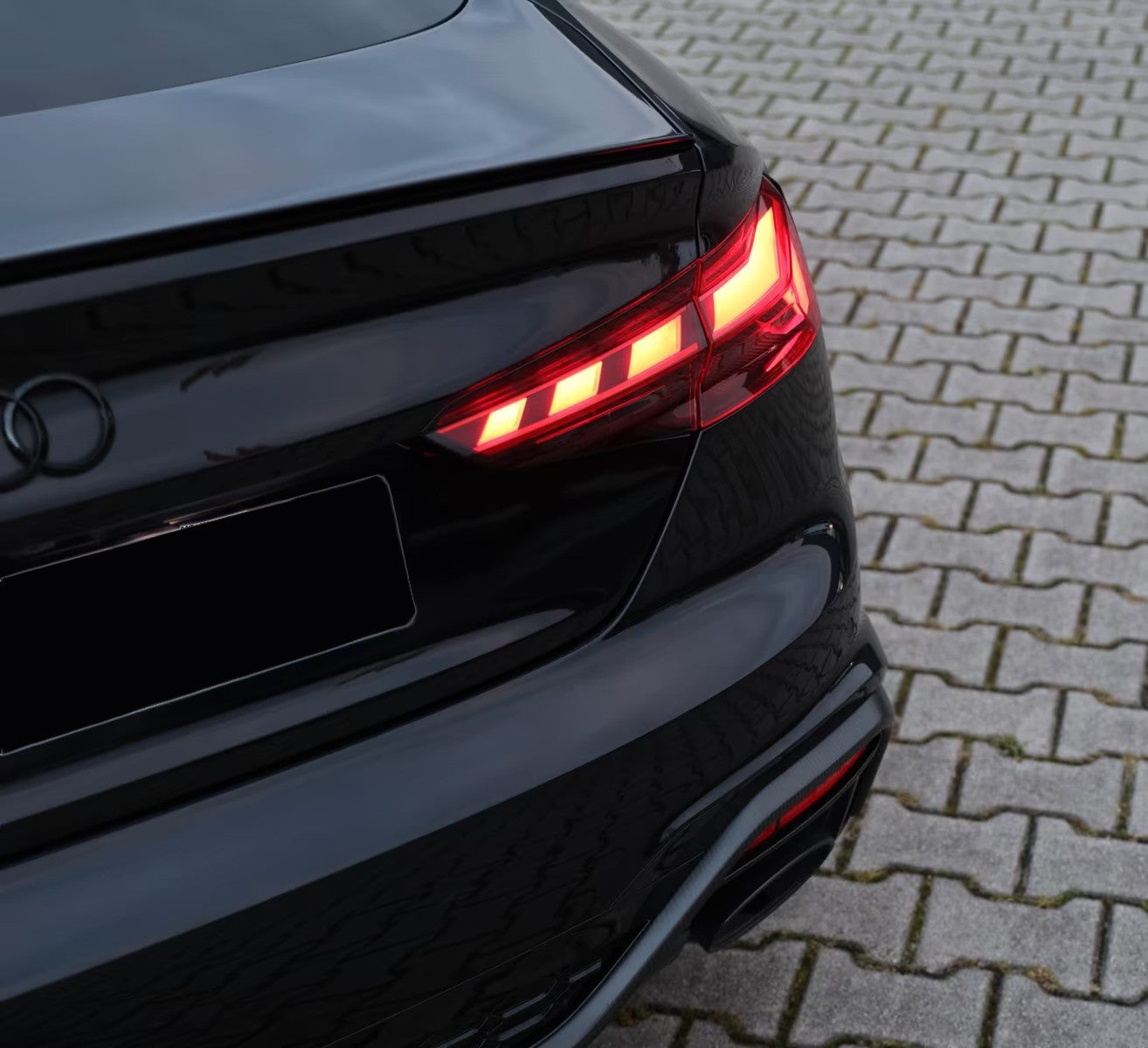


The Audi Q3 F3 is the second generation of Audi's compact luxury SUV, launched in 2018 as a significant leap forward from its predecessor. Built on the MQB platform shared with the Volkswagen Group's most successful models, the F3 brings sharper styling, a more premium interior, and a wider range of powertrains to the compact crossover segment.
In the United States, the Q3 competes directly with the BMW X1, Mercedes-Benz GLA, and Volvo XC40 — a competitive space where reliability and long-term ownership costs matter as much as badge appeal. The F3 generation addresses many of the shortcomings of the older Audi Q3 8U, delivering a more refined driving experience and modern tech.
Whether you are considering buying a used Q3 F3 or already own one, this guide covers everything you need to know: common reliability issues, maintenance costs, key parts to watch, and which variant is the smartest buy.
Parts & Accessories
Your Audi Q3 F3 deserves better.
Hand-picked performance and replacement parts — ready to ship.
Shop Audi Q3 F3 parts →History and Versions
The Audi Q3 F3 entered production in 2018 and went on sale for the 2019 model year. It rides on Volkswagen Group's MQB A2 platform, which it shares with models like the Audi A3 8Y and the VW Tiguan. A mild facelift arrived in 2022, bringing updated front-end styling, revised LED lighting signatures, and some interior trim updates.
In the US market, Audi offered the Q3 F3 exclusively with the 45 TFSI (2.0T) powertrain paired with an S tronic dual-clutch transmission and Quattro all-wheel drive. European markets received a broader lineup including multiple 1.5 TFSI and 2.0 TDI diesel variants.
| Engine | Displacement | Power | Torque | 0-60 mph | Notes |
|---|---|---|---|---|---|
| 35 TFSI (DKRA) | 1.5L Turbo 4-cyl | 150 hp | 184 lb-ft | 8.5 sec | FWD/AWD, Europe only |
| 45 TFSI (DKTA/DKTB) | 2.0L Turbo 4-cyl | 228 hp | 258 lb-ft | 6.3 sec | US market standard, Quattro AWD |
| 35 TDI (DHRB) | 2.0L Turbo Diesel | 150 hp | 258 lb-ft | 9.2 sec | Europe only, EA288 family |
| 45 TDI (DTSA) | 2.0L Turbo Diesel | 200 hp | 332 lb-ft | 7.1 sec | Europe only, EA288 family |
| RSQ3 (DNWA) | 2.5L Turbo 5-cyl | 394 hp | 369 lb-ft | 3.8 sec | EA855 Evo engine, sport model |
How to Check a Used Audi Q3 F3's History
Before buying a used Audi Q3 F3, it is essential to ensure full transparency about its past. Undisclosed accidents can hide poor-quality repairs that directly compromise the safety of the driver and passengers.
The Q3 F3's aluminum-intensive structure and complex driver assistance systems make accident damage particularly risky to overlook. Misaligned bodywork may indicate a repaired front or rear impact, while unreplaced airbag modules and improperly recalibrated radar or camera sensors can leave safety systems non-functional without triggering a visible warning. Hastily repaired front subframe components or bent control arms can also introduce handling issues that are impossible to detect on a casual test drive. It is therefore strongly recommended to check the vehicle's complete history using its license plate or VIN number before making any purchase decision.
Get an instant 20% discount to access a vehicle's full past with total transparency via carVertical by clicking this link or on the banner below:

Key Strengths
The Audi Q3 F3 is one of the most well-rounded compact luxury SUVs on the used market. Here is what works in its favor:
Premium interior quality is genuinely class-leading at this price point. The available Virtual Cockpit digital instrument cluster and MMI Navigation Plus infotainment system feel modern and intuitive even by today's standards.
MQB platform reliability is a real asset. This architecture has been refined across millions of vehicles in the VW Group lineup, meaning most mechanical components are well-understood and parts are widely available.
The 45 TFSI EA888 Gen 3 engine fitted to US-market cars is a significant improvement over earlier EA888 variants, with better thermal management and updated sealing. The Quattro AWD system delivers confident traction in all conditions without the complexity of a traditional mechanical center differential.
Fuel economy is competitive for the segment, averaging 22–28 mpg in real-world mixed driving. Resale values remain strong, and the F3 generation benefits from a noticeably larger cargo area than the 8U it replaced.
Known Reliability Issues
45 TFSI — EA888 Gen 3 (DKTA/DKTB)
The 2.0-liter turbocharged four-cylinder fitted to US Q3 F3 models is generally robust, but a few specific concerns are worth monitoring.
Oil consumption — Some owners report elevated oil consumption between services, typically appearing after 40,000–60,000 miles. This is linked to piston ring seating behavior on early production engines. Severity: Moderate. Monitor oil level monthly and top up with the correct 5W-40 or 5W-30 VW 502 00-spec oil.
Carbon buildup on intake valves — Like all direct-injection engines, the EA888 Gen 3 does not benefit from fuel washing the intake valves. Carbon deposits accumulate progressively and can cause rough idle, hesitation, and reduced power output, typically noticeable from 50,000–80,000 miles. Severity: Moderate. A walnut blasting service is the standard fix.
Thermostat and coolant system — Plastic thermostat housings and coolant flanges are a known weak point across MQB-based Audi and VW models. Leaks or thermostat failures typically appear around 60,000–90,000 miles. Severity: Moderate. Replacement is straightforward but should not be delayed, as overheating risks engine damage.
DSG 7-speed S tronic (DQ381) mechatronic unit — The dual-clutch gearbox fitted to Q3 F3 models can exhibit hesitation at low speeds or shudder during light-throttle engagement, particularly in the first 20,000–40,000 miles. A software update often resolves early issues. More serious mechatronic unit failures are less common but occur after 80,000+ miles without proper fluid maintenance. Severity: Moderate to Critical depending on maintenance history.
35 TFSI — EA211 Evo (DKRA)
Available in European markets, this 1.5-liter turbocharged unit uses cylinder deactivation technology, shutting down two cylinders under light load.
Cylinder deactivation actuator faults — The system can trigger warning lights or cause engine hesitation if actuators malfunction, typically from 30,000–60,000 miles. Severity: Minor to Moderate. A software update or actuator replacement resolves most cases.
Oil separator and PCV system — This engine family is sensitive to a failing positive crankcase ventilation system. A clogged or cracked oil separator leads to oil consumption and blue smoke, typically from 50,000 miles. Severity: Moderate.
RSQ3 — EA855 Evo (DNWA)
The performance-oriented RSQ3 uses Audi's celebrated 2.5-liter inline-five turbocharged engine, which you can read about in detail in our Audi EA855 Evo Engine Guide.
Haldex rear differential service neglect — The RSQ3 uses an electronically controlled Haldex coupling for rear axle engagement. Skipping the Haldex oil service (recommended every 40,000 miles) leads to premature clutch pack wear. Severity: Critical if neglected. Typical failure after 80,000–100,000 miles on unmaintained units.
Intercooler and boost pipe connections — High output means higher stress on the charge air system. Boost pipe clamps can loosen and intercooler connections may develop minor leaks, causing power loss and a check engine light, typically after 50,000 miles. Severity: Moderate.
Chassis Issues
Front control arm bushings — The front suspension geometry relies on pressed rubber bushings that degrade under load over time. Worn bushings cause vague steering and clunking over bumps, typically noticeable from 60,000–80,000 miles. Severity: Moderate.
Rear axle beam wear (FWD/35 TFSI models) — Front-wheel-drive variants use a torsion beam rear axle with known bushing wear at higher mileages, producing rear-end noise on uneven surfaces. Severity: Minor to Moderate.
Electronics and Software
MMI infotainment system freezing — The MIB3 infotainment unit in early F3 production can freeze or reboot unexpectedly. Audi released software updates addressing the majority of these issues. Severity: Minor.
Virtual Cockpit display faults — Some owners have experienced partial display failures or pixel anomalies on the 12.3-inch Virtual Cockpit cluster, typically within the first 30,000–50,000 miles. This often requires a display unit replacement under warranty. Severity: Minor to Moderate.
ADAS sensor calibration — After any windshield replacement or front-end repair, the forward-facing camera and radar unit for lane assist and adaptive cruise control require professional recalibration. This is easily missed at non-specialist shops. Severity: Critical if uncalibrated.
Maintenance and Servicing
The Audi Q3 F3 follows Audi's flexible service interval system, which extends oil change intervals up to 10,000 miles under normal driving conditions. However, many independent technicians recommend shortening this to 7,500 miles for optimal engine longevity, particularly on the 45 TFSI.
Recommended service intervals:
- Engine oil and filter: every 7,500–10,000 miles — use VW 502 00-approved 5W-40 or 5W-30
- DSG transmission fluid (DQ381): every 40,000 miles — do not skip this, it directly affects mechatronic longevity
- Spark plugs: every 40,000 miles — OEM-spec plugs are recommended
- Brake fluid: every 2 years, regardless of mileage
- Coolant: every 4 years or 60,000 miles
- Haldex differential fluid (Quattro models): every 40,000 miles
- Air filter: every 20,000–30,000 miles
Estimated annual maintenance cost for a well-maintained Q3 F3 in the US market ranges from $600 to $1,200 at an independent specialist, and $1,500 to $2,500 at an Audi dealership.
Parts to Watch / Replace First
DSG transmission fluid and filter — The DQ381 gearbox is sensitive to old fluid. Fresh fluid every 40,000 miles prevents shudder and mechatronic wear.
Spark plugs — OEM-specification iridium plugs maintain smooth combustion and prevent misfires in the EA888 Gen 3.
Thermostat housing — Plastic construction degrades over time. Proactive replacement around 70,000 miles avoids roadside breakdowns.
PCV valve / oil separator — Failing positive crankcase ventilation causes oil consumption and sludge buildup; inspect at every major service.
Front control arm bushings — Worn bushings compromise steering precision and accelerate tire wear; inspect after 60,000 miles.
Haldex coupling filter and oil (AWD models) — Neglected Haldex service is one of the most common causes of expensive AWD system repairs on these cars.
Intake manifold cleaning service (walnut blast) — Not a part per se, but a necessary service around 60,000–80,000 miles to restore throttle response on the direct-injection engine.
Brake pads and rotors — Audi's relatively aggressive brake bias means front pads can wear quickly; inspect every 20,000 miles.
FAQ
Is the Audi Q3 F3 reliable?
The Audi Q3 F3 is above average in reliability for its segment when properly maintained. The MQB platform is mature and well-understood, and the EA888 Gen 3 engine is more refined than earlier versions. Most reported issues stem from maintenance neglect rather than fundamental design flaws.
What is the best engine option in the Q3 F3?
For US buyers, the 45 TFSI (2.0T EA888 Gen 3) is the only mainstream option and is a solid choice overall. For performance enthusiasts, the RSQ3's 2.5-liter five-cylinder is an exceptional engine, though it demands stricter maintenance discipline. Avoid early examples with high mileage and no DSG service history.
How many miles will an Audi Q3 F3 last?
A well-maintained Q3 F3 can realistically reach 150,000 to 200,000 miles without major mechanical failure. The key factors are regular oil changes, timely DSG fluid service, and addressing carbon buildup on schedule. Neglected examples can develop expensive problems well before 100,000 miles.
Is the Audi Q3 F3 expensive to maintain?
Maintenance costs are moderate for the luxury SUV segment. Expect to spend $600–$1,200 per year at an independent shop. The most expensive potential repairs involve the DSG transmission mechatronic unit ($1,500–$3,000) and Haldex differential ($800–$1,500) if service has been skipped. Using a VW/Audi-specialist independent shop rather than a dealership significantly reduces costs.
Which model year of the Q3 F3 should I avoid?
2019 and early 2020 production examples had the highest incidence of MMI software bugs and DSG hesitation issues. If possible, target a 2021 or later model, which benefits from software updates applied at the factory and minor production refinements. Post-2022 facelift cars are the most sorted overall.
Does the Q3 F3 have problems with its dual-clutch transmission?
The DQ381 S tronic can exhibit low-speed shudder or hesitation, especially in the first 20,000 miles. Most cases are resolved by a software update. Long-term issues are typically traced to skipped transmission fluid services. Always verify DSG service history when buying used.
Conclusion
The Audi Q3 F3 earns a solid 7.5 out of 10 for overall reliability. It is a well-engineered compact luxury SUV built on a proven platform, with engines and transmissions that reward proper maintenance. The most common issues — carbon buildup, DSG servicing, and thermostat wear — are entirely manageable with proactive care. Buy a well-documented example with verified service history, and the Q3 F3 represents excellent value in the used premium SUV market. Browse our catalog for quality replacement and maintenance parts to keep your Q3 F3 running at its best.