

The Mercedes-Benz E-Class W214 represents the latest evolution of one of the most respected nameplates in the luxury sedan segment. Launched in 2023 as the direct successor to the W213, the W214 raises the bar with a radically redesigned interior, a massive portrait-oriented infotainment screen, and a revised powertrain lineup dominated by mild-hybrid and plug-in hybrid technology.
Positioned squarely against the BMW 5 Series and Audi A6, the W214 targets buyers who want genuine executive comfort without sacrificing driving dynamics. Its mix of advanced driver assistance systems, electrified powertrains, and refined suspension engineering makes it one of the most technically complex E-Classes ever produced.
For US buyers considering a pre-owned example, understanding the specific reliability profile of this generation is critical. The W214 is still a young car, but early ownership data and known platform characteristics already reveal patterns worth knowing before signing any paperwork.
Parts & Accessories
Your Mercedes-Benz E-Class W214 deserves better.
Hand-picked performance and replacement parts — ready to ship.
Shop Mercedes-Benz W214 parts →History and Versions
The W214 was officially revealed in April 2023 and went on sale in the US market later that year. It rides on an evolution of the MRA2 platform and comes exclusively with electrified powertrains — there are no non-hybrid gasoline options in the standard lineup.
Body styles include sedan (W214), estate/wagon (S214), and a coupe-style fastback (C214). The AMG line is represented by the E53 with a straight-six mild-hybrid unit.
| Engine | Displacement | Power | Torque | 0-60 mph | Notes |
|---|---|---|---|---|---|
| E200 — M254 | 2.0L turbo I4 | 204 hp | 221 lb-ft | ~7.1 s | 48V mild hybrid |
| E300 — M254 | 2.0L turbo I4 | 258 hp | 295 lb-ft | ~5.9 s | 48V mild hybrid |
| E350e — M254 PHEV | 2.0L turbo I4 + electric | 313 hp | 413 lb-ft | ~5.5 s | Plug-in hybrid, ~44 mi EV range |
| E450 — M256 | 3.0L turbo I6 | 375 hp | 369 lb-ft | ~4.6 s | 48V mild hybrid, standard US spec |
| E53 AMG — M256 | 3.0L turbo I6 | 429 hp | 413 lb-ft | ~4.3 s | AMG-tuned, EQ Boost ISG |
How to Check a Used Mercedes-Benz E-Class W214's History
Before buying a used Mercedes-Benz E-Class W214, it is essential to ensure full transparency about its past. Undisclosed accidents can hide poor-quality repairs that directly compromise the safety of the driver and passengers.
The W214's advanced architecture makes this especially important. Concealed damage to the front radar mounting structure, ADAS sensor brackets, or structural side members may not be visible during a casual inspection, yet can render the vehicle's driver assistance systems unreliable or completely non-functional. Similarly, unreplaced airbag modules, improperly recalibrated camera systems, or hastily repaired air suspension components can create serious safety risks. It is therefore strongly recommended to check the vehicle's complete history using its license plate or VIN number before making any purchase decision.
Get an instant 20% discount to access a vehicle's full past with total transparency via carVertical by clicking this link or on the banner below:

Key Strengths
The W214 brings a genuinely compelling package to the used luxury sedan market. Its 48V mild-hybrid system reduces fuel consumption without the complexity of a full hybrid, and real-world economy figures are impressive for a car of this size and performance level.
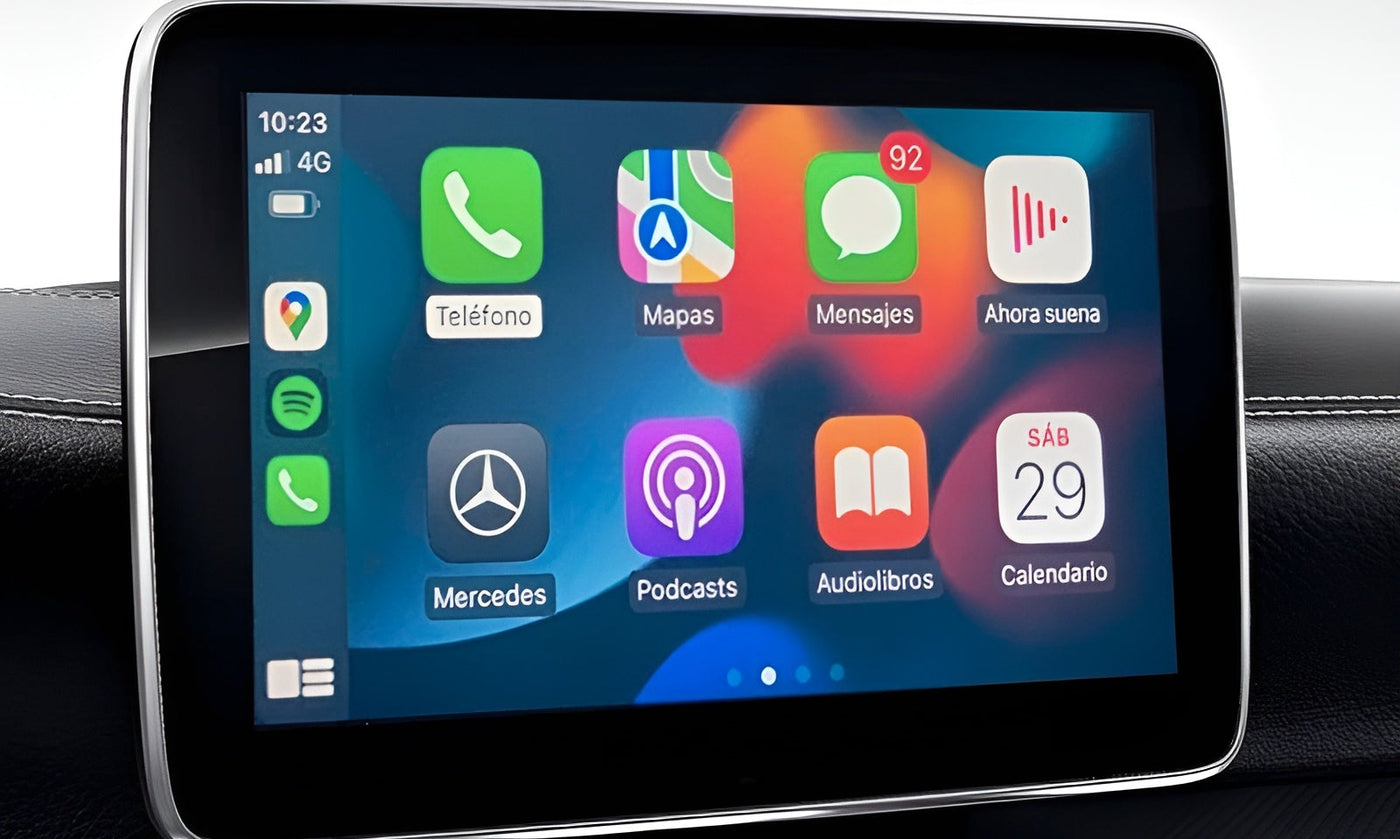
The cabin is a legitimate step forward. The Superscreen dashboard — featuring a 14.4-inch central display and a 12.3-inch driver screen — sets a new benchmark for interior technology in the segment, and build quality is excellent throughout.
Ride quality benefits from Airmatic (on higher trims), which adjusts each wheel independently in real time. The standard air suspension setup on E450 and AMG models delivers a near-isolation level of comfort on highway miles.
Safety ratings are strong, with the W214 earning top marks from Euro NCAP and performing well in IIHS testing. The breadth of available driver assistance features — including proactive lane-keeping, rear-axle steering, and augmented reality navigation — adds genuine real-world value for daily drivers and long-distance travelers alike.
Known Reliability Issues
E200 / E300 — M254 (48V Mild Hybrid)
The M254 engine is a modern unit that generally performs well, but a few early patterns have emerged across the wider Mercedes platform.
48V belt-starter-generator (BSG) wear: The integrated starter-generator that enables mild-hybrid coasting can develop belt slippage or BSG unit noise as early as 30,000–50,000 miles. Symptom: rough engine restart after coasting, subtle vibration at idle. Severity: Moderate.
High-pressure fuel pump noise: Some early W214 owners report a ticking or tapping noise from the high-pressure direct injection pump under cold start conditions. This is often a characteristic of GDI engines but should be monitored. Severity: Minor. Typical appearance: from new to 20,000 miles.
Coolant hose connections at the EGR module: The M254's EGR cooling circuit uses plastic quick-connect fittings that can weep coolant over time. Inspect the fittings around the exhaust gas recirculation system when buying. Severity: Moderate. Typical appearance: 40,000–70,000 miles.
E350e — M254 PHEV
High-voltage battery conditioning: The plug-in hybrid battery pack requires regular charge cycles to maintain cell balance. Vehicles that have rarely been plugged in (used purely as conventional cars) may show degraded EV range and battery management warnings earlier than expected. Severity: Moderate. Typical appearance: 30,000–60,000 miles depending on usage habits.
Rear electric motor seals: The rear-axle-mounted electric drive unit can develop minor oil seepage around its input seals. This has been documented on the wider MRA2-based PHEV lineup. Severity: Minor to Moderate. Typical appearance: 50,000+ miles.
Brake system wear: PHEV drivers who rely heavily on regenerative braking may find that brake calipers seize or corrode faster than expected due to infrequent mechanical contact between pad and rotor. Severity: Moderate. Typical appearance: 40,000–60,000 miles.
E450 / E53 AMG — M256 (Inline-Six)
For a deeper look at the technical profile of this engine, see our Mercedes-Benz M256 Engine Guide: Reliability, Common Problems & Tuning Potential.
ISG (integrated starter-generator) carbon brush wear: The EQ Boost ISG unit on the M256 has shown carbon brush degradation on earlier W213-generation cars. On the W214, this component is revised, but it remains a watch point beyond 60,000 miles. Severity: Moderate.
Oil separator / crankcase ventilation: The inline-six's crankcase ventilation system can accumulate oil residue that restricts airflow, leading to increased oil consumption and potential oil mist ingestion into the intake. Severity: Moderate. Typical appearance: 50,000–80,000 miles.
Charge air cooler condensation: In humid climates, the intercooler on the M256 can accumulate moisture that enters the intake manifold on cold starts, occasionally causing a brief misfire on startup. Severity: Minor.
Chassis Issues
Air suspension compressor wear: Vehicles equipped with AIRMATIC can develop compressor noise or slow leveling response. This is a known long-term wear item across multiple Mercedes platforms. Typical appearance: 60,000–100,000 miles. Severity: Moderate.
Rear subframe bushings: The W214 uses a multi-link rear axle with composite and rubber bushings. Under hard use or in cold climates, premature bushing degradation can lead to vague steering response and a subtle knock over uneven surfaces. Severity: Moderate. Typical appearance: 50,000–80,000 miles.
Rear-axle steering calibration: On models equipped with rear-wheel steering, the system requires periodic recalibration after wheel alignment work. Incorrect calibration can cause uneven tire wear or mild steering instability. Severity: Moderate.
Electronics and Software
MBUX Hyperscreen software glitches: The W214's large Superscreen infotainment system is complex, and early production vehicles have experienced occasional screen freezes, spontaneous reboots, and delayed voice assistant responses. Most issues are resolved via over-the-air software updates. Severity: Minor.
ADAS sensor recalibration after minor impacts: The front radar unit, stereo cameras, and surround sensors are highly sensitive to alignment changes. Even a minor parking bump can require a full sensor recalibration procedure at a Mercedes dealer, which carries a significant labor cost. Severity: Moderate.
Battery management system (BMS) faults on PHEV: Some owners report intermittent BMS warning lights related to sensor communication errors rather than actual battery hardware failures. A software reset typically resolves the issue, but it warrants investigation before purchase. Severity: Minor.
Maintenance and Servicing
The W214 uses Mercedes-Benz ASSYST Plus service interval monitoring, which adjusts service schedules based on driving conditions. Under normal use, oil changes are typically required every 10,000–12,000 miles using Mercedes-approved 0W-20 or 0W-40 fully synthetic oil, depending on the specific engine variant.
Spark plugs on the M254 and M256 are recommended for replacement at 40,000–60,000 miles under moderate use. The air filter and cabin pollen filter should be inspected annually, especially in dusty environments.
For PHEV models, the brake fluid should be changed every 2 years regardless of mileage, as the reduced mechanical brake use allows moisture absorption to go unnoticed for longer.
Typical annual service costs at an independent Mercedes specialist in the US range from $250–$450 for a basic service, rising to $800–$1,500 for a more comprehensive service including spark plugs, filters, and brake fluid. Dealer pricing runs approximately 30–50% higher.
Parts to Watch / Replace First
48V belt-starter-generator drive belt: Subject to tension wear and slippage on mild-hybrid variants; a key early inspection item on any used W214.
High-pressure fuel pump: On both the M254 and M256, the direct injection pump is a wear item that should be checked for noise and pressure at purchase.
Air suspension compressor: The compressor on AIRMATIC-equipped cars is the most common point of failure on aging Mercedes air suspension systems; inspect for slow leveling and unusual noise.
EGR cooling circuit hoses: Plastic quick-connect fittings near the EGR module are prone to weeping coolant; inspect visually for white residue or moisture staining.
Brake calipers and rotors: On PHEV models especially, rear calipers can seize from inactivity; check for uneven pad wear and rotor surface corrosion.
ISG carbon brushes (M256): On E450 and E53 AMG, the integrated starter-generator brushes are a predictable wear item; listen for irregular restart behavior as an early warning.
Rear-axle steering actuator seals: On rear-wheel-steering models, inspect for any fluid trace near the rear steering rack; early detection avoids costly actuator replacement.
FAQ
Is the Mercedes-Benz E-Class W214 reliable?
Based on early ownership data, the W214 is a well-engineered car with no catastrophic design flaws identified to date. Its complexity — particularly around the PHEV system and advanced electronics — means reliability is closely tied to proper maintenance and avoiding deferred software updates. Overall, it ranks favorably for its class.
What is the best engine option in the W214?
For most US buyers, the E450 with the M256 inline-six offers the best balance of performance, refinement, and long-term reliability. It avoids the added complexity of the plug-in hybrid system while delivering strong power and an excellent driving experience. The M254-based E300 is the most economical choice for urban and mixed-use driving.
How many miles will a Mercedes-Benz E-Class W214 last?
With proper maintenance, a W214 powered by the M254 or M256 engine can realistically exceed 200,000 miles. The biggest long-term risk factors are deferred maintenance on the 48V mild-hybrid components, neglected air suspension servicing, and software updates left uninstalled on PHEV battery management systems.
Is the Mercedes-Benz E-Class W214 expensive to maintain?
It is more expensive to maintain than mainstream vehicles, but competitive within the executive luxury segment. Annual maintenance at an independent specialist typically runs $400–$700, rising notably if air suspension components or PHEV battery servicing is required. Using a Mercedes-certified independent shop rather than the main dealer can reduce costs by 30–50%.
Which W214 variants should I avoid?
Early production E350e PHEV units from late 2023 are worth extra scrutiny, as software-related battery management issues were more prevalent before mid-cycle updates were applied. Any W214 with evidence of front-end collision repair should be carefully checked for ADAS sensor recalibration history, as uncalibrated safety systems are a significant concern on this platform.
Does the W214 receive over-the-air updates?
Yes. The W214 supports over-the-air (OTA) software updates through the Mercedes me connect service. Many early software glitches affecting the Superscreen and MBUX system have been resolved via OTA patches. Always verify that the vehicle is running the latest firmware before purchase.
Conclusion
The Mercedes-Benz E-Class W214 earns a reliability score of 7.5/10 for a car of its technological ambition. It is not a simple machine, and its dependability depends heavily on consistent maintenance and staying current with software updates. Buyers who are diligent about servicing will find it a rewarding, refined, and genuinely capable executive sedan. Browse our catalog for quality replacement and maintenance parts to keep your W214 running at its best.