

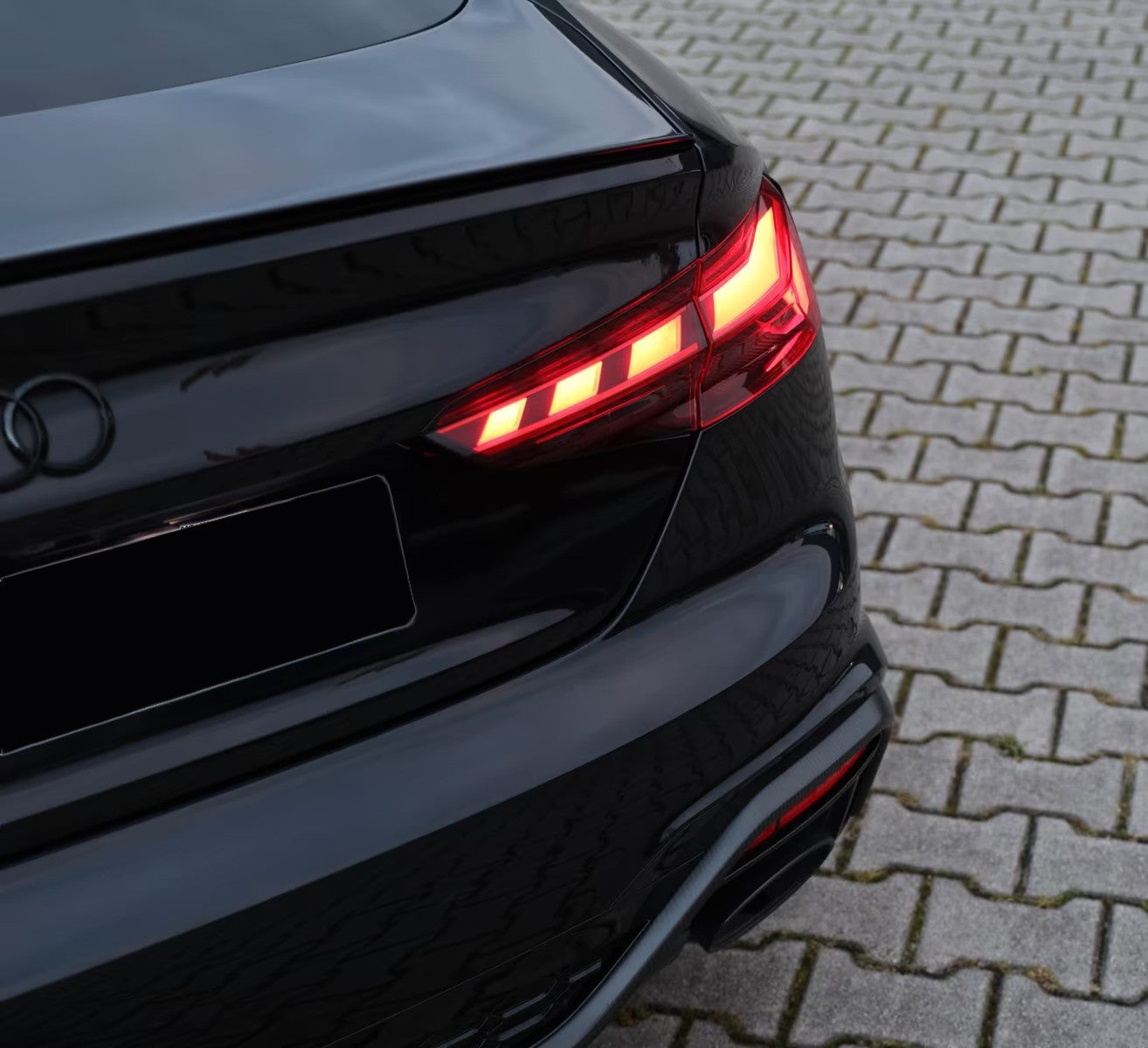


The Audi A3 8Y is the fourth generation of one of Audi's most successful compact models, launched in 2020 and still in production today. Positioned as a premium entry-level sedan and sportback, it competes directly with the BMW 1 Series and Mercedes-Benz A-Class — but with a sharper focus on interior refinement and driving composure.
Built on the MQB Evo platform and packed with the latest Volkswagen Group technology, the 8Y brings a significant leap in interior quality, digital connectivity, and driver assistance systems compared to its predecessor, the Audi A3 8V.
For buyers considering a used 8Y, the question is no longer whether it looks and feels premium — it clearly does — but whether this technology-dense compact holds up over time. This guide covers everything you need to know: engine options, known reliability issues, maintenance costs, and which variants offer the best long-term ownership experience.
Parts & Accessories
Your Audi A3 8Y deserves better.
Hand-picked performance and replacement parts — ready to ship.
Shop Audi A3 8Y parts →History and Versions
The Audi A3 8Y entered production in 2020, replacing the 8V generation. It is offered in two body styles: the Sportback (5-door hatchback) and the Sedan (launched shortly after in 2021). A cabriolet version is no longer offered with this generation.
Engine options span a range of 1.0-liter, 1.5-liter, and 2.0-liter turbocharged petrol units, as well as 2.0-liter diesel and plug-in hybrid (PHEV) variants. The performance flagship, the S3, uses a 2.0 TFSI producing 306 hp paired with quattro all-wheel drive and a 7-speed S tronic gearbox.
A facelift was introduced in 2024, bringing revised front-end styling and updated infotainment software.
| Engine | Displacement | Power | Torque | 0-60 mph | Notes |
|---|---|---|---|---|---|
| 1.0 TFSI (DLAA) | 999 cc | 110 hp | 200 Nm | 10.0 sec | 3-cylinder, entry-level petrol |
| 1.5 TFSI (DADA/DPCA) | 1498 cc | 150 hp | 250 Nm | 8.4 sec | 4-cylinder, cylinder deactivation |
| 1.5 TFSI e (DFYA) | 1498 cc | 204 hp | 350 Nm | 7.5 sec | PHEV, 40 km electric range |
| 2.0 TDI (DXCA) | 1968 cc | 116 hp | 300 Nm | 10.5 sec | 4-cylinder diesel, FWD |
| 2.0 TDI (DXDA) | 1968 cc | 150 hp | 360 Nm | 8.8 sec | 4-cylinder diesel, FWD/quattro |
| 2.0 TFSI S3 (DNUE) | 1984 cc | 306 hp | 400 Nm | 4.7 sec | quattro, S tronic, performance flagship |
How to Check a Used Audi A3 8Y's History
Before buying a used Audi A3 8Y, it is essential to ensure full transparency about its past. Undisclosed accidents can hide poor-quality repairs that directly compromise the safety of the driver and passengers.
The 8Y generation relies heavily on integrated sensor arrays, ADAS systems, and aluminum-intensive body panels that can be difficult to assess visually after an impact. A collision that appears cosmetically repaired may conceal misaligned front radar modules, unreplaced side curtain airbags, or hastily straightened subframe mounting points — all of which are invisible to the naked eye but critical to safety. It is therefore strongly recommended to check the vehicle's complete history using its license plate or VIN number before making any purchase decision.
Get an instant 20% discount to access a vehicle's full past with total transparency via carVertical by clicking this link or on the banner below:

Key Strengths
The Audi A3 8Y is a genuinely compelling used buy for several reasons.
First, the MQB Evo platform is one of the most mature and well-engineered compact car architectures in the industry, shared across VW Group's best-selling models. This means parts availability is excellent and independent mechanic familiarity is high.
Second, the interior quality represents a major step forward from the 8V. The 10.1-inch MMI touchscreen, digital instrument cluster, and premium material choices bring the 8Y very close to the A4 experience in a smaller package.
Third, the 1.5 TFSI engine — by far the most common variant in the US market — has a solid reliability track record and benefits from cylinder deactivation technology that improves real-world fuel economy without introducing significant mechanical stress.
Finally, the S3 variant offers exceptional performance-per-dollar on the used market, with 306 hp, quattro AWD, and a refined chassis that rewards spirited driving without penalizing everyday comfort.
Known Reliability Issues
1.0 TFSI (EA211 evo three-cylinder)
Oil consumption can appear at higher mileage, especially on vehicles used with extended service intervals. This is generally mild but should be monitored through regular checks.
Engine vibration at idle is a natural characteristic of the three-cylinder layout, but worn engine mounts can increase cabin vibration beyond 60,000 miles.
Carbon buildup on intake valves is a known consequence of direct injection, typically appearing between 50,000 and 80,000 miles and causing rough idle or hesitation.
1.5 TFSI (EA211 evo2)
Cylinder deactivation (ACT) shudder can occur during transitions between two- and four-cylinder operation. This is usually software-related and often improved through updates.
Carbon buildup on intake valves remains a long-term characteristic of direct injection turbo engines, depending heavily on driving style.
Minor high-pressure fuel system ticking noise can be present under light load and is generally considered normal unless drivability is affected.
1.5 TFSI e (PHEV)
The most common issue is 12V auxiliary battery degradation, which can cause intermittent electrical faults or system resets due to constant electronic load management.
High-voltage battery thermal management limitations can reduce electric range in extreme cold conditions, though this is typically mild in temperate climates.
2.0 TDI (EA288 evo diesel)
EGR valve clogging is a common issue on VW Group diesels, especially in vehicles used for short urban trips, leading to rough running or limp mode.
DPF blockage is strongly usage-dependent and becomes critical in vehicles that do not regularly complete full regeneration cycles on highways.
Unlike older assumptions, the EA288 family is generally belt-driven rather than chain-driven, meaning timing chain issues are not a common characteristic of this engine generation.
2.0 TFSI S3 (EA888 Gen 4)
Water pump and thermostat housing leaks are among the most commonly reported issues, usually related to plastic housing degradation rather than engine failure.
DSG S tronic behaviour is highly dependent on maintenance history, with low-speed jerkiness often linked to adaptation or fluid condition rather than mechanical failure.
Intercooler condensation under repeated high-load driving can lead to occasional misfires, especially in humid environments.
Chassis Issues
Front control arm bushings are a known wear item across the MQB Evo platform, typically degrading between 50,000 and 80,000 miles depending on road conditions.
Minor rear suspension noise can appear on high-mileage vehicles, particularly in front-wheel-drive torsion beam models.
Electronics and Software
The MIB3 infotainment system is generally stable but can occasionally experience software freezes or Bluetooth connectivity issues requiring resets.
ADAS calibration sensitivity is a known characteristic, where systems like lane assist and adaptive cruise control may require recalibration after windshield replacement or minor front-end impacts.
Maintenance and Servicing
The Audi A3 8Y uses long-life service intervals of up to 10,000–18,000 miles depending on conditions, but most specialists recommend shorter cycles for long-term reliability.
Engine oil and filter should be changed every 7,500 to 10,000 miles using VW 504.00 or VW 508.00 specification oil depending on engine type.
Spark plugs typically require replacement every 40,000 miles on petrol engines.
Brake fluid should be replaced every 2 years.
DSG S tronic servicing is recommended every 40,000 miles on higher-load variants such as the S3.
Air and cabin filters generally follow 20,000–30,000 mile intervals.
Routine maintenance is moderate for the segment, but costs increase significantly on S3 and PHEV variants due to system complexity.
Parts to Watch / Replace First
Water pump and thermostat housing are among the most common preventative replacements on 2.0 TFSI EA888 Gen 4 engines.
Engine mounts degrade faster on three-cylinder engines, increasing vibration levels over time.
Front control arm bushings are a predictable wear item across all MQB Evo A3 models.
The 12V auxiliary battery in PHEV models is a known weak point due to constant electronic load.
Proper DSG maintenance is essential to avoid drivability issues in all S tronic-equipped variants.
FAQ
The Audi A3 8Y is generally a well-engineered compact premium car with strong baseline reliability when properly maintained. The most balanced engine is the 1.5 TFSI, while the S3 EA888 Gen 4 and PHEV variants require stricter maintenance discipline.
The best engine for most buyers remains the 1.5 TFSI, offering the strongest balance of efficiency, refinement, and long-term durability.
With correct servicing, the A3 8Y can realistically reach 150,000 to 200,000 miles.
Maintenance costs are moderate for a premium compact, typically around $600–$900 per year, increasing for performance and hybrid models.
Diesel versions are best suited for high-mileage highway driving, while petrol engines are better for mixed or urban use due to DPF and EGR sensitivity.
Higher-risk purchases include poorly maintained S3 models and early PHEV versions with degraded auxiliary batteries.
Compared to the A3 8V, the 8Y is significantly more advanced but introduces greater reliance on electronics, sensors, and software calibration.
Conclusion
The Audi A3 8Y is one of the most complete compact premium cars in its segment, combining strong build quality, advanced infotainment systems, and efficient turbocharged engines. The 1.5 TFSI remains the safest long-term choice, while the S3 EA888 Gen 4 delivers strong performance but demands stricter maintenance discipline.
Overall, the platform is robust, but success depends heavily on service history, oil quality compliance, and proactive maintenance of known weak points.