

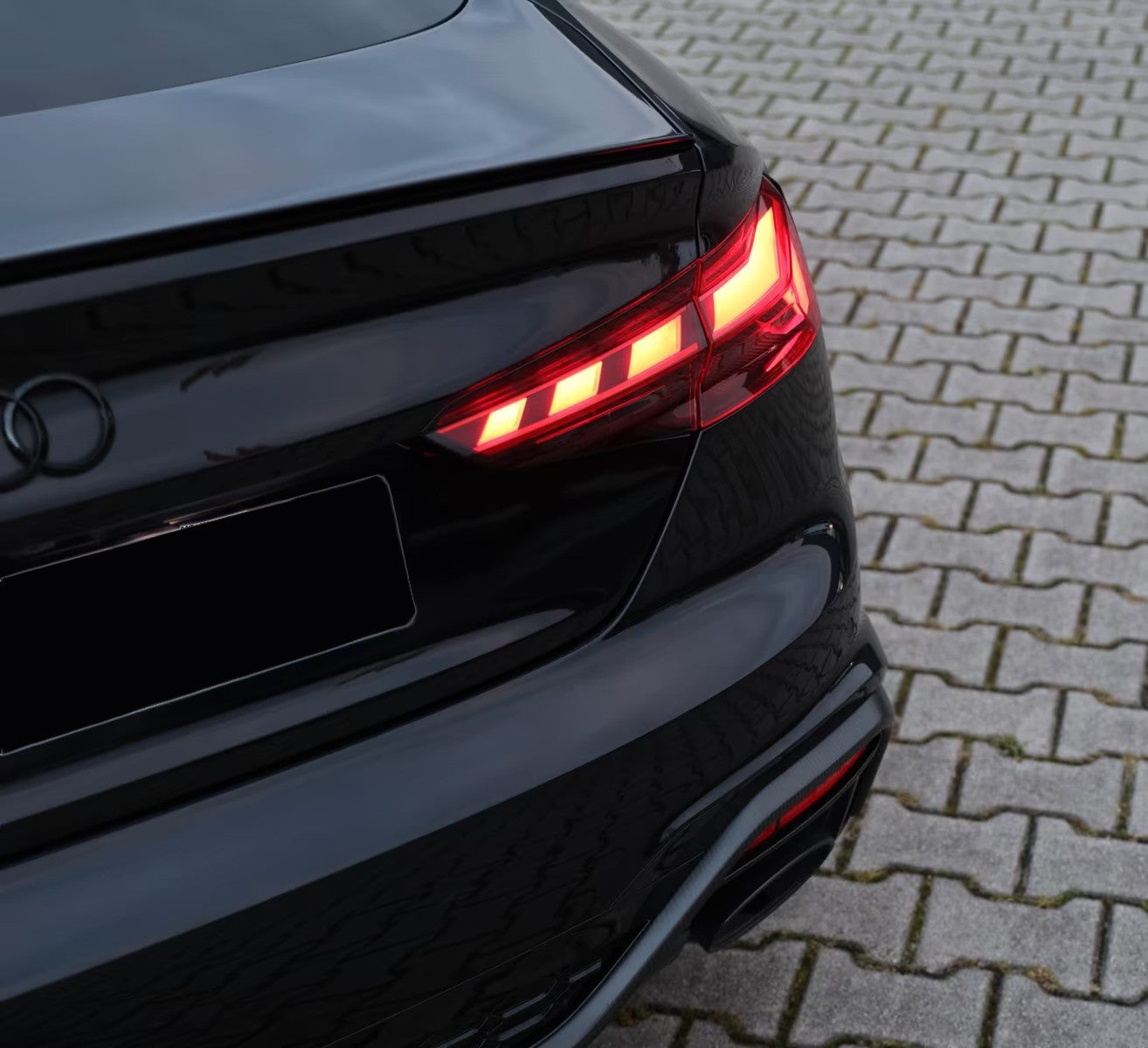


The Audi A5 B10 represents the seventh generation of one of the most iconic compact executive sedans in the world. Launched in 2024, this generation marks a significant leap forward for Audi, introducing a completely redesigned platform, a fully digital interior experience, and a powertrain lineup built around mild-hybrid and plug-in hybrid technology. Positioned squarely against the BMW 3 Series and Mercedes C-Class, the B10 targets buyers who want premium build quality, cutting-edge technology, and real-world efficiency without sacrificing driving dynamics.
For US buyers considering the A5 B10 as a future used purchase — or for early adopters already driving one — understanding its long-term reliability profile is critical. The B10 introduces new turbocharged four-cylinder engines from the EA888 Gen 4 family, advanced driver assistance systems, and a heavy reliance on software-driven features. While it is too early for extensive long-term data, patterns are already emerging from early production units and from Audi's track record with closely related platforms.
This guide gives you everything you need to evaluate the Audi A5 B10 with confidence, whether you are buying new, nearly new, or used.
Parts & Accessories
Your Audi deserves better.
Hand-picked performance and replacement parts — ready to ship.
Shop Audi parts →History and Versions
The Audi A5 B10 entered production in 2024, officially replacing the long-running B9 generation. It is built on the Premium Platform Combustion (PPC) architecture, shared with the updated Audi A6 and A5 families. The B10 is offered in Sedan and Avant (wagon) body styles, with the Allroad variant expected to follow.
Engine options at launch are focused on turbocharged four-cylinder units with 48V mild-hybrid assistance, complemented by a plug-in hybrid variant. A performance S5 variant using a turbocharged six-cylinder is anticipated but had not been officially confirmed for all markets at the time of writing.
If you are interested in the previous generation, the Audi A4 B9 Reliability Guide covers its known issues in detail.
| Engine | Displacement | Power | Torque | 0-60 mph | Notes |
|---|---|---|---|---|---|
| 35 TFSI (EA888 Gen 4) | 2.0L inline-4 turbo | 150 hp | 184 lb-ft | ~8.5 sec | Mild-hybrid 48V, entry-level petrol |
| 40 TFSI (EA888 Gen 4) | 2.0L inline-4 turbo | 204 hp | 236 lb-ft | ~6.8 sec | Mild-hybrid 48V, standard petrol |
| 45 TFSI e (EA888 Gen 4 PHEV) | 2.0L inline-4 turbo + electric motor | 272 hp combined | 295 lb-ft | ~6.0 sec | Plug-in hybrid, ~50 miles EV range |
| 35 TDI (EA288 Evo) | 2.0L inline-4 turbo diesel | 163 hp | 280 lb-ft | ~8.2 sec | Mild-hybrid 48V, base diesel |
| 40 TDI (EA288 Evo) | 2.0L inline-4 turbo diesel | 204 hp | 332 lb-ft | ~6.9 sec | Mild-hybrid 48V, top diesel |
How to Check a Used Audi A5 B10's History
Before buying a used Audi A5 B10, it is essential to ensure full transparency about its past. Undisclosed accidents can hide poor-quality repairs that directly compromise the safety of the driver and passengers.
The A5 B10's advanced construction — including high-strength steel sections, aluminum structural components, and integrated sensor housings for ADAS systems — means that even a moderate collision can cause damage invisible to the naked eye. Misaligned bodywork can throw off radar and camera calibration, unreplaced side airbags or curtains may not deploy correctly in a future accident, and hastily repaired suspension components on the five-link rear axle can introduce handling instability that only reveals itself under hard braking or cornering. It is therefore strongly recommended to check the vehicle's complete history using its license plate or VIN number before making any purchase decision.
Get an instant 20% discount to access a vehicle's full past with total transparency via carVertical by clicking this link or on the banner below:

Key Strengths
The Audi A5 B10 arrives as one of the most polished compact executive cars on the market, and several factors make it genuinely attractive as a used purchase down the line.
Build quality remains a core Audi strength. Panel gaps are tight, interior materials are a clear step above most rivals, and the new MMI digital cockpit feels well-integrated rather than bolted on. The move to a 48V mild-hybrid system across the entire petrol range meaningfully improves fuel economy in stop-and-go conditions, reducing wear on the starter motor and improving long-term engine longevity.
The EA888 Gen 4 engine family is one of the most well-documented and refined four-cylinder turbos in the industry, benefiting from years of engineering refinement. Quattro all-wheel drive availability adds genuine all-weather capability, a strong selling point in northern US states.
The PHEV variant offers impressive electric-only range for daily commutes, and its battery pack is covered by an extended warranty on new vehicles — something worth verifying when buying used. The five-link rear suspension setup, carried over and refined from the B9, delivers a strong balance of ride comfort and handling precision.
Known Reliability Issues
The B10 is a new model, and long-term data is still accumulating. However, known concerns from early production, warranty claims, and shared-platform experience allow us to map the most likely problem areas.
35 TFSI / 40 TFSI — EA888 Gen 4
The EA888 engine family has a well-established reliability profile. The Gen 4 EA888 version fitted to the Audi A5 B10 (A4 successor) is significantly revised, but some watch points remain.
Oil consumption at higher mileage — Some EA888 variants have shown a tendency to consume oil above 50,000 miles, linked to piston ring wear or valve stem seal degradation. Monitor oil levels closely and establish a baseline early.
Timing chain tensioner wear — A known weak point across the EA888 engine family. Symptoms include a rattling noise on cold start that disappears after warm-up. Severity: Moderate. Typical appearance: 60,000–90,000 miles.
Turbocharger actuator faults — Electronic wastegate actuators can develop positioning errors, triggering boost-related fault codes. Severity: Moderate. Typical appearance: 40,000–70,000 miles.
48V mild-hybrid belt-starter-generator (BSG) wear — The 48V mild-hybrid system BSG unit that enables engine stop-start and mild-hybrid recuperation is a new component with limited long-term data. Early reports suggest it is robust, but belt and pulley wear should be monitored. Severity: Minor to Moderate. Typical appearance: 50,000+ miles.
45 TFSI e — EA888 Gen 4 PHEV
High-voltage battery degradation — As with all PHEV systems, battery capacity will decline over time, reducing EV-only range. Units regularly charged to 100% and depleted to 0% show faster degradation. Severity: Moderate. Typical appearance: 50,000–80,000 miles or after 5–7 years.
Coolant circuit complexity — The plug-in hybrid (PHEV) variant has two separate cooling circuits (engine and battery/electronics). Additional hoses, pumps, and valves increase the number of potential leak points. Severity: Minor to Moderate. Typical appearance: 40,000–60,000 miles.
Regenerative braking system calibration — Some early Audi PHEV owners have reported inconsistent brake pedal feel, caused by software managing the transition between regenerative and friction braking. This is typically resolved via a software update. Severity: Minor.
35 TDI / 40 TDI — EA288 Evo
EGR valve fouling — The EA288 Evo diesel engine exhaust gas recirculation system is a well-known maintenance point. Carbon buildup in the EGR valve and intake manifold can restrict airflow and trigger fault codes. Severity: Moderate. Typical appearance: 40,000–60,000 miles.
DPF clogging on short trips — The diesel particulate filter (DPF) regenerates only above sustained highway speeds. Owners doing predominantly urban driving will see accelerated DPF clogging. Severity: Moderate. Typical appearance: 30,000–50,000 miles for urban-use vehicles.
AdBlue (DEF) system faults — The SCR system / AdBlue system requires regular AdBlue top-ups. Faulty dosing injectors or NOx sensors can trigger warning lights and eventually lock the engine. Severity: Moderate. Typical appearance: 50,000–80,000 miles.
Chassis Issues
Five-link rear suspension bushings — Shared with the latest Audi A5 B10 platform architecture, the rear bushings can show premature wear on cars used in northern states with poor road surfaces. Symptoms include rear-end vagueness and clunking over bumps. Severity: Minor to Moderate. Typical appearance: 50,000–70,000 miles.
Front control arm bushings — Fore-aft compliance bushings on the front axle are a wear item on all PPC platform Audi models. Clunking over expansion joints is the primary symptom. Severity: Minor. Typical appearance: 60,000–80,000 miles.
Electronics and Software
MMI infotainment system software glitches — The new generation Audi MMI system is heavily software-dependent. Early production units have shown occasional screen freezes, Bluetooth connectivity drops, and navigation errors. Most issues are resolved via over-the-air (OTA) updates, but verify update history when buying used.
ADAS sensor calibration drift — Radar and camera sensors for adaptive cruise control, lane assist, and other Audi driver assistance systems require precise calibration. Any bodywork repair or windshield replacement that is not followed by a proper recalibration can lead to incorrect system behavior. Severity: Critical if unaddressed.
Central electrical module faults — The A5 B10 (PPC architecture) uses a highly centralized computing system, meaning a single module failure can affect multiple vehicle systems simultaneously. This is a watch point that may become clearer as the model ages.
Maintenance and Servicing
Audi specifies variable service intervals for the Audi A5 B10, with oil changes typically due every 10,000 miles or once per year, whichever comes first. However, for drivers doing a lot of short trips or towing, shortening the interval to 7,500 miles is strongly recommended to prevent oil degradation.
Use only VW/Audi-approved 0W-20 or 0W-30 fully synthetic oil meeting the VW 508.00 specification (EA888 Gen 4 engines) and VW 507.00 specification (EA288 diesel engines). Using incorrect oil spec on the EA888 or EA288 engine family can accelerate timing chain and turbo wear.
Brake fluid should be replaced every two years regardless of mileage — especially on Audi PHEV models where reduced brake pad usage can allow moisture absorption in the fluid to go unnoticed.
Spark plugs on the TFSI engines should be replaced every 40,000 miles. On the diesel, injector return lines and glow plugs deserve inspection from 60,000 miles onward.
AdBlue (DEF) on diesel Audi models needs topping up approximately every 10,000 miles depending on driving style. Ignoring low AdBlue warnings can result in a no-start condition.
Expect to budget $250–$450 per service at an independent Audi specialist. Dealer pricing typically runs $400–$700 per visit.
FAQ
Is the Audi A5 B10 reliable?
Based on early production data and Audi's track record with the EA888 engine family and EA288 Evo diesel engines, the Audi A5 B10 appears to be a well-engineered car with reasonable long-term reliability prospects. As with any newly launched model, some early software and electronics issues have been reported, most of which are addressed through OTA updates. Allow at least two to three years of production data to accumulate before drawing firm conclusions.
What is the best engine option in the Audi A5 B10?
For most US buyers, the 40 TFSI (EA888 Gen 4 with 48V mild hybrid) offers the best balance of performance, efficiency, and long-term reliability. The EA888 engine is a proven powertrain with a large support network for parts and specialist knowledge. The PHEV system (45 TFSI e) is compelling for low-mileage daily commuters but adds battery management complexity over time.
How many miles will an Audi A5 B10 last?
With proper maintenance — correct oil spec, timely timing chain service, and regular inspections — there is no reason an Audi A5 B10 cannot reach 150,000 to 200,000 miles. The EA888 and EA288 engines have demonstrated this longevity in previous generations. The PHEV battery pack will likely require attention or replacement between 80,000 and 120,000 miles.
Is the Audi A5 B10 expensive to maintain?
Maintenance costs are moderate for the segment. Routine service at an independent Audi specialist costs $250–$450 per visit. Major items like timing chain service or DPF replacement can push costs to $800–$1,500. PHEV battery replacement, if required out of warranty, is the most significant potential expense, with estimates in the $5,000–$10,000 range depending on configuration.
What should I check when buying a used Audi A5 B10?
Prioritize a full VIN history check to rule out accident damage and verify service records. Inspect the MMI system for software update history. On TDI variants, check DPF regeneration logs via OBD diagnostics if possible. On PHEV models, verify battery state of health and confirm the high-voltage system has no stored fault codes. Always check for ADAS calibration records if any bodywork or windshield work has been carried out.
How does the Audi A5 B10 compare to earlier Audi A5 generations?
The B10 generation is a more technologically complex car than its predecessors, which generally means higher repair costs when things go wrong but also a more refined ownership experience when everything works correctly.
Conclusion
The Audi A5 B10 earns a provisional reliability score of 7.5 out of 10 for a new model. It is built on solid engineering foundations, uses well-proven engine technology, and benefits from Audi's continuous refinement of the EA888 and EA288 families.
The main risks lie in its software complexity, 48V mild-hybrid components with limited long-term data, and the inherent unknowns of any first-year production vehicle. Buying a well-documented, service-history-verified example with software up to date is the surest path to a trouble-free ownership experience. Browse our catalog for quality replacement and maintenance parts to keep your A4 B10 running at its best.