

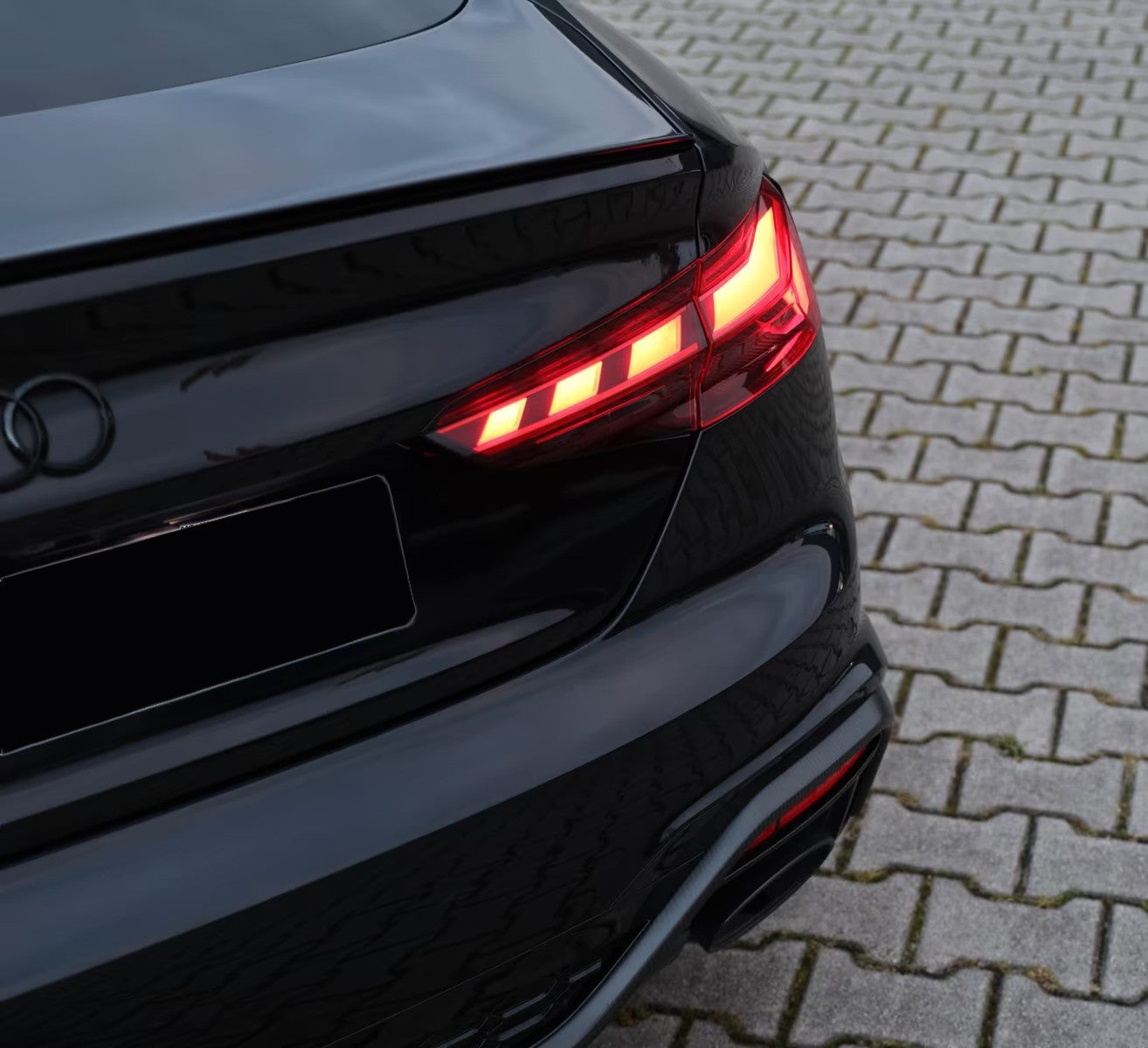


The BMW M3 G80 represents the seventh generation of one of the most iconic sports sedans in automotive history. Launched in 2021, it sits at the pinnacle of the 3 Series lineup, blending everyday usability with track-focused performance in a way few cars can match. Powered by the all-new S58 twin-turbocharged inline-six, the G80 marked a significant departure from its predecessors — offering more power, a new xDrive all-wheel-drive option, and a controversial but functional design overhaul.
In the US market, the M3 G80 competes directly with the Mercedes-AMG C63, Alfa Romeo Giulia Quadrifoglio, and Audi RS3. It has attracted both loyal BMW enthusiasts and a new generation of performance car buyers.
If you are considering buying a used G80 — whether it is an early 2021 model or a more recent example — understanding its known reliability issues, maintenance costs, and potential weak points is essential before committing your money. This guide covers everything you need to know.
Parts & Accessories
Your BMW M3 G80 deserves better.
Hand-picked performance and replacement parts — ready to ship.
Shop BMW M3 G80 parts →History and Versions
The BMW M3 G80 entered production in 2021 as the direct successor to the BMW M3 F80. It shares its platform with the G20 3 Series and is built exclusively as a four-door sedan, with the coupe variant carrying the M4 G82 designation. A significant milestone came with the introduction of the Competition xDrive variant, bringing all-wheel drive to the M3 nameplate for the first time in its history.
The lineup was further expanded with the M3 Touring G81, a performance wagon available in select markets, and the limited CS variant introduced for the 2024 model year with further power and weight savings.
| Engine | Displacement | Power | Torque | 0-60 mph | Notes |
|---|---|---|---|---|---|
| S58 (Standard) | 3.0L Twin-Turbo I6 | 473 hp | 406 lb-ft | 4.1 sec | RWD, 6-speed manual or 8-speed auto |
| S58 (Competition) | 3.0L Twin-Turbo I6 | 503 hp | 479 lb-ft | 3.8 sec | RWD or xDrive, 8-speed auto only |
| S58 (CS) | 3.0L Twin-Turbo I6 | 543 hp | 479 lb-ft | 3.4 sec | xDrive only, track-focused |
How to Check a Used BMW M3 G80's History
Before buying a used BMW M3 G80, it is essential to ensure full transparency about its past. Undisclosed accidents can hide poor-quality repairs that directly compromise the safety of the driver and passengers.
The M3 G80 is a high-performance vehicle frequently used on track days, driven hard on back roads, or pushed beyond its limits by previous owners. Risks invisible to the naked eye include misaligned carbon fiber body panels, unreplaced airbags following minor collisions, hastily repaired front subframe or control arm mounts, and undetected differential or gearbox damage from aggressive launches. Carbon ceramic brake systems may also have been subjected to extreme heat cycles without proper inspection. It is therefore strongly recommended to check the vehicle's complete history using its license plate or VIN number before making any purchase decision.
Get an instant 20% discount to access a vehicle's full past with total transparency via carVertical by clicking this link or on the banner below:

Key Strengths
The BMW M3 G80 is a genuinely compelling used buy for several reasons.
The S58 engine has already demonstrated strong durability in early real-world examples, with most owners reporting no major mechanical failures up to 60,000 miles when maintained properly. Its power delivery is smooth and linear, and the engine responds well to both spirited driving and relaxed cruising.
The 8-speed M Steptronic automatic transmission in Competition variants is fast, reliable, and rarely causes issues. The optional 6-speed manual on the standard model is a highlight for driving purists and has shown no specific weak points in its short history.
The xDrive system adds genuine all-weather capability, making the G80 one of the most versatile performance sedans available. The adaptive M suspension and electronically controlled rear differential provide excellent handling balance.
Finally, the G80 benefits from BMW's latest generation infotainment architecture, which is more stable and user-friendly than the systems found in older M3 generations.
Known Reliability Issues
M3 G80 Standard and Competition — S58
High-pressure fuel pump (HPFP) failure Some early G80 owners reported symptoms including rough idle, engine hesitation, and loss of power at high RPM. The root cause was traced to premature HPFP wear. BMW issued a technical service bulletin addressing this. Severity: Moderate. Typical appearance: 10,000–30,000 miles on early 2021 builds.
Coolant system leaks Several owners have reported minor coolant weeping from the water pump housing and associated hoses. Left unaddressed, this can escalate into overheating. Severity: Moderate. Typical appearance: 20,000–50,000 miles.
Oil consumption Like many high-performance turbocharged engines, the S58 can consume oil between service intervals, particularly when driven hard. Owners should check the oil level every 1,000–1,500 miles rather than relying solely on the service indicator. Severity: Minor to Moderate. Apparent from early mileage.
Turbocharger wastegate rattle A characteristic metallic rattle on cold starts has been reported, caused by turbocharger wastegate actuator play. This is a known trait of the S58 in some production runs and does not necessarily indicate impending failure, but should be monitored. Severity: Minor. Typical appearance: 15,000–40,000 miles.
Carbon buildup on intake valves As a direct-injection engine, the S58 is susceptible to intake valve carbon deposits over time. This can cause rough idling and a slight reduction in power. A walnut blasting service is the standard remedy. Severity: Moderate. Typical appearance: 40,000–60,000 miles.
Chassis Issues
Front control arm bushings The G80's stiffened front suspension setup places significant stress on control arm bushings, especially on cars used for track days. Premature wear leads to steering vagueness and clunking over bumps. Severity: Moderate. Typical appearance: 30,000–50,000 miles on track-driven examples.
Rear subframe stress On heavily track-driven xDrive Competition models subjected to repeated aggressive launches, some owners have reported stress marks around the rear subframe mounting points. This is not widespread but warrants inspection on high-mileage or track-registered vehicles. Severity: Critical if present. Typical appearance: 40,000+ miles on abused examples.
Electronics and Software
iDrive software glitches Early G80 models with the iDrive 7 system occasionally exhibited screen freezes, module communication errors, and M Drive setting resets. Most issues were resolved via OTA software updates, but pre-update cars still on the road may need a dealer flash. Severity: Minor. Present on 2021–early 2022 builds.
PDC and camera calibration errors Several owners reported intermittent parking sensor faults and camera calibration warnings, often after minor impacts or temperature extremes. Severity: Minor. Typical appearance: any mileage.
Maintenance and Servicing
The BMW M3 G80 follows BMW's Condition Based Servicing (CBS) system, which monitors oil life, brake pad wear, and other components in real time. However, for a performance vehicle driven hard, a more proactive schedule is strongly recommended.
Oil changes should be performed every 5,000–7,000 miles using BMW-approved 0W-40 full synthetic oil, rather than waiting for the CBS indicator which may suggest up to 10,000 miles. This is especially important if track days are involved.
Brake fluid should be flushed every two years regardless of mileage, as high-performance braking generates significant heat that degrades fluid over time.
Spark plugs on the S58 typically require replacement around 40,000–50,000 miles. The S58 uses iridium plugs that are specific to the application — do not substitute with generic alternatives.
Differential and transmission fluid changes are recommended every 40,000–50,000 miles on track-used vehicles, even though BMW classifies them as lifetime fills.
Average service costs in the US: routine oil service $250–$400 at a BMW dealer, $150–$250 at an independent specialist. Major services including spark plugs, brake flush, and filters typically run $600–$1,000.
Parts to Watch / Replace First
High-pressure fuel pump (HPFP) — Check service history for any TSB-related replacement. Early units on 2021 builds may still be original and approaching wear threshold.
Engine air filter — Often neglected on used performance cars. A clogged filter reduces throttle response and can stress the turbochargers.
Spark plugs — On any G80 approaching 40,000 miles, budget for a fresh set. Worn plugs on a high-compression turbo engine cause misfires and increase stress on the ignition coils.
Coolant hoses and water pump — Inspect carefully for weeping or brittleness, especially on 2021–2022 examples.
Front control arm bushings — Check for play and cracking, particularly on cars with any track history.
Brake pads and rotors — On a 500 hp performance sedan, brake wear can be rapid. Always inspect brake component thickness and rotor surface condition before purchase.
Differential fluid (rear and front on xDrive) — Likely overdue on any used example not serviced by an enthusiast owner.
FAQ
Is the BMW M3 G80 reliable?
The G80 has shown above-average reliability for a high-performance sports sedan in its class. The S58 engine is mechanically robust, and most reported issues are minor or have been addressed via software updates. Provided it has been properly maintained and not abused on track, a well-kept G80 can be a dependable daily driver.
What is the best engine option for the M3 G80?
All G80 variants use the same S58 3.0L twin-turbo inline-six. The choice comes down to configuration: the Competition xDrive offers the best all-weather performance and fastest acceleration, while the standard manual is the purist's choice. The CS is the most capable track version but commands a significant price premium.
How many miles will a BMW M3 G80 last?
With proper maintenance, the S58 engine is capable of 150,000–200,000 miles before requiring major work. However, track use, inconsistent oil changes, and ignored cooling system maintenance can significantly shorten that lifespan. Service history is the single most important factor when evaluating a used G80.
Is the BMW M3 G80 expensive to maintain?
Yes, relative to mainstream vehicles. Routine services cost $250–$400, while more comprehensive maintenance intervals can reach $800–$1,200. Parts are generally more expensive than standard 3 Series components, and some items — such as the carbon ceramic brake option — carry substantial replacement costs. Using a trusted independent BMW specialist rather than a dealer can reduce costs meaningfully.
Which M3 generation should I compare when shopping?
If you are cross-shopping within the M3 lineage, the BMW M3 F80 is the closest predecessor and offers a lower entry price with a proven (if more complex) S55 engine. The G80 is the more refined and powerful option for buyers who prioritize modern technology and available all-wheel drive. You can also compare the G80 to its standard sibling, the BMW 3 Series G20, to understand the platform-level differences.
Should I avoid early 2021 production models?
Early 2021 builds are more likely to exhibit the HPFP issue and iDrive software glitches before they were corrected by BMW. While these are not catastrophic problems, a 2022 or later model year is preferable if choosing between otherwise comparable examples. Always verify whether any relevant TSBs have been completed before purchasing.
Conclusion
The BMW M3 G80 earns a reliability score of 7.5/10 for a high-performance sports sedan. Its S58 engine is strong and well-engineered, its known issues are manageable, and most problems have been progressively addressed over the production run. The key risks lie in track abuse, deferred maintenance, and early-build software or fuel pump concerns.
Browse our catalog for quality replacement and performance parts to keep your M3 G80 running at its best.