


Dashboard warning lights on a Mercedes are never random. Whether you drive a C-Class, E-Class, GLC, GLE or other, each light follows a strict color code: red means stop immediately, orange means a fault requiring rapid diagnosis, and green or blue confirms normal operation.
This guide explains each light, why it commonly appears on Mercedes vehicles, and how to react correctly.
The color code – fundamentals
Mercedes uses a reliable visual language: red means you must stop the vehicle immediately, orange indicates a serious fault that requires fast diagnosis, while green, blue or white confirm system operation. Your reaction must follow this hierarchy.
Red warning lights — immediate danger
Low Oil Pressure

When the oil pressure light turns red, engine lubrication is compromised. On Mercedes A and C Class this is often caused by oil leaks, defective oil pumps or failed sensors. The risk is immediate: engine seizure or turbo failure. Stop the engine instantly.
Engine Overheating

This red temperature light indicates overheating. Electric water pumps and thermostats are known weak points on W176, while clogged radiators and leaks affect Vito and Sprinter vans. Let the engine cool before checking the cooling system.
Red Brake Warning

This may indicate the parking brake is engaged, brake fluid level is low or a critical hydraulic failure. Mercedes brake systems are electronically assisted — ignoring this warning may lead to brake loss.
Airbag / SRS Failure


This indicates a malfunction of airbags or seatbelt pretensioners. While active, protection systems may not deploy or may trigger unpredictably. Immediate diagnostic scanning is mandatory.
Battery / Charging System

This light indicates alternator, belt or battery failure. Electrical systems will progressively shut down. Reach a workshop as soon as possible.
Orange warning lights — faults to treat rapidly
Check Engine / EDC

Common on A-Class for EGR clogging or lambda sensors, on C-Class often AdBlue, NOx sensors or DPF faults. A flashing light requires immediate stop to protect the catalytic converter.
ABS / ESP

This indicates partial loss of electronic stability control, usually due to wheel sensors or hydraulic module failure. Normal braking remains, but without electronic assistance.
Tire Pressure Monitoring (TPMS)

Usually a slow puncture or sensor miscalibration after tire changes. Inflate tires to factory pressure and reset.
Brake Pad Wear

This warns that friction material thickness is insufficient. Ignoring this damages discs and increases braking distance. Replace pads immediately.
Airmatic / ABC Suspension Fault

Indicates compressor failure, air strut leaks or hydraulic pressure loss. Symptoms include uneven ride height or vehicle sagging after parking.
Glow Plug System

If this light stays on or flashes, one or more glow plugs or the control module is defective, causing hard cold starts, vibrations and power loss.
Driver Attention Assist

The coffee cup symbol does not indicate a mechanical fault. It detects fatigue and concentration loss. On long motorway journeys, take a break immediately.
Green, blue and white indicators
These confirm system operation: headlights, cruise control, driver assistance features. They require no action.
Our Mercedes Parts & Accessories
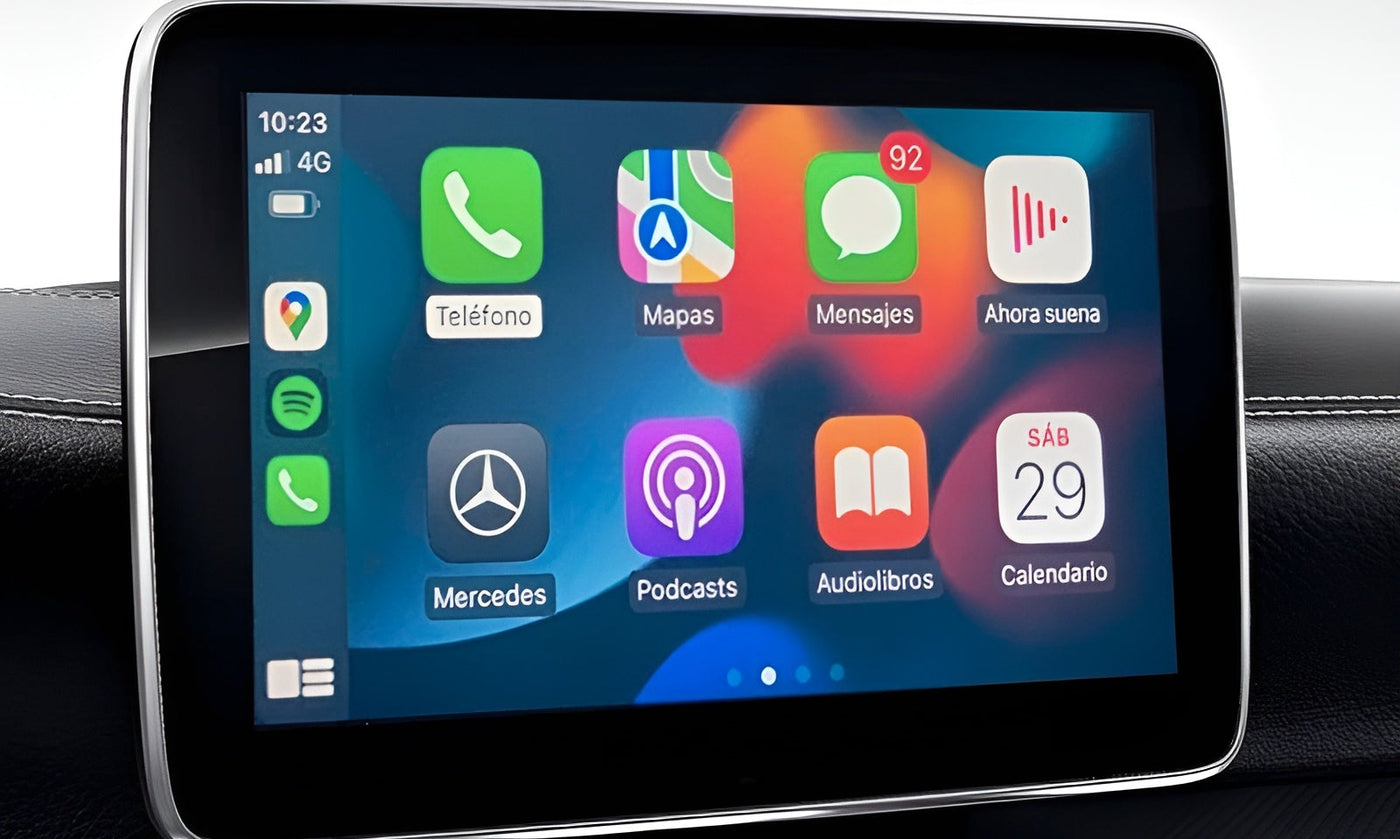
Upgrade your Mercedes with premium grilles, carbon body kits, CarPlay modules, interior accessories and many more!