

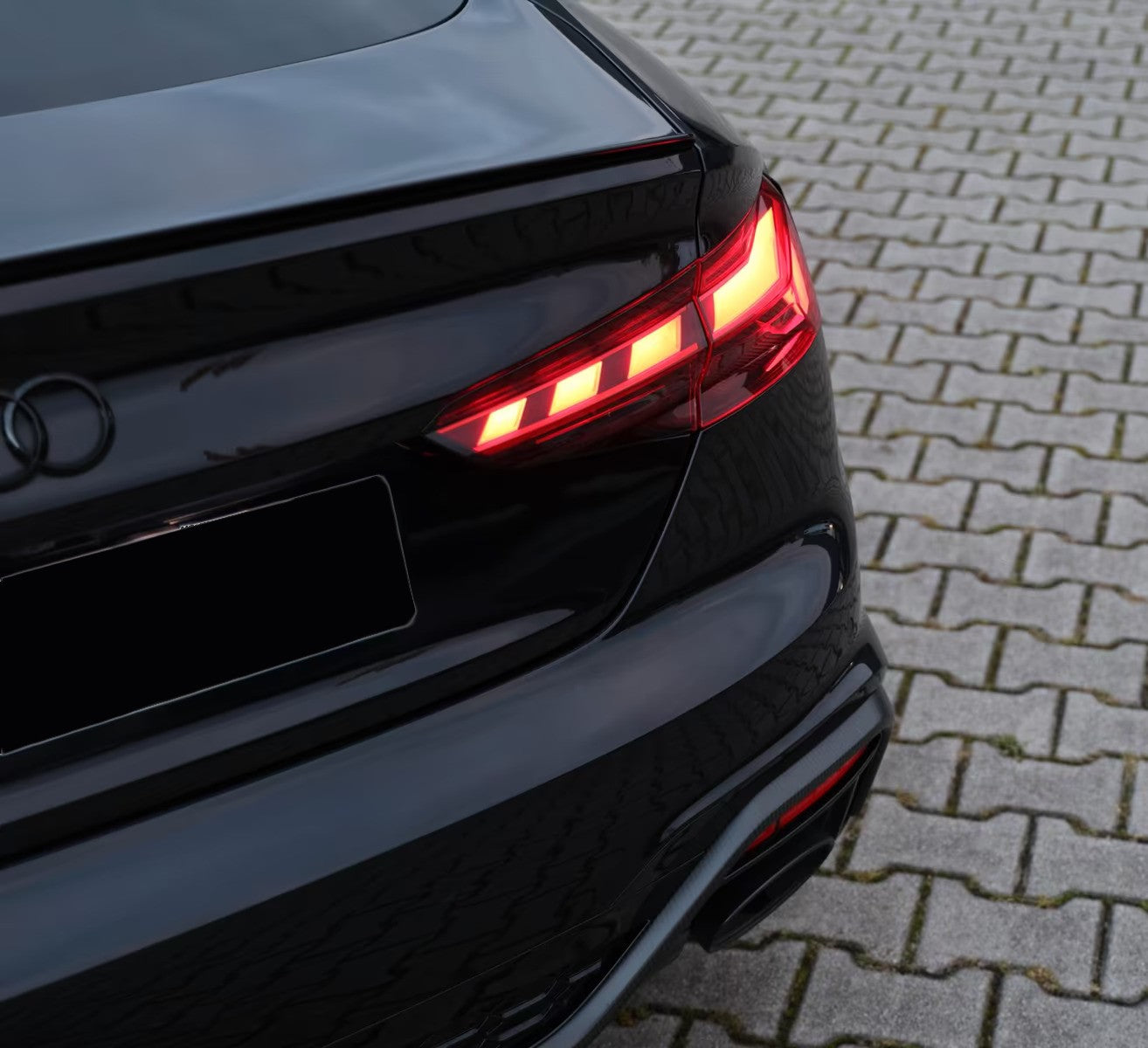


The Audi A5 B9 is the second generation of Audi's popular A5 lineup, representing a significant step forward in design, technology, and driving refinement over its predecessor. Launched in 2016, the F5 generation covers the Coupe, Sportback, and Cabriolet body styles, positioning itself firmly in the premium mid-size segment against rivals like the BMW 4 Series and Mercedes C-Class Coupe.
With its sleek bodywork, refined interior, and a broad engine lineup ranging from efficient four-cylinder turbos to punchy six-cylinder units, the Audi A5 F5 appeals to both daily drivers and weekend enthusiasts. The top-tier RS5, powered by a twin-turbocharged V6, represents one of the most exciting performance options in its class.
For buyers considering a used Audi A5 F5, reliability is a legitimate concern. Like any modern European vehicle, it comes with its share of known issues — particularly around the EA888 turbocharged four-cylinder and the S tronic dual-clutch transmission. This guide walks you through everything you need to know before making your purchase decision.
Parts & Accessories
Your Audi A5 F5 deserves better.
Hand-picked performance and replacement parts — ready to ship.
Shop Audi A5 F5 parts →History and Versions
The Audi A5 F5 debuted at the Paris Motor Show in 2016 and went on sale the same year. It replaced the first-generation Audi A5 8T, sharing its MLB platform with the B9-generation A4. A mid-cycle facelift arrived in 2019, bringing updated MMI infotainment, revised styling cues, and new driver assistance features.
Available in three body styles — Coupe (F53), Sportback (F5A), and Cabriolet (F57) — the A5 F5 covers a wide range of buyer profiles. Engine options span turbocharged four-cylinders, a turbocharged V6 in the S5, and an even more potent twin-turbo V6 in the RS5.
| Engine | Displacement | Power | Torque | 0-60 mph | Notes |
|---|---|---|---|---|---|
| 2.0 TFSI (45 TFSI) | 2.0L Inline-4 | 245 hp | 273 lb-ft | 5.9 s | EA888 Gen 3B, most common variant |
| 2.0 TFSI (40 TFSI) | 2.0L Inline-4 | 190 hp | 236 lb-ft | 7.2 s | EA888 Gen 3B, entry-level petrol |
| 3.0 TFSI (S5) | 3.0L V6 Turbo | 354 hp | 369 lb-ft | 4.7 s | EA839, Quattro standard |
| 2.9 TFSI (RS5) | 2.9L V6 Twin-Turbo | 444 hp | 443 lb-ft | 3.9 s | EA839, high-performance variant |
| 2.0 TDI (35 TDI) | 2.0L Inline-4 | 163 hp | 295 lb-ft | 8.1 s | EA288, most fuel-efficient option |
| 2.0 TDI (40 TDI) | 2.0L Inline-4 | 190 hp | 295 lb-ft | 7.5 s | EA288, stronger diesel option |
| 3.0 TDI (S5 TDI) | 3.0L V6 TDI | 347 hp | 516 lb-ft | 4.8 s | EA897, post-facelift only |
How to Check a Used Audi A5 F5's History
Before buying a used Audi A5 F5, it is essential to ensure full transparency about its past. Undisclosed accidents can hide poor-quality repairs that directly compromise the safety of the driver and passengers.
On the A5 F5 specifically, risks invisible to the naked eye include misaligned rear bodywork after rear-end collisions, unreplaced side curtain airbags following even minor impacts, and suspension geometry issues stemming from hastily repaired front subframe components. The A5 F5's frameless door glass and complex body lines also make it particularly difficult to spot imperfect panel realignment without a professional inspection. It is therefore strongly recommended to check the vehicle's complete history using its license plate or VIN number before making any purchase decision.
Get an instant 20% discount to access a vehicle's full past with total transparency via carVertical by clicking this link or on the banner below:

Key Strengths
The Audi A5 F5 brings a lot to the table as a used purchase. Its MLB platform is one of the most rigid and well-engineered architectures Volkswagen Group has produced, delivering excellent ride quality and structural integrity.
The interior is a genuine highlight. Build quality is exceptional for the segment, with soft-touch materials throughout and an MMI infotainment system that holds up well even by today's standards. The Virtual Cockpit digital instrument cluster, available across the range, remains one of the most driver-focused displays available in this class.
The broad engine lineup is another strength. The 2.0 TDI diesel variants are particularly appealing for high-mileage buyers, offering genuine fuel economy without sacrificing refinement. Meanwhile, the S5 and RS5 deliver sports car performance in a practical, daily-drivable package.
Quattro all-wheel drive, available on most variants, adds confidence in poor weather conditions. Depreciation has also worked in the used buyer's favor — well-maintained examples represent strong value in today's market.
Known Reliability Issues
2.0 TFSI — EA888 Gen 3 / Gen 3B
The EA888 Gen 3 family is significantly more refined than earlier generations, but it still carries a set of well-documented, age-dependent issues that tend to appear as mileage increases rather than early-life defects.
Oil consumption (intermittent, engine-dependent)
Some engines exhibit elevated oil usage, typically linked to piston ring wear, cylinder wall glazing, or valve stem seal degradation. This is not universal across the fleet, but when present it usually becomes noticeable between 40,000 and 80,000 miles. Left unmanaged, it increases long-term wear and can indicate underlying compression inefficiencies.
Intake valve carbon accumulation (direct injection limitation)
Like all direct-injection-only petrol engines, the intake valves are not cleaned by fuel wash, leading to progressive carbon buildup. This restricts airflow and disrupts combustion stability, typically manifesting as rough idle, hesitation under load, and occasional misfires. It becomes relevant from roughly 50,000–70,000 miles depending on driving profile.
Cooling system degradation (water pump / thermostat assembly)
The integrated plastic water pump and thermostat housing assembly is a known wear point. Heat cycling causes internal sealing failure or coolant seepage. Failures generally occur between 60,000 and 100,000 miles and can escalate quickly into overheating if ignored.
Timing chain stretch and tensioner wear
While the EA888 uses a timing chain rather than a belt, the hydraulic tensioner can lose effectiveness over time. Early symptoms include cold-start rattling for a few seconds. If neglected, chain elongation can lead to timing deviation and potential catastrophic engine damage. Risk increases significantly beyond 80,000–100,000 miles.
High-pressure fuel system faults (HPFP / injectors)
Less common but still present are high-pressure fuel pump inefficiencies or injector imbalance. These typically present as hard starting, hesitation under throttle, or misfire codes. These faults are intermittent but become more likely with higher mileage or poor fuel quality history.
2.0 TDI — EA288
The EA288 diesel is mechanically robust and well-suited to high-mileage use, but its emissions equipment introduces most of the long-term ownership complexity.
EGR system clogging (soot accumulation)
Exhaust gas recirculation valves and associated intake passages gradually accumulate carbon deposits, particularly in urban-driven vehicles. This leads to rough idle, reduced throttle response, and airflow restriction. Occurrence is strongly usage-dependent and often appears between 40,000–80,000 miles.
DPF saturation (driving-style sensitive)
Diesel particulate filter loading is highly dependent on operating conditions. Short-trip or low-speed driving prevents regeneration cycles, causing soot buildup and eventual limp mode. Highway use significantly reduces risk, while city-only usage accelerates failure risk after ~60,000 miles.
Thermostat and coolant regulation faults
Sticking thermostats or coolant control issues can prevent optimal engine operating temperature. This reduces efficiency and increases soot production, indirectly accelerating DPF/EGR stress.
Injector wear at high mileage
On higher-mileage examples (typically 100,000+ miles), injector degradation can lead to uneven combustion, harder starts, and increased emissions output. This is a wear-out condition rather than a design flaw.
3.0 TFSI / 2.9 TFSI (S5 / RS5) — EA839
The EA839 V6 is generally more mechanically robust than the four-cylinder engines, but its complexity introduces several higher-cost failure points.
Valve cover and upper engine oil leaks
Seepage from valve cover gaskets and ancillary seals is relatively common as the engine ages. This is usually gradual but should be monitored as it can contaminate surrounding components and ignition hardware.
Carbon buildup (reduced severity but still present)
Although less aggressive than on EA888 engines due to improved airflow design, carbon accumulation still occurs over time. It typically becomes relevant around 60,000–80,000 miles and manifests as minor drivability degradation rather than severe misfiring.
Turbocharger and boost control wear (RS5-specific sensitivity)
On RS5 variants, sustained high-load operation can accelerate wear on turbocharger assemblies and related control systems. Symptoms include uneven boost delivery, vibration under load, or subtle performance degradation.
S tronic (DL382 / DL501 depending on drivetrain)
The dual-clutch transmission is one of the most critical systems in the A5 F5 ownership experience, and its condition is highly dependent on maintenance history.
Mechatronic unit wear or failure
The mechatronic control unit can degrade over time, leading to hesitation, harsh engagement, or unpredictable gear selection. This is one of the more expensive failure points and typically develops gradually rather than suddenly.
Clutch pack wear (urban driving sensitivity)
Frequent low-speed driving, creeping traffic, and aggressive launches accelerate clutch wear. Symptoms include shuddering on take-off, slipping under load, or delayed engagement.
Fluid degradation (often neglected)
Despite Audi’s “lifetime fill” claim, transmission fluid degrades significantly with heat cycles. Lack of service accelerates both clutch and mechatronic wear. Proper preventive maintenance is critical to long-term reliability.
Chassis and Suspension
Front control arm bushing fatigue
A known wear item across the MLB platform. Degradation leads to vague steering response, clunking over uneven surfaces, and uneven tire wear.
Rear subframe mount wear (quattro models more affected)
Higher torque loads and drivetrain mass contribute to gradual bushing deterioration, affecting rear-end stability under load transitions.
Adaptive damping system faults (if equipped)
Vehicles with optional adaptive suspension may experience damper leakage or electronic control faults, resulting in inconsistent ride quality or warning messages.
Electronics and Driver Assistance
MMI system instability (pre-facelift more common)
Software freezes, slow boot cycles, or infotainment reboots can occur, typically resolved through updates or module resets rather than hardware replacement.
Sensor degradation (parking / radar systems)
Parking sensors, radar modules, and front camera systems may fail due to moisture ingress or connector corrosion. These faults are usually intermittent but increase with age.
Virtual Cockpit display issues (early production cars)
Pixel dropout or partial cluster failure has been reported in early production models, though full failure is uncommon.
FAQ
Is the Audi A5 F5 reliable?
The Audi A5 F5 is a reasonably reliable vehicle for its class, but it requires attentive maintenance. The EA888 TFSI engines and S tronic transmission are the two areas that demand the most attention. Well-maintained examples with a documented service history are generally dependable.
What is the best engine option in the Audi A5 F5?
For daily driving and long-term reliability, the 2.0 TDI (EA288) is arguably the most dependable option when used predominantly on highways. For performance buyers, the 3.0 TFSI in the S5 offers an excellent balance of power and refinement with fewer inherent issues than the four-cylinder turbo.
How many miles will an Audi A5 F5 last?
A well-maintained Audi A5 F5 can realistically reach 150,000 to 200,000 miles. Diesel variants and the V6 petrol engines tend to be more durable at high mileage than the 2.0 TFSI four-cylinder when properly serviced.
Is the Audi A5 F5 expensive to maintain?
Maintenance costs are moderate to high compared to non-European competitors. Expect to spend $800 to $1,500 per year on routine maintenance at an independent specialist, more at a dealership. Major repairs such as mechatronic unit replacement can push annual costs significantly higher.
Which Audi A5 F5 should I avoid?
Early production 2016-2017 examples of the 2.0 TFSI with no documented oil consumption checks or intake cleaning are the highest-risk purchases. Also approach any used S tronic quattro variant with caution if transmission fluid changes cannot be verified. The post-facelift 2020+ models are generally preferable for their software improvements and updated hardware.
Is the RS5 F5 a good used buy?
The RS5 F5 is an exciting used buy for performance enthusiasts, but it carries higher running costs and a few specific early-production concerns. Prioritize examples with full service history and avoid pre-2018 builds unless they have documented dealer maintenance. Tires, brakes, and performance fluid services add up quickly on this variant.
Conclusion
The Audi A5 F5 earns a solid 7 out of 10 for overall reliability. It is a genuinely well-built car that rewards careful ownership and proactive maintenance. Choose wisely, verify the service history, and the A5 F5 is one of the most compelling used premium coupes on the market today. Browse our catalog for quality replacement and maintenance parts to keep your A5 F5 running at its best.