

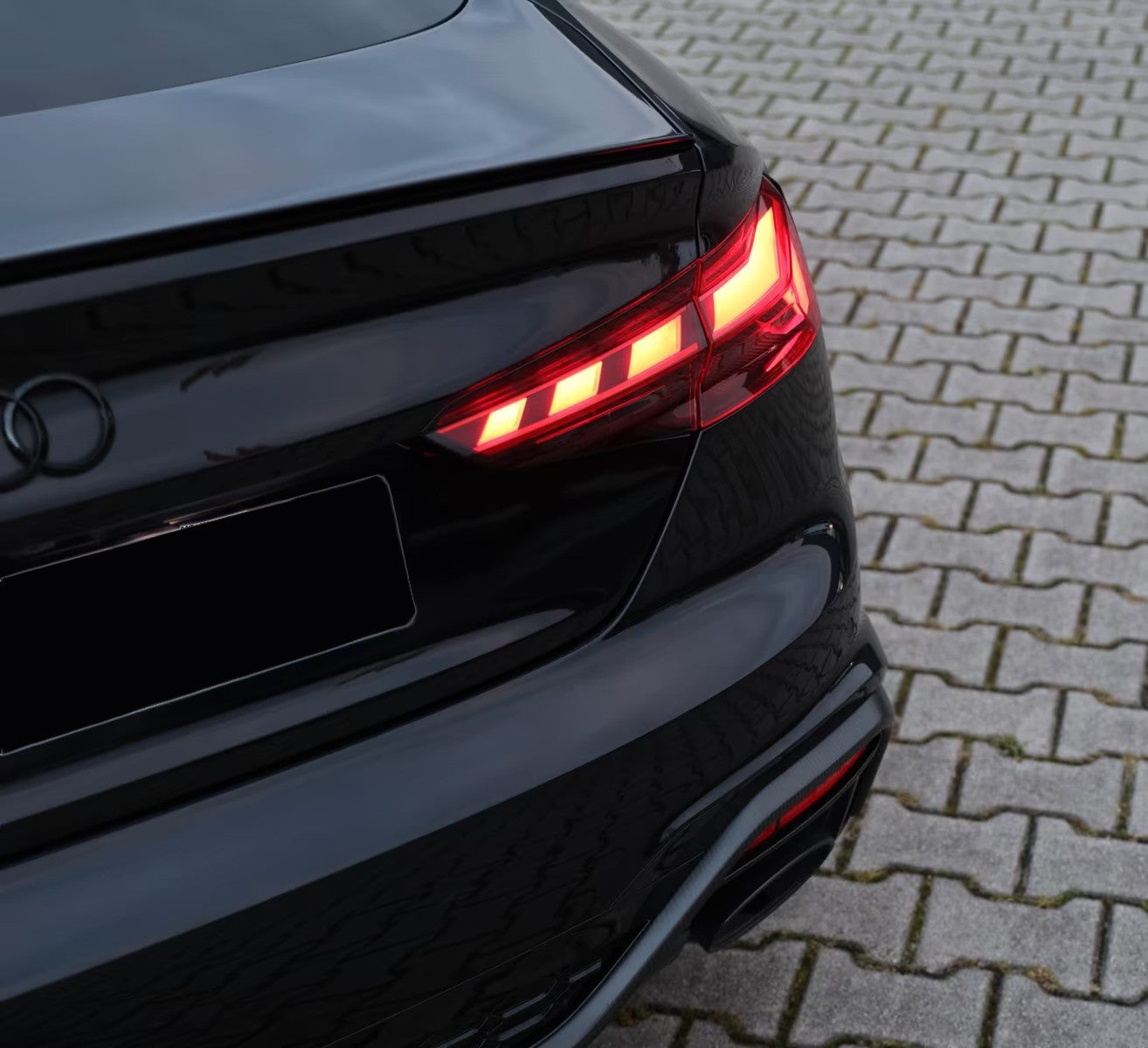


The BMW M3 E92 is one of the most celebrated performance sedans ever built. Produced between 2007 and 2013, it represented the first time BMW fitted its iconic M3 badge to a four-door body in the modern era, making it a compelling choice for enthusiasts who wanted daily usability without sacrificing raw driving performance.
At the heart of the E90 M3 sits the legendary S65 V8 engine — a 4.0-liter naturally aspirated unit derived from the M5's V10, producing 414 horsepower and an unforgettable high-revving soundtrack. Combined with the E90's razor-sharp chassis and near-perfect weight distribution, this is a sports car wearing a family car's clothing.
Today, used examples are increasingly sought after, with prices stabilizing at a level that reflects their collector status. But the S65 engine and its associated components come with well-documented quirks that every prospective buyer must understand. This guide covers everything you need to know about BMW M3 E90 reliability, known issues, maintenance costs, and what to look for before handing over your money.
Parts & Accessories
Your BMW M3 E92 deserves better.
Hand-picked performance and replacement parts — ready to ship.
Shop BMW M3 E92 parts →History and Versions
The BMW M3 E90/E92 was produced from 2007 to 2013, sharing its platform with the broader E90 3 Series family. While the E92 coupe and E93 convertible variants of the M3 are more commonly discussed, the E90 sedan remains the rarest and arguably most practical body style.
All E90 M3 models sold in the US market were powered by the same S65B40 4.0-liter V8, paired either with the 6-speed manual (Getrag 420G) or the 7-speed dual-clutch DCT (M-DCT). A limited Competition Package was available, adding stiffer suspension and revised steering. The 2011 model year brought minor refinements.
If you are also researching the standard 3 Series platform, the BMW 3 Series (E90/E92) Reliability Guide provides useful context on shared components.
| Engine | Displacement | Power | Torque | 0-60 mph | Notes |
|---|---|---|---|---|---|
| S65B40 (Manual) | 4.0L V8 | 414 hp | 295 lb-ft | 4.6 sec | 6-speed Getrag 420G, standard US spec |
| S65B40 (DCT) | 4.0L V8 | 414 hp | 295 lb-ft | 4.4 sec | 7-speed M-DCT, optional from 2008 |
| S65B40 Competition | 4.0L V8 | 414 hp | 295 lb-ft | 4.4 sec | Competition Package: stiffer suspension, revised tuning |
How to Check a Used BMW M3 E90's History
Before buying a used BMW M3 E90, it is essential to ensure full transparency about its past. Undisclosed accidents can hide poor-quality repairs that directly compromise the safety of the driver and passengers.
Given the M3 E90's performance credentials, the risks go well beyond cosmetic damage. A prior accident may have left the car with misaligned subframe mounting points, unreplaced side curtain airbags, or hastily repaired front suspension components — all of which are invisible to the naked eye during a casual inspection. The S65 engine is expensive to repair, and a vehicle that has been tracked or abused without a proper service record can carry hidden wear on rod bearings, throttle actuators, and VANOS components. It is therefore strongly recommended to check the vehicle's complete history using its license plate or VIN number before making any purchase decision.
Get an instant 20% discount to access a vehicle's full past with total transparency via carVertical by clicking this link or on the banner below:

Key Strengths
The BMW M3 E90 offers a combination of attributes that are increasingly rare in modern performance cars.
The S65 V8 is a naturally aspirated masterpiece. With a redline of 8,400 rpm and no turbo lag to manage, the driving experience is immediate, linear, and deeply rewarding. Few modern engines match its character.
The four-door body makes the E90 significantly more practical than its E92 coupe sibling while sharing identical mechanical components. This makes it ideal as a daily driver or a car that doubles as weekend track tool.
Chassis dynamics are exceptional. The double-wishbone front suspension, rear multi-link setup, and near 50/50 weight distribution deliver precise handling that rewards skilled drivers. The M-DCT gearbox, when properly maintained, provides blisteringly fast shifts.
Values have begun climbing steadily, meaning a well-maintained example holds its worth. The E90 M3 is already widely regarded as a future classic, and the sedan variant is the rarest of the three body styles, adding to its long-term appeal.
Known Reliability Issues
M3 E90 — S65B40
Rod bearing wear is the single most critical issue on the S65 engine. The main and connecting rod bearings are prone to premature failure, particularly on cars that were driven hard before reaching full operating temperature or maintained with extended oil change intervals. Symptoms include a knocking noise from the bottom end, which can escalate rapidly to catastrophic engine failure. This typically appears anywhere between 60,000 and 100,000 miles, though it can occur earlier on abused examples.
Throttle actuator failure is another well-documented problem. The S65 uses eight individual throttle bodies, each controlled by an actuator. When one fails, the car enters limp mode and triggers a check engine light. Replacement of a single actuator runs $300–$600, and full replacement of all eight is not uncommon. This typically appears between 40,000 and 80,000 miles.
VANOS solenoid issues are common on higher-mileage examples. Worn or clogged VANOS solenoids cause rough idle, reduced power, and fault codes. Cleaning or replacing the solenoids resolves the issue in most cases. Expect this around 50,000–90,000 miles.
Oil consumption can be significant, particularly on high-mileage or track-driven cars. Owners should check the oil level every 1,000–1,500 miles, especially between services. Always verify oil condition and top-up frequency when inspecting a used example.
Subframe cracking has been reported on M3 E90 examples that were used on track. The rear subframe mounting points can develop stress cracks in the body, requiring welding repair or replacement. Check for signs of reinforcement plates or previous repair work in this area.
Chassis Issues
Front control arm bushings wear relatively quickly given the performance-oriented suspension geometry. Worn bushings cause vague steering and clunking over bumps, typically presenting between 40,000 and 70,000 miles. Replacement is straightforward but should be done in pairs.
Rear trailing arm bushings are subject to similar wear and play a critical role in rear-end stability. Degraded bushings can cause unpredictable handling at the limit — unacceptable on a performance vehicle. Check for play during a pre-purchase inspection.
Differential mount bushings deteriorate with age and hard use, causing vibration and clunking under acceleration. Often overlooked during maintenance, these should be inspected at every major service.
Electronics and Software
SMG/DCT mechatronics unit issues are worth investigating on DCT-equipped cars. Fault codes related to clutch adaptations or gear selection can indicate a mechatronics unit approaching end of life — an expensive repair. Always test all gears and launch control function on M-DCT cars.
Instrument cluster pixel failure is shared with the broader E90 platform and causes segments of the odometer or trip computer display to go blank. A cosmetic issue but worth noting.
Steering angle sensor and DSC module faults are occasionally reported, usually triggered by corroded connectors rather than component failure. A full diagnostic scan before purchase is essential.
Maintenance and Servicing
The M3 E90 requires disciplined maintenance to remain reliable. The S65 engine should receive fresh oil every 5,000 to 7,500 miles using a BMW-approved full synthetic 10W-60 — never stretch intervals to the default BMW OBC recommendation of 15,000 miles.
Rod bearing replacement is considered preventive maintenance by most knowledgeable M3 owners. Budget $1,500–$2,500 for a professional bearing replacement if it has not already been done on the car you are considering.
Coolant system components — including the water pump, thermostat, and expansion tank — should be replaced as a kit around 80,000–100,000 miles. The plastic components age and fail, and an overheating event can cause severe engine damage.
Brake fluid should be flushed every two years given the high thermal loads the system endures. Brake pad and rotor replacement intervals are shorter than on standard 3 Series models due to the additional power and weight.
Typical annual maintenance cost for a well-maintained M3 E90 runs $1,500–$3,000 per year, excluding major repairs. Budget higher if the car has not been properly serviced.
Parts to Watch / Replace First
-
Rod bearings: The highest-priority item on any M3 E90. Replace preventively if not documented, regardless of mileage.
-
Throttle actuators: Inspect all eight for fault codes. Replace any unit showing error codes or erratic behavior before it causes further drivability issues.
-
VANOS solenoids: Clean or replace at high mileage to restore idle quality and throttle response.
-
Water pump and thermostat: Replace as a set at 80,000 miles or earlier if the service history is incomplete.
-
Front control arm bushings: Check for play and replace in pairs at the first sign of vague steering or front-end noise.
-
Rear trailing arm bushings: Critical for high-speed stability — inspect carefully during pre-purchase.
-
Differential mount bushings: Often neglected; replace if vibration under acceleration is present.
-
Brake rotors and pads: High-performance variants wear faster than standard — verify remaining thickness and rotor condition.
-
Engine air filters: Eight individual throttle bodies demand clean airflow; replace the air filter at every oil change interval.
FAQ
Is the BMW M3 E90 reliable?
The M3 E90 can be reliable when properly maintained, but it demands more attention and investment than a standard 3 Series. The S65 V8 is mechanically sound when rod bearings are replaced preventively and oil changes are performed every 5,000–7,500 miles. Neglected examples are genuinely risky and expensive to repair.
What is the best engine option for the M3 E90?
There is only one engine option — the S65B40 4.0-liter V8. The real choice is transmission: the 6-speed manual is preferred by purists and is generally simpler to maintain, while the M-DCT dual-clutch offers faster shifts but comes with mechatronics unit concerns as it ages.
How many miles will a BMW M3 E90 last?
With proper maintenance, the M3 E90 can realistically reach 150,000 to 200,000 miles. The critical variable is rod bearing health. Cars with documented bearing replacements and consistent short oil change intervals are far more likely to reach high mileage without major engine work.
Is the BMW M3 E90 expensive to maintain?
Yes, compared to a standard vehicle. Annual maintenance costs typically run $1,500–$3,000, and major work such as rod bearings, throttle actuators, or a cooling system refresh can add significantly to that figure. Parts and labor for the S65 are more expensive than for the turbocharged engines found in later M3 generations.
What mileage should I avoid when buying a used M3 E90?
Be cautious of any example above 80,000 miles that cannot document a rod bearing replacement, regular short-interval oil changes, and a cooling system service. Track cars or examples with aggressive modifications carry additional risk at any mileage. The ideal purchase is a documented, single-owner car with sub-60,000 miles and proof of rod bearing work.
How does the M3 E90 compare to the M3 E46?
The E90 M3 offers more power, a more sophisticated chassis, and greater daily usability than its predecessor. If you are interested in the previous generation, the BMW M3 E46 Reliability Guide covers its specific strengths and weaknesses in detail.
Conclusion
The BMW M3 E90 earns a reliability score of 6.5 out of 10 as a used purchase — not because the car is poorly engineered, but because it demands a level of maintenance commitment that many previous owners have failed to meet. In the right hands, with proper oil change discipline and preventive rod bearing work, it is a deeply rewarding machine that represents the peak of naturally aspirated M car engineering. Browse our parts catalog to find everything you need to keep your M3 E90 in top condition.