


What Does "Blind Spot Assist Inoperative" Mean on a Mercedes-Benz?
The Blind Spot Assist Inoperative warning appears in the instrument cluster or MBUX display when your Mercedes-Benz detects that the Blind Spot Assist (BSA) system can no longer monitor the adjacent lanes behind your vehicle. This is a direct, safety-relevant message — not a maintenance reminder. When it triggers, the system has either lost sensor function, detected a hardware fault, or determined that operating conditions prevent reliable detection. The warning is common across the W205 C-Class, W213 E-Class, W222 S-Class, X253 GLC, W166/W167 GLE, and most current Mercedes platforms equipped with the Driver Assistance Package.
Mercedes Blind Spot Assist uses two short-range radar sensors mounted in the rear bumper fascia — one on each side — to detect vehicles entering the blind spot zone. When a vehicle is detected, an amber warning triangle illuminates in the corresponding A-pillar mirror housing. If you activate the turn signal while a vehicle is present, the warning escalates to an audible alert and, on newer models, a corrective steering impulse via Active Lane Keeping Assist. When the system goes inoperative, all of this protection is offline. If you're searching for a fix for your Mercedes blind spot assist inoperative warning, the root cause is almost always sensor-related, software-related, or caused by physical obstruction — and a fault code scan is the fastest way to pinpoint it.
Common Causes of BSA Inoperative on a Mercedes-Benz
1. Blocked or Contaminated Rear Radar Sensors
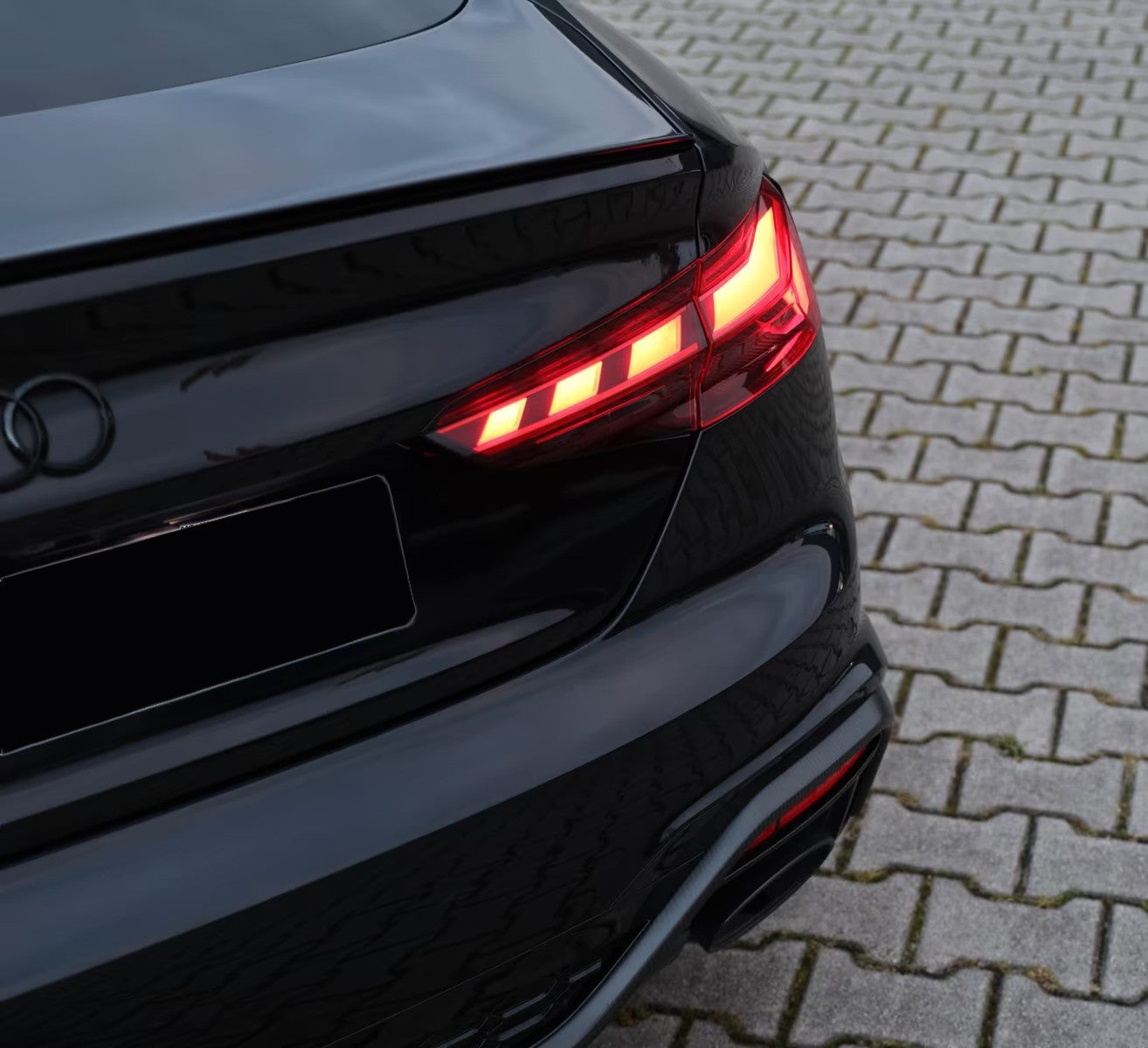
The most frequent trigger for a Mercedes BSA inoperative warning is physical obstruction of one or both rear radar sensors. These sensors are embedded behind the rear bumper cover, typically near the outer corners. Road film, mud, ice, snow, or even a trailer hitch ball blocking the sensor field will cause the system to disable itself. The W213 E-Class and W167 GLE are particularly susceptible after winter driving or off-road use. Clean the rear bumper thoroughly and retest before assuming a hardware fault. Many Mercedes blind spot warning inoperative cases resolve with nothing more than a bumper wash.
2. Rear Bumper Damage or Misaligned Sensor Bracket
Even a minor rear collision — enough to crack the bumper cover or shift the internal radar sensor bracket — can misalign the sensor's field of view beyond its calibration tolerance. The BSA control module will detect the signal anomaly and disable the system. On the W205 C-Class and X253 GLC, the radar units are fastened to plastic brackets inside the bumper; these brackets can crack or deform from low-speed impacts without any visible external damage. A recalibration using Mercedes-Benz XENTRY/DAS is required after any bumper repair.
3. Radar Sensor Hardware Failure
The short-range radar (SRR) sensors themselves can fail internally due to moisture ingress, thermal cycling stress, or manufacturing defects. This generates a hard fault code stored in the Radar Sensor Module (RSM) or Distronic Plus / Driver Assistance module. Failed sensors on the W222 S-Class and W213 E-Class are a documented issue and typically require full sensor replacement followed by static recalibration. A scan tool will identify which sensor has failed — left rear, right rear, or both.
4. Wiring Harness Fault or CAN Bus Communication Error
The BSA radar sensors communicate over the vehicle's CAN bus network. A damaged wiring harness, corroded connector, or disrupted CAN line between the sensor and the central Driver Assistance ECU will cause the system to report as inoperative. This is more common on high-mileage W205 and W213 vehicles and on cars that have had rear bodywork performed where the harness was disturbed. A mercedes benz blind spot malfunction caused by a CAN fault will often appear alongside other driver assistance warnings simultaneously — Active Lane Keeping Assist, Attention Assist, or Active Brake Assist may also show as unavailable.
5. Software Fault or Control Module Reset Required
On vehicles equipped with MBUX (standard from 2019 onward on most platforms), a software glitch in the Driver Assistance module or a failed over-the-air update can cause BSA to report as inoperative without any physical hardware problem. This is more common on the W177 A-Class, W247 B-Class, and early EQC/EQS builds. A module reset or software reflash via XENTRY often resolves it. Additionally, if the vehicle battery was recently replaced or fully discharged, some assistance systems require a drive cycle or manual re-initialization before resuming normal operation.
What to Do When You See This Warning
First, do not ignore this warning and continue driving as if the system is active — Blind Spot Assist is now fully offline, and the mirror warning indicators will not illuminate. Check your mirrors manually until the fault is resolved. Next, inspect the rear bumper area for obvious obstructions: mud, snow, ice, or debris packed behind the bumper cover. If the bumper is clean and undamaged, the next step is to connect an OBD2 scanner that can read Mercedes-specific fault codes. Generic OBD2 readers will not access the Driver Assistance ECU or the Radar Sensor Module — you need a tool that supports manufacturer-specific CAN bus modules.
This warning does not prevent the vehicle from being driven, but it does represent a real reduction in safety capability. If the fault appeared after a collision or bumper repair, do not attempt to recalibrate the sensors without proper equipment — misaligned radar sensors can generate false alerts or fail to detect real vehicles, which is worse than the system being off. If you see this Mercedes blind spot assist inoperative message alongside multiple other driver assistance warnings at the same time, a CAN bus or battery voltage issue is likely, and the car should be scanned immediately.

Don't Pay $100+ Just to Read a Fault Code
Mercedes stores the exact BSA fault code — radar sensor, CAN fault, or calibration error — in a module that generic readers can't access. The Launch X431 CR319 reads Mercedes-specific codes across all ECUs in under 30 seconds — compact enough for the glove box, no subscription required.
→ Get the OBD2 ScannerHow to Diagnose BSA Inoperative on a Mercedes-Benz
Diagnosing a Mercedes BSA inoperative warning correctly requires working through the system in order — starting with the cheapest and most reversible causes first. Here's the logical sequence:
Step 1: Scan for fault codes. Connect a scanner capable of reading Mercedes-specific modules and pull codes from the Driver Assistance ECU, Radar Sensor Module (RSM), and the central gateway. The stored fault codes will identify whether the fault is a sensor failure, a calibration error, a CAN communication loss, or a power supply issue. Without this step, every other diagnostic action is guesswork. Note every active and stored code before clearing anything.
Step 2: Inspect and clean the rear radar sensors. With the fault codes in hand, physically inspect both rear bumper corners. Remove any mud, road film, or debris from the sensor windows. If the bumper has been repainted, confirm the paint layer over the sensor area is not too thick — non-metallic paint over approximately 2mm can attenuate the radar signal enough to cause a fault. Check for any cracks in the bumper cover directly over the sensor locations.
Step 3: Check sensor alignment and connector integrity. If the codes point to a specific sensor, access it by removing the inner bumper liner or dropping the bumper. Verify the radar sensor bracket is intact and correctly positioned. Inspect the electrical connector for corrosion, bent pins, or moisture intrusion. Reseat the connector firmly. On the W213 E-Class and W222 S-Class, the sensor connectors are known to accumulate corrosion in high-humidity climates.
Step 4: Perform sensor recalibration or module reset. After any physical repair — sensor replacement, bumper repair, or bracket adjustment — the Blind Spot Assist radar sensors must be recalibrated using Mercedes-Benz XENTRY/DAS or a compatible professional-grade scanner. Static calibration requires a flat surface and specific target distances from the rear of the vehicle. If the fault is purely software-related (no hardware defect found), a module reset or software update via XENTRY may be all that is needed. Confirm the fault does not return after a complete drive cycle before closing the repair.
Mercedes-Benz Fault Codes Related to BSA Inoperative
| Code | Description | Likely cause |
|---|---|---|
| C119700 | Blind Spot Assist — Left Rear Radar Sensor: Signal Implausible | Left SRR sensor failure, misalignment, or obstruction of the left rear bumper sensor zone |
| C119800 | Blind Spot Assist — Right Rear Radar Sensor: Signal Implausible | Right SRR sensor failure, misalignment, or obstruction of the right rear bumper sensor zone |
| C119600 | Blind Spot Assist — Component Not Calibrated / Calibration Required | Sensor replaced or bumper repaired without subsequent XENTRY recalibration; bracket shifted after impact |
| U029D00 | Lost Communication with Radar Sensor Module (RSM) | CAN bus wiring fault, damaged harness, or corroded connector between the radar sensor and Driver Assistance ECU |
FAQ — Mercedes-Benz BSA Inoperative
Can I still drive my Mercedes with Blind Spot Assist inoperative?
Yes, the vehicle is fully drivable. However, Blind Spot Assist is completely offline — the mirror warning indicators will not activate and no corrective steering input will be applied if you signal into an occupied lane. Check your mirrors manually and resolve the fault as soon as practical, especially if you regularly drive on the highway.
Will cleaning the rear bumper fix the "Blind Spot Assist Inoperative" warning on my Mercedes?
In many cases, yes. Mud, packed snow, ice, or heavy road grime covering the rear radar sensor windows is the single most common cause of this warning — particularly after winter driving or car washes that don't clean behind the bumper corners. Clean the rear bumper thoroughly, clear the stored fault code with a scanner, and complete a drive cycle. If the warning returns, the fault is hardware or software-based rather than an obstruction issue.
How much does it cost to fix Blind Spot Assist inoperative on a Mercedes-Benz?
Cost depends entirely on the root cause. Cleaning the sensor area costs nothing. A radar sensor recalibration at a dealer typically runs $150–$300. Replacing a failed SRR radar sensor on a W205 C-Class or W213 E-Class — including parts and labor — generally falls between $400 and $900 depending on the sensor location and model year. A wiring harness repair is highly variable. Scanning the fault codes first with a compatible OBD2 tool prevents paying for diagnostics before knowing what actually failed.
Does a Mercedes BSA inoperative warning affect other driver assistance systems?
It can. On platforms where Blind Spot Assist shares radar sensor data with Active Lane Change Assist, Exit Warning, or Active Blind Spot Assist (which applies corrective steering), all of those features will also be unavailable when the radar sensors are faulted. If the warning appears simultaneously with faults for Collision Prevention Assist, Distronic Plus, or Active Brake Assist, a broader CAN bus or power supply issue is likely rather than a sensor-specific failure — scan all modules to get the full picture.