

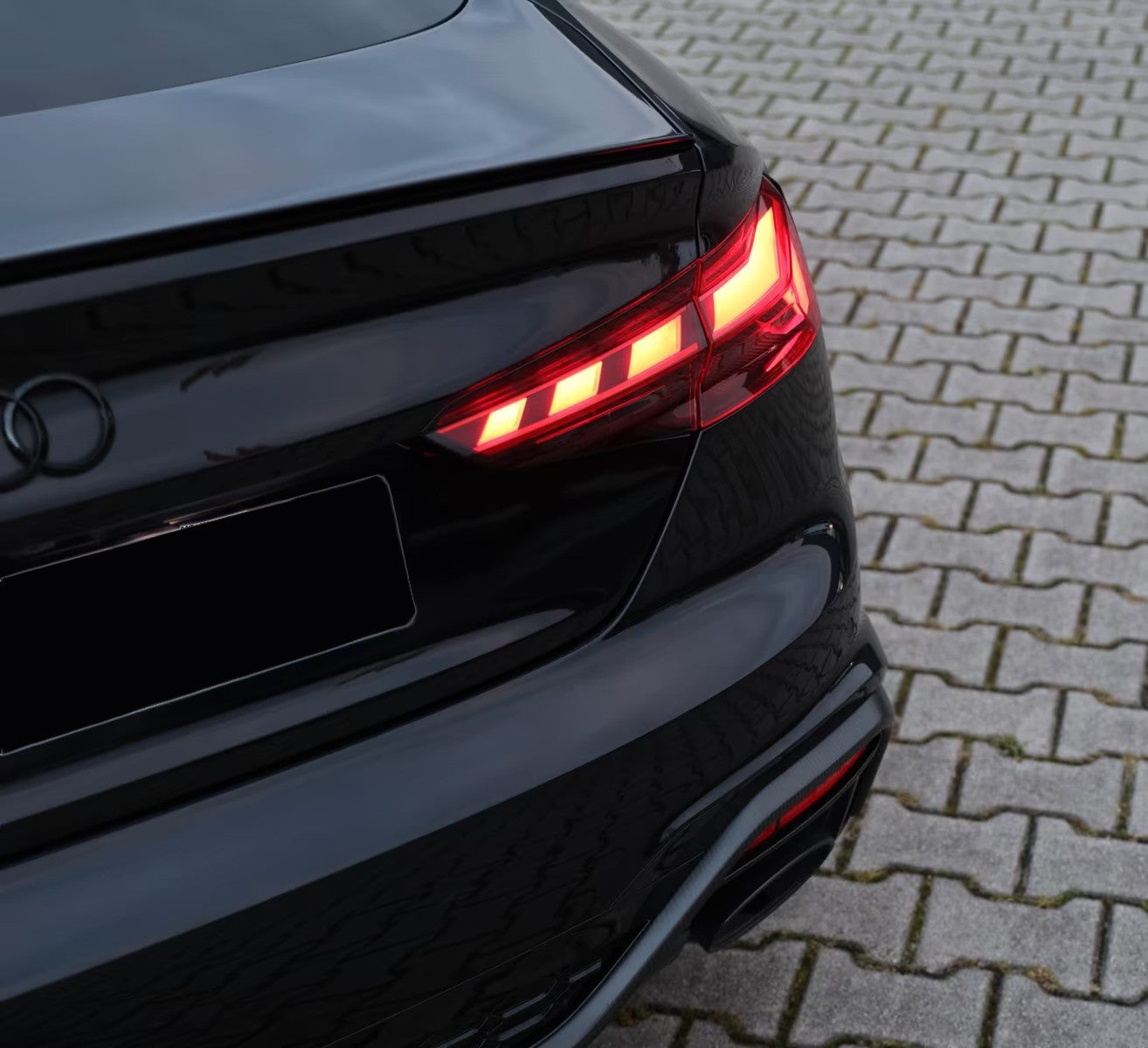


The Audi A6 C5 occupies a special place in the history of the German brand. Produced between 1997 and 2004, this executive sedan — and its Avant wagon variant — offered a compelling blend of comfort, quattro all-wheel drive capability, and refined German engineering at a price that undercut its BMW 5 Series and Mercedes E-Class rivals.
Today, the C5 generation is one of the most sought-after used Audis on the American market. Its combination of solid build quality, spacious interior, and a wide range of petrol and diesel engines makes it an attractive proposition for daily drivers and enthusiasts alike.
But like any aging European vehicle, the Audi A6 C5 comes with its share of known weaknesses. Oil leaks, electrical gremlins, and suspension wear are all part of the ownership story. Understanding these issues before you buy is the difference between a great deal and a costly mistake.
This guide covers everything you need to know: engine options, common reliability issues, maintenance costs, and the parts most likely to need attention.
Parts & Accessories
Your Audi A6 deserves better.
Hand-picked performance and replacement parts — ready to ship.
Shop Audi A6 parts →History and Versions
The Audi A6 C5 debuted in 1997 as a replacement for the C4 generation, sharing its platform with the Volkswagen Passat B5. It was offered in sedan and Avant (wagon) body styles, with an Allroad variant introduced in 2000 featuring raised suspension and off-road capability.
A mild facelift arrived in 2001, bringing updated headlights, revised bumpers, and interior refinements. Production ended in 2004, replaced by the C6 generation.
Engine choices ranged from modest four-cylinder units to the thunderous 4.2L V8 found in the S6. The 2.7T biturbo and 2.8L V6 were the most popular petrol choices in the US market, while several diesel variants were offered in Europe.
| Engine | Displacement | Power | Torque | 0-60 mph | Notes |
|---|---|---|---|---|---|
| 1.8T (AEB/APU) | 1.8L I4 Turbo | 150 hp | 155 lb-ft | 9.2s | Entry-level petrol |
| 2.4 V6 | 2.4L V6 | 165 hp | 166 lb-ft | 8.5s | Naturally aspirated, smooth |
| 2.7T (AJK/ARE) | 2.7L V6 Biturbo | 250 hp | 258 lb-ft | 6.2s | US flagship petrol, quattro only |
| 2.8 V6 (ACK) | 2.8L V6 | 193 hp | 206 lb-ft | 7.8s | Naturally aspirated, common in US |
| 4.2 V8 (ART) | 4.2L V8 | 300 hp | 295 lb-ft | 5.8s | S6 variant, high performance |
| 1.9 TDI (AWX) | 1.9L I4 Diesel | 130 hp | 228 lb-ft | 10.5s | Europe only, very economical |
| 2.5 TDI (AKE) | 2.5L V6 Diesel | 163 hp | 280 lb-ft | 8.2s | Europe, torquey and efficient |
How to Check a Used Audi A6 C5's History
Before buying a used Audi A6 C5, it is essential to ensure full transparency about its past. Undisclosed accidents can hide poor-quality repairs that directly compromise the safety of the driver and passengers.
The Audi A6 C5 is particularly vulnerable to issues that are invisible to the naked eye after a collision. A repaired front-end impact, for example, may have left the subframe misaligned, affecting steering precision and tyre wear patterns. Airbags that were deployed in an accident may not have been properly replaced or recoded, leaving occupants unprotected. The rear multilink suspension is another area where a hasty repair can mask serious structural damage that only reveals itself under hard driving or over time. It is therefore strongly recommended to check the vehicle's complete history using its license plate or VIN number before making any purchase decision.
Get an instant 20% discount to access a vehicle's full past with total transparency via carVertical by clicking this link or on the banner below:

Key Strengths
The Audi A6 C5 has aged remarkably well for a vehicle now over two decades old. Here is what makes it a smart used buy.
Build quality is a genuine highlight. The interior materials, panel gaps, and overall fit and finish remain impressive by the standards of its era — and compared to many modern economy cars.
The quattro all-wheel drive system available on most variants is one of the most reliable AWD systems ever produced. It requires minimal maintenance and delivers excellent traction in rain and snow.
The 2.7T biturbo engine, while demanding in maintenance, delivers genuine performance that rivals sports sedans of the same period. When properly maintained, it is capable of exceeding 200,000 miles.
The Avant wagon body style remains practical and spacious, with cargo capacity that competes with modern crossovers. Parts availability is excellent, and a strong DIY community means repair guides and forums are readily accessible.
Finally, purchase prices are low. A clean, well-maintained C5 can be found for well under $10,000 — making it one of the most affordable ways to own a genuine German executive car.
Known Reliability Issues
2.8 V6 — ACK / ATQ
The naturally aspirated 2.8L V6 is the most straightforward engine in the C5 lineup, but it is not without issues.
Timing belt failure is the most critical risk. The 2.8 V6 uses a rubber timing belt that must be replaced every 60,000 miles or 5 years. Failure to do so risks catastrophic engine damage. Always verify belt replacement history before purchase.
Coolant leaks from the plastic coolant flange located at the rear of the engine are common after 80,000 miles. The part itself is inexpensive, but labour can be significant due to its location.
Oil consumption becomes noticeable after 100,000 miles, often due to worn valve stem seals. Burning roughly one quart every 1,000 miles is considered normal by Audi for this engine but should be monitored carefully.
2.7T Biturbo — AJK / ARE / APB
The 2.7T is the most performance-oriented petrol option in the C5 range, and also the most maintenance-intensive.
Timing belt and idler tensioner failure is the single most dangerous issue. The belt drives both camshafts and the water pump, and tensioner failure is well-documented on this engine. Replacement is recommended every 50,000 to 60,000 miles — some specialists suggest even sooner.
Turbocharger failure affects both turbos, typically after 100,000 to 120,000 miles. Oil starvation caused by neglected oil changes accelerates wear significantly. Listen for excessive whine or shaft play.
PCV (Positive Crankcase Ventilation) system failure is extremely common. A clogged or collapsed PCV hose causes oil leaks, excessive oil consumption, and rough idle. This typically manifests between 80,000 and 120,000 miles.
Coolant system leaks from the water pump and thermostat housing are frequent on high-mileage examples. The water pump should be replaced as part of every timing belt service.
For a deeper look at the biturbo family's architecture and potential, the Audi EA113 Engine Guide covers related VAG turbocharged petrol engines in detail.
1.8T — AEB / APU
The 1.8T four-cylinder is well known across the VAG family as a durable but temperamental turbocharged unit.
Sludge buildup is the most notorious issue. Extended oil change intervals cause oil to break down and form sludge inside the engine, blocking oil passages and starving the camshaft and timing chain tensioner. Always check service records.
Timing belt tensioner failure is again a critical concern. The belt must be inspected every 40,000 to 60,000 miles on this engine.
Ignition coil failure is extremely common, causing misfires and rough running. The four coil packs should be replaced as a set when one fails — typically between 60,000 and 100,000 miles.
4.2 V8 — ART (S6)
The S6's 4.2L V8 is a powerful but expensive unit to maintain.
Timing chain tensioner wear on the V8 causes a distinct cold-start rattle. Left unaddressed, this leads to chain stretch and potential guide failure — a repair that can cost $3,000 or more in labour alone.
Oil leaks from the valve cover gaskets and rear main seal are nearly universal on high-mileage S6 examples. Expect to address these after 100,000 miles.
Chassis Issues
Front control arm bushings wear out on virtually every C5, typically between 60,000 and 100,000 miles. Worn bushings cause vague steering, clunking over bumps, and uneven tyre wear.
Rear multilink suspension components — particularly the trailing arm bushings and upper control arms — also wear with age. Replacement improves handling dramatically and is a worthwhile investment on any used C5.
Quattro rear differential mount bushings crack over time, causing vibration and clunking under load. This is often misdiagnosed as a drivetrain issue.
Electronics and Software
Central locking module failure is one of the most commonly reported electrical faults on the C5. Symptoms include intermittent locking, windows not responding, and interior lights behaving erratically.
Instrument cluster failures — particularly the MFA (multi-function display) going blank — are well documented. Pixel loss on the DIS display is also common and can be repaired by a specialist.
MMI / navigation unit issues affect earlier units. Slow response, disc read errors, and module failures are all reported on high-mileage cars.
Maintenance and Servicing
The Audi A6 C5 requires attentive, regular maintenance to remain reliable over the long term. Deferred services accelerate the issues described above.
Oil changes should be performed every 5,000 to 7,500 miles using a quality 5W-40 full synthetic oil meeting the VW 502.00 specification. Extended intervals are not recommended on the 2.7T or 1.8T engines given their sludge and PCV sensitivity.
Timing belt replacement is the most critical scheduled service. Intervals vary by engine: - 1.8T: every 40,000 to 60,000 miles - 2.8 V6: every 60,000 miles - 2.7T: every 50,000 to 60,000 miles
Always replace the water pump, tensioner, and idler pulleys at the same time. Using only genuine or OEM-quality parts is strongly recommended.
Spark plugs should be replaced every 30,000 to 40,000 miles on petrol variants. Brake fluid should be flushed every 2 years regardless of mileage. Differential and transmission fluid changes every 40,000 to 60,000 miles are essential on quattro models.
Expect to spend $800 to $1,500 for a full timing belt service at an independent specialist, and $150 to $300 for routine oil service.
Parts to Watch / Replace First
Timing belt kit — The single most important preventive replacement on any C5. Always include the water pump, tensioner, and idler roller in the kit.
Control arm bushings — Front lower control arm bushings are the first casualty of age and road use. Replace as a complete set for best results.
PCV system (crankcase ventilation hose and valve) — Critical on the 2.7T and 1.8T. A failed PCV causes oil leaks, consumption, and boost irregularities.
Coolant flange / thermostat housing — Plastic components that crack with age. The rear coolant flange on the 2.8 V6 is a known failure point.
Ignition coil packs — Replace the full set on any 1.8T or 2.7T purchase, especially if service history is incomplete.
Brake master cylinder — Can develop internal leaks causing a spongy pedal. Often overlooked on high-mileage cars.
Instrument cluster — If the MFA display is blank or shows pixel loss, factor in a cluster rebuild or replacement.
Central locking module — Prone to failure; a secondhand replacement unit is affordable and straightforward to swap.
Quattro rear differential mount bushings — Often neglected. Replacement eliminates drivetrain vibration and clunking on acceleration.
FAQ
Is the Audi A6 C5 reliable?
The A6 C5 is reasonably reliable for its age, provided it has been properly maintained. The naturally aspirated 2.8 V6 is the most straightforward engine, while the 2.7T biturbo demands more attention. With documented service history and a thorough pre-purchase inspection, a well-kept C5 can provide many years of dependable use.
What is the best engine option for the Audi A6 C5?
For reliability, the 2.8 V6 is the most forgiving choice — simpler, naturally aspirated, and with fewer failure-prone systems. For performance, the 2.7T offers an excellent driving experience but requires diligent maintenance and a higher budget. Avoid high-mileage 2.7T examples with unknown service history.
How many miles will an Audi A6 C5 last?
A well-maintained A6 C5 can realistically reach 200,000 miles or more. The key factors are regular oil changes, timely timing belt replacement, and addressing coolant and PCV issues before they escalate. Neglected examples can fail well before 100,000 miles.
Is the Audi A6 C5 expensive to maintain?
Maintenance costs are moderate to high for a vehicle of this age. Routine services are affordable, but the timing belt service ($800 to $1,500), turbo replacement ($1,000 to $2,500 per unit on the 2.7T), and suspension rebuilds can add up. Using a specialist independent shop rather than a dealer significantly reduces costs.
Which Audi A6 C5 variant should I avoid?
Avoid any 2.7T with unknown or incomplete service history — particularly around timing belt and oil change records. High-mileage S6 V8 examples are also risky given the cost of timing chain and oil leak repairs. Any C5 with evidence of coolant mixing with oil should be walked away from immediately.
Does the Audi A6 C5 have quattro available?
Yes, quattro all-wheel drive was available on most engine variants including the 2.7T, 2.8 V6, and 4.2 V8. The Allroad variant came exclusively with quattro. Front-wheel drive versions were offered with some four-cylinder engines in European markets. The quattro system on the C5 is mechanically robust and requires only periodic differential fluid changes to remain in good condition.
Conclusion
The Audi A6 C5 earns a reliability score of 6.5 out of 10 — above average for a vehicle of its age when properly maintained, but demanding enough to punish neglect quickly. Its strengths are real: solid build quality, excellent quattro system, and strong parts availability. Its weaknesses are equally real: timing belt sensitivity, PCV issues, and electrical quirks. Buy one with a clean history, verified service records, and a pre-purchase inspection, and the C5 remains one of the best-value German executive cars on the used market. Browse our catalog for quality replacement and maintenance parts to keep your A6 C5 running at its best.