

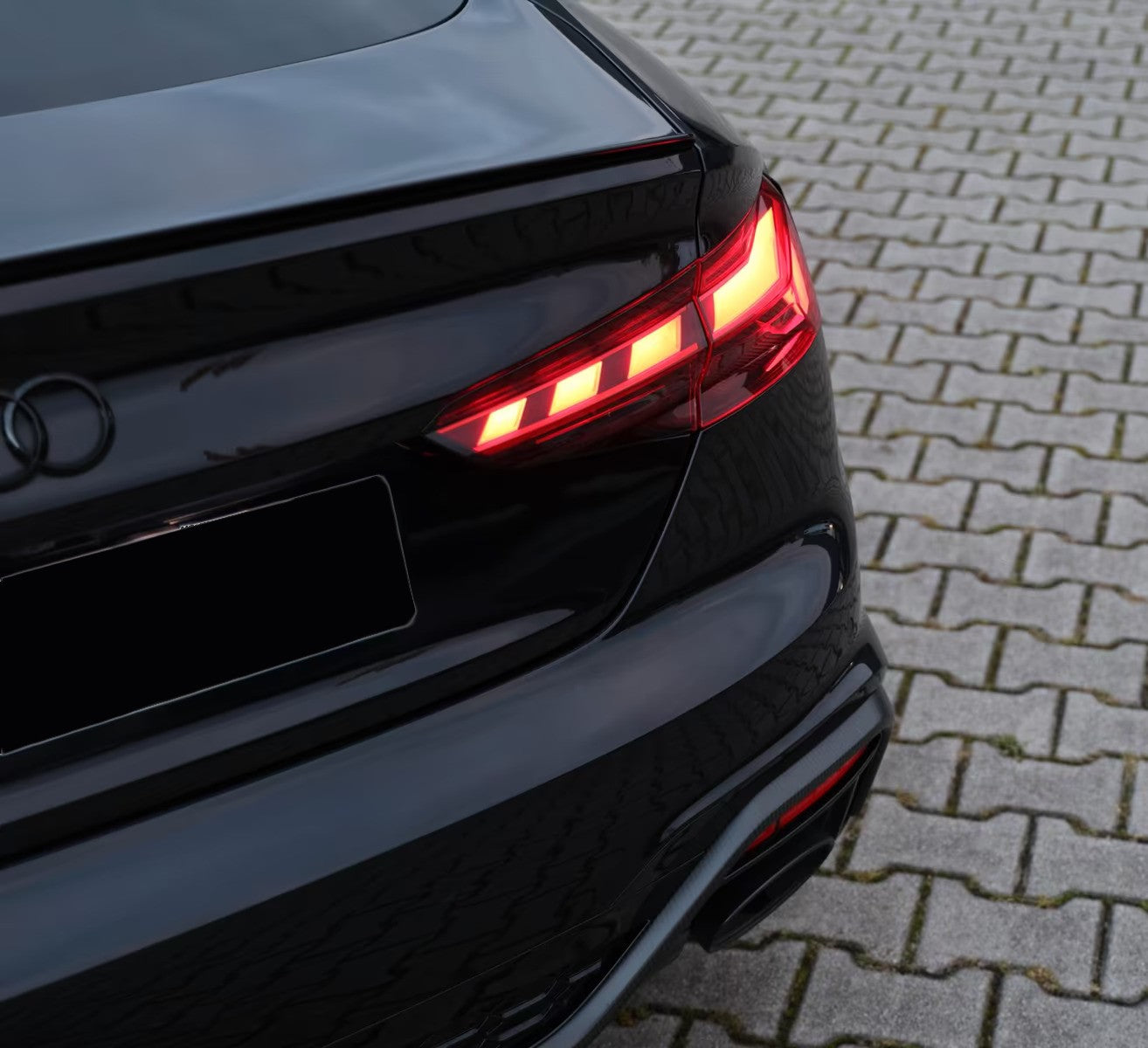


The Audi A8 D5 is the fourth generation of Audi's flagship luxury sedan, produced from 2017 to the present. Positioned at the very top of the Audi lineup, it competes directly with the BMW 7 Series, Mercedes-Benz S-Class, and Lexus LS, offering a blend of cutting-edge technology, refined comfort, and genuinely impressive performance.
What sets the D5 apart from its predecessors — including the Audi A8 D4 — is its radical technological leap: a mild-hybrid system (MHEV) on virtually all variants, a 48-volt electrical architecture, and a new generation of MLB Evo platform shared with the A6 C8 and A7 4K.
For buyers in the US market, the D5 represents an opportunity to acquire a near-luxury experience at a significant depreciation discount. But before signing any paperwork, understanding the known reliability issues, maintenance costs, and critical mileage thresholds is essential. This guide covers everything you need to know.
Parts & Accessories
Your Audi A8 D5 deserves better.
Hand-picked performance and replacement parts — ready to ship.
Shop Audi A8 D5 parts →History and Versions
The Audi A8 D5 (internal code: 4N) was unveiled at the Frankfurt Motor Show in 2017 and went on sale in the US for the 2019 model year.
The D5 introduced a fully redesigned interior with a dual-screen MMI Touch Response system, replacing the previous rotary dial setup. Engine options span from a 3.0 TFSI mild-hybrid V6 through a 4.0 TFSI twin-turbo V8, up to the W12 in long-wheelbase form and a 3.0 TDI diesel for international markets.
A mild facelift arrived for the 2022 model year, updating the front fascia and refining the MMI software.
| Engine | Displacement | Power | Torque | 0-60 mph | Notes |
|---|---|---|---|---|---|
| 3.0 TFSI (MHEV) | 3.0L V6 | 335 hp | 369 lb-ft | ~5.6 sec | 48V mild hybrid; standard US model |
| 4.0 TFSI (MHEV) | 4.0L V8 | 460 hp | 487 lb-ft | ~4.5 sec | 48V mild hybrid; A8 L variant available |
| 6.0 W12 | 6.0L W12 | 563 hp | 590 lb-ft | ~3.7 sec | Top-spec; A8 L only; US market limited |
| 3.0 TDI (MHEV) | 3.0L V6 Diesel | 286 hp | 457 lb-ft | ~5.9 sec | Europe/international only |
| 4.0 TDI (MHEV) | 4.0L V8 Diesel | 422 hp | 664 lb-ft | ~4.9 sec | Europe/international only |
How to Check a Used Audi A8 D5's History
Before buying a used Audi A8 D5, it is essential to ensure full transparency about its past. Undisclosed accidents can hide poor-quality repairs that directly compromise the safety of the driver and passengers.
The A8 D5 is a particularly complex vehicle, and invisible accident damage can manifest in ways that are difficult to detect without a full history report. Misaligned aluminum space frame panels are costly to repair correctly and are often masked with filler. Unreplaced side curtain airbags or faulty pre-sense front radar modules may remain dormant until an emergency. Air suspension components hastily repaired or sourced from non-OEM suppliers may show no obvious signs of failure at a test drive, yet degrade rapidly within months. It is therefore strongly recommended to check the vehicle's complete history using its license plate or VIN number before making any purchase decision.
Get an instant 20% discount to access a vehicle's full past with total transparency via carVertical by clicking this link or on the banner below:

Key Strengths
The Audi A8 D5 makes a compelling case as a used luxury purchase for several reasons.
The MLB Evo platform is exceptionally rigid and refined, contributing to a ride quality that rivals anything in the segment. The standard air suspension with adaptive damping delivers genuine magic carpet comfort, and the optional predictive active suspension (which physically lifts and lowers corners in anticipation of road inputs) is genuinely unlike anything else available at this price point used.
The 48-volt mild-hybrid system reduces fuel consumption meaningfully in real-world driving and improves low-speed torque response. Both the 3.0 TFSI and 4.0 TFSI engines are capable and smooth, with the V8 in particular offering effortless performance well into high mileage.
The interior quality — particularly on higher trims — remains class-leading even years after purchase, and the quattro all-wheel drive system continues to be one of the most confidence-inspiring setups in any luxury sedan.
Known Reliability Issues
3.0 TFSI — EA839 (V6 Mild Hybrid)
The base US engine is the 3.0-liter turbocharged V6 from the EA839 family, paired with the 48V belt-alternator-starter (BAS) system. It is generally a strong unit, but several issues have been documented.
Oil consumption — Some owners report elevated oil consumption, particularly above 60,000 miles. The cause is often piston ring wear or valve stem seal degradation. Severity: Moderate. Check the oil level at every fill-up.
48V mild-hybrid belt-alternator-starter (BAS) failure — The BAS unit can fail between 50,000 and 80,000 miles, often preceded by a "mild hybrid system fault" warning. Replacement is expensive, typically $1,500–$2,500 in parts alone. Severity: Moderate.
Water pump failure — The electric auxiliary water pump is a known weak point, typically failing between 60,000 and 100,000 miles. Symptoms include coolant warning lights and overheating at idle. Severity: Moderate to Critical if left unaddressed.
Carbon buildup on intake valves — As a direct-injection engine, the EA839 is susceptible to carbon deposits on intake valves. Walnut blasting is recommended around 60,000–80,000 miles. Severity: Minor to Moderate depending on symptoms.
4.0 TFSI — EA825 (V8 Mild Hybrid)
The 4.0-liter twin-turbocharged V8 is the EA825 engine family and is shared with several Audi, Bentley, and Porsche models. It is a robust unit overall, but comes with its own set of known concerns.
Cylinder deactivation system (COD) issues — The cylinder-on-demand system, which deactivates four cylinders under light load, can cause rough idle, misfires, or oil fouling of deactivated cylinders. Symptoms typically emerge after 40,000–70,000 miles. Severity: Moderate.
Valve stem seal leaks — Oil burning from degraded valve stem seals is a recurring complaint, often visible as blue smoke on cold starts. Typically surfaces between 70,000 and 120,000 miles. Severity: Moderate.
Timing chain tensioner wear — The V8 uses a dual-chain timing system; tensioner wear has been reported, most commonly after 80,000 miles. Early warning signs include a rattling noise on cold start. Severity: Critical if ignored.
Turbocharger oil feed line leaks — The oil feed lines to both turbos can develop seepage, typically noticed as slight oil smell or minor leaks on the underside. Appears around 60,000–90,000 miles. Severity: Moderate.
Chassis Issues
Air suspension compressor failure — The pneumatic air suspension compressor is a known wear item on the D5. Failure typically occurs between 60,000 and 100,000 miles, often preceded by longer leveling times or a compressor that runs constantly. Replacement compressors cost $400–$900 for the unit alone. Severity: Moderate to Critical.
Air suspension air strut leaks — Individual air struts can develop leaks at the rubber bellows, causing one corner to sag overnight. Typically appears on higher-mileage examples above 80,000 miles. Severity: Moderate.
Front control arm bushings — The aluminum front control arms use press-fit rubber bushings that deteriorate with age and mileage. Clunking over bumps or imprecise steering feel are the primary symptoms. Expect wear between 60,000 and 100,000 miles. Severity: Minor to Moderate.
Electronics and Software
MMI Touch Response system glitches — The dual-screen infotainment system can suffer from frozen screens, unresponsive touch inputs, and spontaneous reboots. This is often software-related and can be resolved with an OEM software update, though some hardware failures (display units themselves) have also been reported. Severity: Minor.
48V electrical architecture faults — Intermittent fault codes related to the 48V subsystem — including the mild-hybrid controller and the active roll stabilization system — have been logged on multiple D5 examples. A full diagnostic scan with a VCDS or OEM-level tool is recommended before purchase. Severity: Moderate.
Rear seat entertainment module failures — On long-wheelbase A8 L variants with the rear entertainment package, the RSE modules and tablet charging cradles can develop faults. Typically cosmetic rather than critical. Severity: Minor.
Maintenance and Servicing
The Audi A8 D5 uses Audi's flexible service intervals, with oil changes typically recommended every 10,000 miles or 12 months, whichever comes first. However, many experienced mechanics recommend shortening this to 7,500 miles given the engine complexity and mild-hybrid demands.
Key maintenance intervals to observe:
- Engine oil and filter: every 7,500–10,000 miles; use only VW 508.00 or 504.00-spec full synthetic oil
- Spark plugs: every 40,000 miles on both V6 and V8 variants
- Transmission fluid (ZF 8HP): change at 60,000–80,000 miles even if listed as "lifetime fill"
- Brake fluid: every 2 years regardless of mileage
- Air suspension inspection: annually; check for slow leaks at all four corners
- Cabin air filter: every 20,000 miles or annually
Average service costs at an independent Audi specialist in the US range from $250–$400 for a full synthetic oil service, $600–$900 for a major service including filters and spark plugs, and $1,500–$3,000 for air suspension component replacement.
Dealers will charge significantly more. Finding a qualified Audi-specialist independent shop is strongly recommended for ongoing ownership.
Parts to Watch / Replace First
Air suspension compressor — The most common wear item on the D5. Inspect for slow self-leveling or audible strain on startup. Replace proactively if the original unit has more than 80,000 miles.
Air suspension struts (all four corners) — Rubber bellows degrade with age and temperature cycling. Inspect for sagging corners and replace in axle pairs to maintain balanced ride height.
48V belt-alternator-starter (BAS) unit — The heart of the mild-hybrid system. A failing unit triggers fault codes and removes the engine stop-start and coasting functions. Replace before it causes downstream electrical faults.
Intake valves (walnut blast service) — Not a part to replace, but a service to schedule. Carbon buildup on intake valves reduces performance and fuel economy on both the V6 and V8 variants.
ZF 8HP transmission fluid and filter — The gearbox is extremely durable when maintained. Replacing the fluid and internal filter at 60,000–80,000 miles is the single best investment for long-term drivetrain health.
Spark plugs — Easy to overlook on a luxury vehicle, but degraded plugs cause misfires that can damage catalytic converters. Stick to the 40,000-mile replacement schedule.
FAQ
Is the Audi A8 D5 reliable?
The A8 D5 is broadly reliable for a full-size luxury sedan of its complexity. It performs well when properly maintained, but its advanced systems — particularly the 48V mild-hybrid architecture and pneumatic air suspension — introduce more potential failure points than a conventional vehicle. Budget accordingly for maintenance and occasional system repairs.
What is the best engine option in the Audi A8 D5?
For US buyers, the 4.0 TFSI V8 offers the best balance of performance and long-term durability when well-maintained. The 3.0 TFSI V6 is perfectly competent and slightly less expensive to service, making it a solid choice for buyers prioritizing running costs over outright performance.
How many miles will an Audi A8 D5 last?
With diligent maintenance, the A8 D5 is capable of reaching 200,000 miles or more. The engines themselves are robust; the limiting factors are typically the air suspension, 48V system components, and electronics, which become increasingly expensive to repair beyond 150,000 miles.
Is the Audi A8 D5 expensive to maintain?
Yes, by most standards. Annual maintenance costs for a well-kept D5 in the US typically run $1,500–$3,000 per year at an independent specialist. Dealers charge significantly more. Air suspension repairs, mild-hybrid system servicing, and tire replacement (on wide, low-profile fitments) are the largest recurring expenses.
Which Audi A8 D5 model years should I avoid?
The earliest 2019 model year examples had the most software-related MMI issues and some first-production 48V system faults. The 2021 and later model years benefit from multiple software updates and revised mild-hybrid calibration, making them preferable for used buyers who want fewer early-ownership headaches.
What mileage is too high for a used Audi A8 D5?
Anything beyond 100,000 miles requires careful pre-purchase inspection, particularly of the air suspension, timing chain, and 48V belt-alternator-starter. A pre-purchase inspection (PPI) by an Audi specialist and a full VCDS diagnostic scan are non-negotiable at that mileage range.
Conclusion
The Audi A8 D5 earns a reliability score of 7/10 for a luxury full-size sedan in its class. It is a genuinely impressive machine that rewards attentive ownership with a near-unmatched driving and passenger experience. The key risks — air suspension wear, mild-hybrid system faults, and carbon buildup — are all manageable with proper maintenance and proactive parts replacement. Browse our catalog for quality replacement and maintenance parts to keep your A8 D5 performing at its best.