



The Audi RS7 4G is one of the most compelling grand touring machines to come out of Ingolstadt. Launched in 2013, it combines the sleek five-door Sportback body of the A7 with a twin-turbocharged 4.0-liter V8 engine producing a staggering 560 horsepower in standard trim. The result is a car that can seat four adults in genuine comfort, carry luggage, and still sprint to 60 mph in under 4 seconds.
In the US market, the RS7 4G positioned itself as a direct rival to the Mercedes-AMG CLS 63 and BMW M6 Gran Coupe, but with Audi's signature quattro all-wheel drive and a more restrained, executive appearance. It was never a cheap car new, and used examples still command strong prices today. That makes doing your homework before buying absolutely critical.
This guide covers everything you need to know about the Audi RS7 4G: its engine variants, known reliability issues, maintenance requirements, and what to check before handing over your money.
Parts & Accessories
Your Audi RS7 4G deserves better.
Hand-picked performance and replacement parts — ready to ship.
Shop Audi RS7 4G parts →History and Versions
The Audi RS7 C7 was produced from 2013 to 2018, based on the C7 platform shared with the A6 C7 and A7 4G. It received a significant facelift in 2015, bringing updated LED headlights, a revised MMI infotainment system, and minor styling tweaks. In 2014, Audi also introduced the RS7 Performance variant, pushing output to 605 horsepower and reducing the 0-60 mph time to a claimed 3.7 seconds.
All RS7 4G models use the CTGF or CRDB designation of Audi's 4.0 TFSI biturbo V8, internally coded as the EA824 engine family. No diesel or six-cylinder options were ever offered in this model.
| Engine | Displacement | Power | Torque | 0-60 mph | Notes |
|---|---|---|---|---|---|
| 4.0 TFSI V8 (CTGF) | 3,993 cc | 560 hp | 516 lb-ft | 3.9 sec | Standard RS7, pre- and post-facelift |
| 4.0 TFSI V8 Performance (CRDB) | 3,993 cc | 605 hp | 553 lb-ft | 3.7 sec | RS7 Performance, from 2014 |
How to Check a Used Audi RS7 4G's History
Before buying a used Audi RS7 4G, it is essential to ensure full transparency about its past. Undisclosed accidents can hide poor-quality repairs that directly compromise the safety of the driver and passengers.
Given the RS7's performance capabilities, the risks of hidden damage are particularly serious. A previous high-speed impact can leave misaligned rear subframe mounting points, unreplaced side curtain airbags, or hastily repaired adaptive air suspension components that appear functional but are structurally compromised. Carbon ceramic brake damage, bent control arms, and improperly reset airbag modules are common after-effects of accidents that are invisible to the naked eye. It is therefore strongly recommended to check the vehicle's complete history using its license plate or VIN number before making any purchase decision.
Get an instant 20% discount to access a vehicle's full past with total transparency via carVertical by clicking this link or on the banner below:

Key Strengths
The Audi RS7 4G has several qualities that make it an attractive used buy, even a decade after its launch.
The 4.0 TFSI biturbo V8 is a genuinely strong and tuneable engine. When properly maintained, it is capable of covering well over 150,000 miles without a major rebuild. The quattro drivetrain provides exceptional traction and durability, and the eight-speed Tiptronic automatic gearbox (ZF 8HP) is one of the most proven transmissions in the segment.
The carbon fiber reinforced polymer (CFRP) roof and aluminum-intensive body structure help manage weight despite the car's size. The adaptive air suspension delivers a genuinely comfortable daily ride while allowing for sharper dynamics when required.
Depreciation has largely run its course on early 4G models, meaning buyers can access serious performance at a fraction of the original sticker price. The RS7 also benefits from a wide aftermarket and Audi dealer parts availability across the US.
Known Reliability Issues
RS7 Standard and Performance — 4.0 TFSI V8 (CTGF / CRDB)
Carbon buildup on intake valves Direct injection engines accumulate carbon deposits on the intake valves over time because fuel is not sprayed over them to clean them. On the 4.0 TFSI, this becomes noticeable from around 60,000 to 80,000 miles, causing rough idling, reduced throttle response, and occasional misfires. Severity: Moderate. The fix involves walnut blasting the intake ports, a labor-intensive but straightforward procedure.
High-pressure fuel pump (HPFP) failure The HPFP on the 4.0 TFSI is a known weak point. Symptoms include hard starting, fuel pressure fault codes, and hesitation under acceleration. Failures typically appear between 50,000 and 90,000 miles. Severity: Critical — a failing pump can cause the engine to run lean and potentially damage injectors. Replacement is recommended at the first sign of fuel delivery codes.
Timing chain and tensioner wear The 4.0 TFSI uses a timing chain system with plastic-tipped tensioners. On higher-mileage examples, typically 80,000 miles and above, stretched chains and worn tensioners can cause rattling on cold starts. Severity: Critical if left unaddressed — a jumped chain will cause catastrophic engine damage. Always listen for chain rattle on startup when inspecting a used RS7.
Oil consumption Moderate to elevated oil consumption is common on the 4.0 TFSI, particularly on pre-facelift cars built before mid-2014. Some owners report consumption of one quart per 1,000 to 1,500 miles at higher mileages. Severity: Moderate. Always check oil level before any test drive and ask for service records showing top-up frequency.
Turbocharger oil feed line leaks The turbocharger oil feed lines and associated banjo bolt seals are prone to weeping oil at around 60,000 to 100,000 miles. This typically presents as a slight oil smell after hard driving. Severity: Minor to Moderate depending on volume. Inspect the underside of the engine bay carefully for signs of fresh oil residue near the turbo housings.
Wastegate rattle A common complaint on the 4.0 TFSI across multiple Audi and Volkswagen Group models is wastegate actuator rattle at idle and low RPM. It does not always cause driveability issues, but it can indicate wear in the wastegate linkage. Severity: Minor to Moderate. Replacement actuators are available and relatively straightforward to fit.
Chassis Issues
Adaptive air suspension failures The air suspension fitted to all RS7 4G models is a frequent source of issues. Air spring bags, the compressor unit, and the valve block are all wear items. Failures typically appear from 70,000 miles onward but can occur earlier if the car has been driven hard over rough surfaces. Symptoms include the car sitting unevenly or a "suspension fault" warning. Severity: Moderate to Critical depending on which component has failed.
Control arm bushing and ball joint wear The front and rear control arm bushings deteriorate over time, especially when the car has been driven in sport or dynamic mode regularly. Clunking or vague steering response typically appears from 60,000 to 80,000 miles. Severity: Moderate. Full arm replacement is often the more cost-effective approach versus bushing-only renewal on these vehicles.
Rear differential mounts The rear differential mounting bushings can soften and crack, contributing to vibration and drivetrain noise under acceleration. This typically appears from 80,000 miles onward. Severity: Minor to Moderate.
Electronics and Software
MMI infotainment system glitches The MMI 3G+ system fitted to the RS7 4G is generally reliable but can experience random reboots, frozen screens, and Bluetooth connectivity issues. These problems are more common on pre-facelift cars. Severity: Minor. Software updates via an Audi dealer often resolve persistent issues.
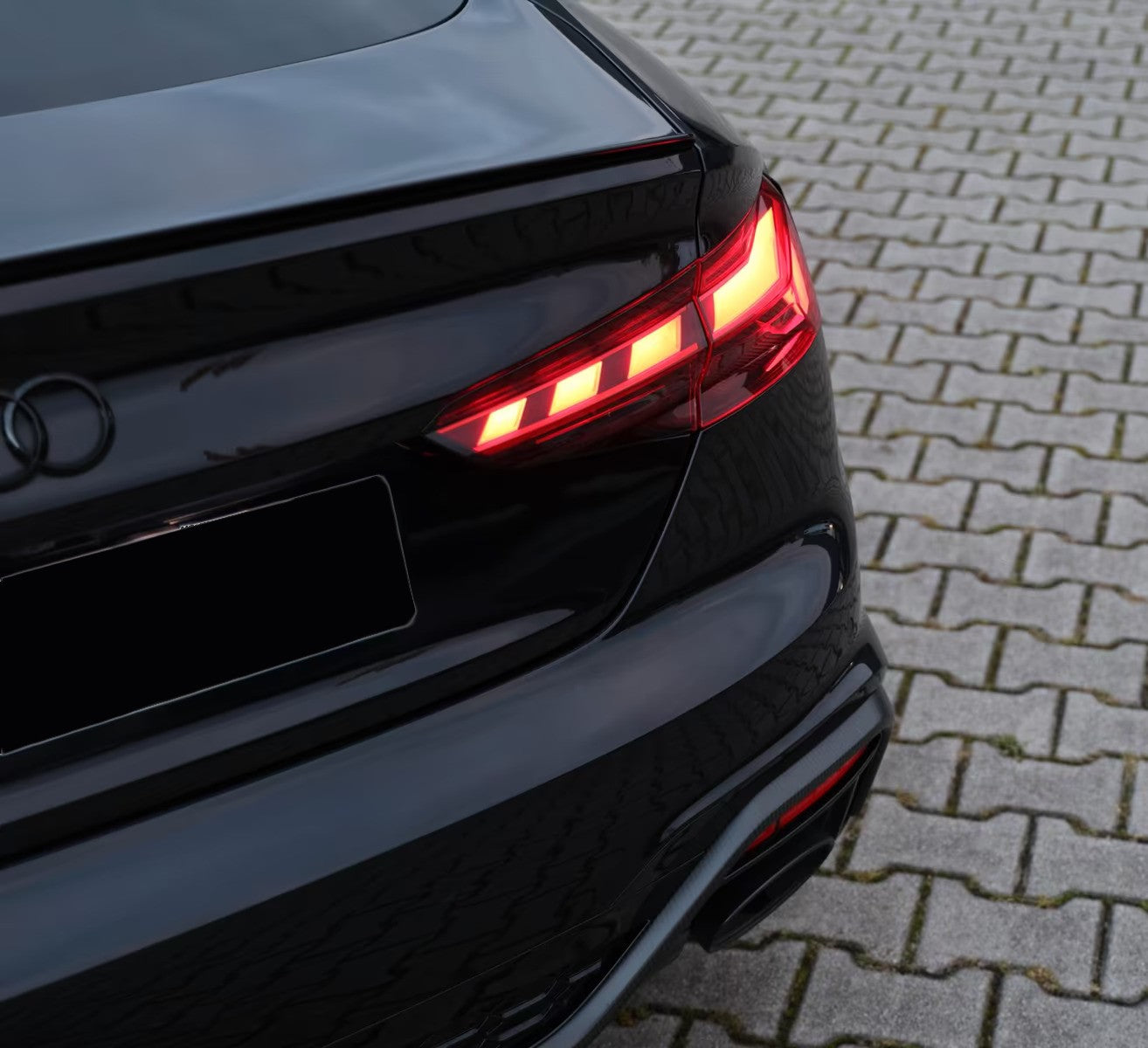
LED and OLED lighting module failures The RS7's LED headlight and OLED tail light modules are complex and expensive to replace. Individual segments can fail, and dealers may require entire assembly replacement rather than module-level repair. Severity: Minor functionally, but Costly financially.
Battery drain and start-stop module faults Multiple electronic control units remain active when the RS7 is parked. Aging auxiliary batteries or faulty start-stop modules can cause unexpected battery drain. This typically becomes an issue from 5 to 7 years of age on original batteries. Severity: Minor. Always test battery condition before purchase.
Maintenance and Servicing
The Audi RS7 4G follows Audi's variable-interval service schedule, but given the performance demands of the 4.0 TFSI, more conservative intervals are strongly recommended.
Oil changes should be performed every 5,000 to 7,500 miles using a VW 502.00-approved 5W-30 full synthetic oil. The factory long-life schedule of 10,000+ miles is too aggressive for a high-output turbocharged V8 that frequently sees sustained high RPM. Spark plugs should be replaced every 30,000 to 40,000 miles, as worn plugs accelerate carbon buildup and can cause misfires under boost.
The ZF 8HP automatic transmission benefits from a fluid change every 50,000 to 60,000 miles, despite being labeled as a sealed unit. Fresh fluid noticeably improves shift quality and extends transmission life. Differential and transfer case fluids should similarly be renewed on the same interval.
Air suspension components should be inspected at every service from 60,000 miles onward. Brake fluid should be replaced every two years regardless of mileage given the thermal loads from repeated high-speed stops.
Typical annual service costs at an independent specialist in the US range from $600 to $1,200 for a standard oil and inspection service, rising to $2,500 to $4,000 for major services involving spark plugs, filters, and fluid changes.
Parts to Watch / Replace First
Intake valve cleaning kit (walnut blasting) — Carbon deposits on the intake valves are inevitable on direct injection engines. Budget for this service if it has not been performed recently.
High-pressure fuel pump — A failing HPFP will cause drivability issues and can damage injectors. Replace at the first sign of fuel pressure codes or hesitation.
Timing chain tensioners — Critical safety item on high-mileage examples. Proactive replacement of the tensioners and guides around 90,000 to 100,000 miles is strongly recommended.
Air suspension compressor and valve block — These are the most common air suspension failure points. Pre-emptive inspection and replacement of worn components avoids more expensive secondary damage.
Front and rear control arm sets — Worn bushings and ball joints affect both safety and driving dynamics. Replace as a complete axle set for best results.
Turbocharger oil feed lines — Inspect and replace if any seepage is present around the turbo housings to prevent oil starvation damage.
Spark plugs — Often overlooked on performance cars, worn plugs under boost cause misfires and accelerate catalytic converter wear.
ZF 8HP transmission fluid — Fresh fluid is one of the best preventative maintenance steps on this platform.
FAQ
Is the Audi RS7 4G reliable?
The RS7 4G is reasonably reliable for a high-performance vehicle of this complexity, but it requires diligent maintenance. Neglected service history, particularly around oil changes and spark plug intervals, is the root cause of most major failures. A well-maintained example with documented service records is a solid long-term ownership proposition.
What is the best version of the RS7 4G to buy?
The post-facelift RS7 (2015 onward) is the preferred choice, as Audi addressed several early oil consumption and software issues. The RS7 Performance offers more power but shares the same fundamental engine architecture, so reliability differences between the two variants are minimal.
How many miles will an Audi RS7 4G last?
A properly maintained RS7 4G can realistically reach 150,000 to 200,000 miles. The 4.0 TFSI is a robust block, and the ZF transmission is extremely durable with regular fluid changes. The main limiting factors are air suspension longevity and the cost of major engine work such as timing chain replacement.
Is the Audi RS7 4G expensive to maintain?
Yes, maintenance costs are above average. Annual servicing typically runs $800 to $1,500 at an independent specialist, and major jobs such as timing chain replacement, air suspension overhauls, or turbocharger work can each cost $3,000 to $7,000. Budgeting for these expenses before purchase is essential.
What mileage should I avoid when buying a used RS7 4G?
Be cautious with examples above 80,000 miles that have no documented history of timing chain tensioner inspection, intake valve cleaning, or air suspension component replacement. These are the mileage ranges where deferred maintenance begins to compound into expensive repairs. Anything under 60,000 miles with a clean service history represents the safest entry point.
Does the RS7 4G share parts with the S6 or S7?
Yes. The RS7 4G shares the C7 platform with the Audi S7 4G and the Audi RS6 C7, and the 4.0 TFSI engine is common across all three models. This means parts availability is strong and independent specialist knowledge is widespread, which helps keep repair costs manageable compared to more exotic alternatives.
Conclusion
The Audi RS7 4G earns a reliability score of 7 out of 10 for a performance car in its class. It is fast, refined, and genuinely usable as a daily driver — but it rewards attentive ownership and punishes neglect. The main areas to watch are the timing chain system, air suspension, and intake valve carbon buildup.
Buy one with full service history, budget for proactive maintenance, and the RS7 4G will deliver an exceptional ownership experience. Browse our catalog for quality replacement and performance parts to keep your RS7 running at its best.